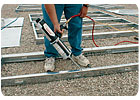
In order to attach the e-track bars to the fiberglass
reinforced plastic interior walls of this trailer, Henkel replaced self-sealing
through-bolts with a structural acrylic adhesive formulated for long-term
strength on galvanized steel. This change made the e-track installation process
a one-person job.
Structural adhesive systems have been formulated to bond
trusses, joists, shear walls, headers, studs and cantilevered beams.
Manufacturers are increasingly using structural adhesives to replace or augment rivets, bolts, welds and other traditional fastening methods. Design engineers are now specifying structural adhesives to assemble wind blades, commercial furniture, appliances, heavy-duty construction and agricultural vehicles, automobiles, buses, hot tubs, electric motors, boats, loudspeakers, signs/displays, machine tools, and more.
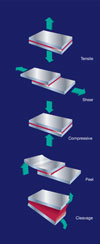
Today’s
structural adhesives are formulated to withstand severe shock, peel and impact
forces.
Why Adhesives?
Structural adhesives offer many benefits over mechanical fasteners or thermal methods of assembly such as welding, brazing and soldering. Adhesives distribute an even stress load over an area, reducing stress on joints. Adhesives are applied inside the joint and are nearly invisible within the assembly. They can resist flex and vibration stresses, and will form both a seal and a bond to protect joints from corrosion. Some adhesives can fill large gaps. They join irregularly shaped surfaces, minimally increase the weight of an assembly, create virtually no change in part dimensions or geometry, and quickly and easily bond dissimilar substrates and heat-sensitive materials.Since adhesives are liquids prior to curing, assembly can be easily automated. By using the proper dispensing and curing equipment, manufacturers can achieve a very strong end product with an aesthetically pleasing and neat appearance. Bonding requires fewer skilled workers and can be 20 times faster than welding. Excess adhesive can be removed prior to the painting process - a significant advantage over grinding and abrading to generate a smooth welded finish.

A fast-fixturing structural acrylic adhesive that offers
excellent impact and peel resistance on aluminum completely replaced rivets on
both the front and rear exterior walls in this beverage trailer assembly
application.
Structural Adhesive Technologies
Structural adhesive technologies include epoxies, acrylics, methylmethacrylates (MMAs), modified silanes and polyurethanes. These adhesive technologies provide tough, durable bonds on metals, plastics, composites and ceramics.Advances in structural adhesive technology have dramatically expanded the scope of potential bonding applications for these materials:
- Over time, traditional structural adhesives lose strength on certain substrates, such as galvanized steel, as zinc coatings would eventually delaminate the bond. New structural adhesive technologies provide such long-term durability on zinc-coated substrates that they are now being used to assemble pre-fabricated building components, such as trusses, joists, shear walls, headers, studs and cantilevered beams.
- Certain new structural adhesives actually increase in strength from their initial cured state when exposed to elevated temperatures. These adhesives also withstand vibration better than mechanical fasteners. In applications such as electric-motor manufacturing, where the end product operates at elevated temperatures and experiences strong vibration, structural adhesives offer distinct advantages over mechanical fasteners.
- In industries where products are getting smaller with each new generation, manufacturers must design for impact and temperature resistance. Structural adhesives used on portable speakers or small electronics, for example, must cure rapidly, exhibit high impact resistance, and withstand the elevated temperatures that are the result of tighter operating spaces.
- Fast-fixturing structural adhesives can increase processing speeds, reduce work-in-process and eliminate mechanical fastener inventories.
- Structural adhesive can withstand the range of environmental conditions an assembly may see during its useful life, including humidity, salt exposure, high temperatures, chemicals and vibration. Structural adhesives can also withstand welding, phosphate pickling, autopheretic and powder coating processes while maintaining strength.
- Some new structural adhesive technologies are designed to bite through surface oils and contaminants, eliminating the need for surface preparation and activators. For difficult-to-bond substrates such as polyolefin plastics, new structural adhesives bond exceptionally well without the need for primer or surface treatment.
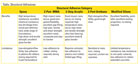
The Table shows available structural adhesive technologies, their benefits, limitations and general performance capabilities. These adhesive technologies provide tough, durable bonds on a larger variety of substrates than in the past, including metals, plastics, composites and ceramics.
For more information, visit www.henkel.com.