
Hundreds of polymers are used in thousands of plastic applications, including shelter, transportation, and food and beverage packaging. As innovation expands polymer types and uses, formulations become increasingly complex. This is because new applications almost always require additives to produce performance properties (such as toughness, flexibility, conductivity and antistatic qualities) to match polymers to applications.
In addition, adding performance modifiers can cause changes in characteristics, including look, feel, color, adhesion, flammability or durability. Thus, formulators must add even more modifiers to compensate for these unwanted changes.
Processing characteristics (melt point, flow, density, mold release, etc.) often necessitate additional additives. One polymer line from one manufacturer may contain dozens of different additives or additive blends among the line’s individual products, depending on each polymer’s grade and intended use. Hence, identifying additives in polymer formulations is crucial to product formulation for performance, health, safety and cost of manufacture. It also allows for analysis of competitive products and investigating alternative technologies.
This article examines the use of LCMS-IT-TOF mass spectrometry to identify unknown additives in polymer formulations.
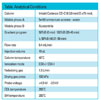
Table. Analytical Conditions
The Need for Analysis
Bottled water has become one of the most visible applications for polymers. However, even products as well researched and mature as plastic water bottles can show the need for analytical examination of polymers. In 2008, Environmental Working Group (EWG), a non-profit environment and health-awareness organization, released the results of its independent study of bottled water purchased at locations around San Francisco. A surprising array of chemical contaminants was found in every brand.The EWG analyses, conducted by the University of Iowa Hygienic Laboratory, examined 10 brands of bottled water. It revealed a range of pollutants, most of which appeared to have been present in the water prior to bottling. Other pollutants may have been introduced during or after processing, including many industrial chemicals used as plasticizers, viscosity modifiers, and propellants. One of the most prevalent pollutants was trihalomethane, a commonly used industry solvent that has been linked to cancer and reproductive problems.
The study illustrates the need for ongoing analysis of plastics with LCMS.

Figure 1. Mass Chromatogram; Peaks A, B, C and E were detected by ESI+; Peak D was Detected by ESI-
Advantage of LCMS-IT-TOF Mass Spectrometry
Liquid chromatography (LC) is the right tool for separating soluble polymers because it divides molecules independent of their molecular weight, according to differences in end groups. It can be executed in three modes: Size-exclusion chromatography (SEC), liquid chromatography at critical conditions (LCCC) and gradient LC (adsorptions or precipitation-redissolution). The first methodology is governed by entropy (separation by hydrodynamic volume); adsorption LC is driven by enthalpic effects, and LCCC is driven by a balance of enthalpic and entropic effects. Gradient LC of polymers enables separation according to differences in chemical composition distribution (CCD). For copolymer analysis, this is a powerful tool to measure polymer composition and assess the distribution of the composition.The 3-D ion trap-time-of-flight mass spectrometer (LCMS-IT-TOF) is used to analyze the mass of components eluting from the HPLC column, and for structural elucidation. Time-of-flight (TOF) has quickly established itself as the preferred type of mass analyzer for the characterization of synthetic macromolecules. TOF combines a high sensitivity with a broad mass range and a high spectral resolution and accuracy.
The instrument’s design allows for high-speed MSnanalysis because the ion acceleration method used to remove ions from the trap ballistically ejects all of the ions simultaneously from the ion trap toward the TOF. The precursor ion automatic selection measurement mode conducts MS, MS2and MS3analysis in order of intensity during peak elution. High-speed polarity switching allows analysis of different types of ions in a single run.
Determining the compositional formula by MSn, along with searching a compound database using that composition formula as a keyword, is a realistic method for identifying polymer additive candidates. Using the predicted structure (obtained from the compound database) compared with the MSnspectrum (taken from the accurate mass) can be achieved with the use of the LCMS-IT-TOF system. It is the ability to conduct MSnmeasurements, along with accurate mass, that makes identification fast and easy. In addition, this technique can be used to identify many compounds, including natural products, metabolites, impurities and degradation byproducts.
LCMS-IT-TOF mass spectrometry provides fast, accurate identification of polymer modifiers for quality control, raw material quality assurance, and ingredient transfer or transformation caused by degradation or oxidation.
Pharmaceutical and food and beverage packaging are important to analyze because of the potential for incidental human consumption and corporate liability. In these applications, LCMS-IT-TOF analysis can provide preclinical study of drug/packaging interactions, as well as evaluations of lipids, acids and other food/beverage ingredients with packaging - particularly with new, reformulated, or repackaged products.

Figure 2. MS, MS2 and MS3 Spectra of Peak A
Finding Suitable Substitute Additives
LCMS-IT-TOF analysis for identifying additives is effective for choosing additives for new polymeric solutions, but it is particularly well suited for altering existing products. Producers may need to change a polymer formulation to improve performance, reduce risk of hazardous chemical exposure, gain compliance with new/revised regulations, shorten manufacturing cycles, or reduce production costs by using less-costly raw materials.Chemists must consider a significant number of factors when formulating with substitutions: the replacement additive or additive blend cannot significantly impact the final product’s physical properties; the additive cannot slow manufacturing by negatively impacting solubility, cure times, thermal stability or other process characteristics; and it cannot cause alternative polymerizations/reactions.
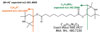
Figure 3. Predicted Structure and MS2, MS3 Spectra Assignments
Adjusting Solutions without Bisphenol A
One high-profile example of why a polymer producer would need to alter a polymeric system is the evidence of human exposure to bisphenol A (BPA). This material is used in food can linings, plastic baby bottles, and many polycarbonate-based consumer products used in the kitchen.BPA has been shown to leach from plastics cleaned with harsh detergents or used to contain acidic or high-temperature liquids, as well as food can linings. Microwaving polycarbonate food containers was shown to further release toxins.
Studies by the Centers for Disease Control and Prevention found bisphenol A in the urine of 93% of children and adults tested in 2003–04.3Infants fed with liquid formula are among the most exposed; those given formula from polycarbonate bottles can consume up to 13 micrograms of BPA per kg of body weight per day (µg/kg/day).4The EPA considers exposures up to 50 µg/kg/day to be safe. Thus, polymer producers were forced to reduce or eliminate BPA from formulations as quickly as possible.
Adjusting Solutions without Phthalates
Several studies of phthalic acid esters (phthalates) used as plasticizers in consumer products and building materials reveal phthalate exposure among residents in industrialized countries. The groups identified include dimethyl, diethyl, benzylbutyl, diisononyl and diisodecyl phthalates. Consumer food containers commonly contain diisobutyl, dibutyl and di-2-ethylhexyl phthalates.Recent toxicological studies have demonstrated the potential of these most commonly used phthalates to disturb the human hormonal system, human sexual development and reproduction. Phthalates are also suspected to trigger asthma and dermal diseases in children.5
Case Study
Starting with the assumption that the most likely additives are fairly common commercial materials, LCMS-IT-TOF mass spectrometry can provide accurate mass measurement using MSnto reduce the number of potential materials to a select few.A typical preparation consists of adding sample material in 1 mL THF/methanol (50/50) solution, then extracting the additives by placing the vial in an ultrasonic bath for 30 minutes. Analysis can be conducted by injecting 10 µL of the supernatant directly into the HPLC column.
This study was undertaken to identify the polymer additives used in a particular type of polymer. The 3-D ion trap-time-of-flight mass spectrometer (LCMS-IT-TOF) is used to analyze the masses of the components eluting from the HPLC column and for structural elucidation. Taking advantage of the high-speed performance of this instrument, the precursor ion automatic selection measurement mode is used to conduct MS, MS2and MS3analysis in order of intensity during peak elution. High-speed polarity switching was used to allow analysis of different types of ions in a single run.
Summary
Identifying additives in polymer formulations is a crucial part of product formulation. Additives must be examined for performance, health, safety and manufacturing cost. Liquid chromatography with 3-D ion trap-time-of-flight mass spectrometry (LCMS-IT-TOF) is an ideal way to analyze a mass of components eluting from the HPLC column, as well as to determine structural elucidation.It is also important to note that other methods are available for polymer analysis, including pylorsis gas chromatography mass spectrometry (PYR-GCMS) and matrix assisted laser desorption ionization time-of-flight mass spectrometry (MALDI-TOFMS). In combination, these three methods provide researchers with a powerful tool to detect any polymer additive.
For more information, visit www.ssi.shimadzu.com.