Polymers: The Basics

Defining polymers and their properties.
 Cynthia Shirk / iStock / Getty Images Plus
If you’re after basic information on plastic materials, you’ve come to the right place. This article examines the definition and properties of polymers, the building blocks of plastics.
Plastics are polymers. But what is a polymer? The simplest definition is “something made of many units.” Think of a polymer as a chain. Each link of the chain is the “-mer,” or basic unit that is usually made of carbon, hydrogen, oxygen and/or silicon. To make the chain, many links or “-mers” are hooked or polymerized together. Polymerization can be demonstrated by linking countless strips of construction paper together to make paper garlands or by hooking together hundreds of paper clips to form chains.
The Structure of Polymers
Many common classes of polymers are composed of hydrocarbons. These polymers are specifically made of small units bonded into long chains. Carbon makes up the backbone of the molecule, and hydrogen atoms are bonded along the backbone. In addition, there are polymers that contain only carbon and hydrogen. Polypropylene, polybutylene, polystyrene and polymethylpentene are examples of these.
Even though the basic makeup of many polymers is carbon and hydrogen, other elements may also be involved. Oxygen, chorine, fluorine, nitrogen, silicon, phosphorous and sulfur are other elements that are found in the molecular makeup of polymers. Polyvinyl chloride (PVC) contains chlorine. Nylon contains nitrogen. Teflon contains fluorine. Polyester and polycarbonates contain oxygen. There are also some polymers that, instead of having a carbon backbone, have a silicon or phosphorous backbone. These are considered inorganic polymers. Silly Putty is a well-known silicon-based polymer.
 RedHelga / iStock / Getty Images Plus
Molecular Arrangement of Polymers
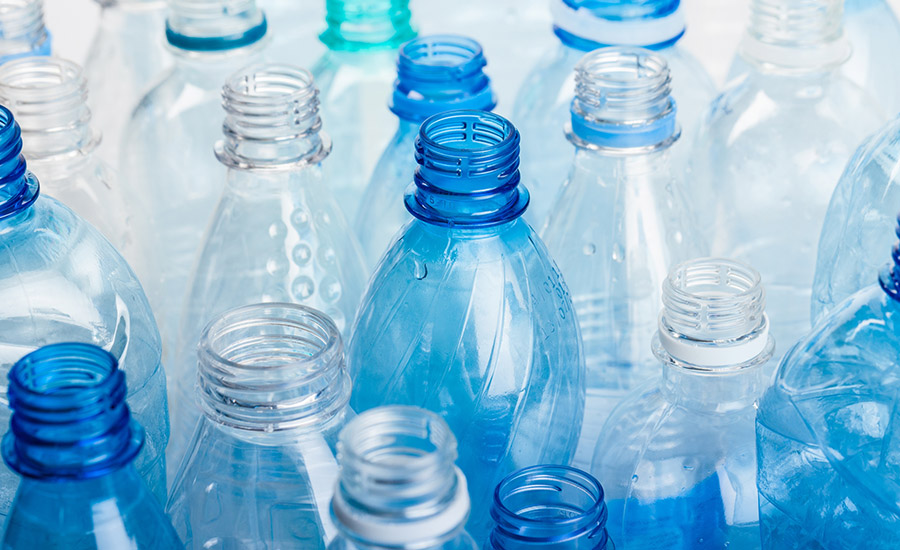
Think of how spaghetti noodles look on a plate. This is similar to how polymers can be arranged if they lack a specific form. Controlling and quenching the polymerization process can result in amorphous organization. An amorphous arrangement of molecules has no long-range order or form in which the polymer chains arrange themselves. Amorphous polymers are generally transparent - an important characteristic for many applications such as food wrap, plastic windows, headlights and contact lenses.
Obviously, not all polymers are transparent. The polymer chains in objects that are translucent and opaque are in a crystalline arrangement. By definition, a crystalline arrangement has atoms, ions or molecules in a distinct pattern. We usually associate crystalline structures with salt and gemstones, but not with plastics. Just as quenching can produce amorphous arrangements, processing can control the degree of crystallinity. The higher the degree of crystallinity, the less light that can pass through the polymer. Therefore, the degree of translucence or opaqueness of the polymer is directly affected by its crystallinity.
Scientists and engineers are always producing better materials by manipulating the molecular structure that affects the final polymer produced. Manufacturers and processors introduce various fillers, reinforcements and additives into the base polymers, expanding product possibilities.
 artisteer / iStock / Getty Images Plus
Characteristics of Polymers
Polymers are divided into two distinct groups: thermoplastics and thermosets. The majority of polymers are thermoplastic, meaning that once the polymer is formed it can be repeatedly heated and reformed. This property allows for easy processing and facilitates recycling. The other group, thermosets, cannot be remelted. Once these polymers are formed, reheating will cause the material to scorch.
Every polymer has very distinct characteristics, but most polymers have the following general attributes.
- Polymers can be very resistant to chemicals. Consider all the cleaning fluids in your home that are packaged in plastic. Reading the warning labels that describe what happens when the chemical comes in contact with skin or eyes or is ingested will emphasize the chemical resistance of these materials.
- Polymers can be both thermal and electrical insulators. A walk through your house will reinforce this concept, as you consider all the appliances, cords, electrical outlets and wiring that are made or covered with polymeric materials. Thermal resistance is evident in the kitchen with pot and pan handles, the foam core of refrigerators and freezers, insulated cups, coolers, and microwave cookware all made of polymers. The thermal underwear that many skiers wear is made of polypropylene, and the fiberfill in winter jackets is acrylic.
- Generally, polymers are very lightweight, with varying degrees of strength. Consider the range of applications, from toys to the frame structure of space stations, or from delicate nylon fiber in pantyhose or Kevlar, which is used in bulletproof vests.
- Polymers can be processed in various ways to produce thin fibers or very intricate parts. Plastics can be molded into bottles or the bodies of cars, or be mixed with solvents to become an adhesive or a paint. Elastomers and some plastics stretch and are very flexible. Other polymers can be foamed like polystyrene (StyrofoamTM) and urethane, to name two examples. Polymers are materials with a seemingly limitless range of characteristics and colors. Polymers have many inherent properties that can be further enhanced by a range of additives to broaden their uses and applications.
In addressing all the superior attributes of polymers, it is equally important to discuss some of the difficulties associated with the material. Plastics deteriorate but never decompose completely. Neither do glass, paper or aluminum. Plastics make up 9.5% of our trash by weight compared to paper, which constitutes 38.9%. Glass and metals make up 13.9% by weight.
Applications for recycled plastics are growing every day. They can be blended with virgin plastic (plastic that has not been processed before) without sacrificing properties in many applications. Recycled plastics are used to make polymeric timbers for use in picnic tables, fences and outdoor toys, thus saving natural lumber. Plastic from 2-liter bottles is even being spun into fiber for the production of carpet.
An option for plastics that are not recycled, especially those that are soiled, such as used microwave food wrap or diapers, can be a waste-to-energy system (WTE).
The controlled combustion of polymers produces heat energy. The heat energy produced by the burning plastics not only converts to electrical energy, but also helps burn the wet trash that is present. Paper also produces heat when burned, but not as much as plastics. On the other hand, glass, aluminum and other metals do not release any energy when burned.
To better understand the incineration process, consider the smoke coming off a burning object and then ignite the smoke with a Bunsen burner. Observe that the smoke disappears. This is not an illusion, but an illustration that the byproducts of incomplete burning are still flammable. Incineration burns the material and then the byproducts of the initial burning.
Polymers affect every day of our lives. These materials have so many varied characteristics and applications that their usefulness can only be measured by our imagination. Polymers are the materials of past, present and future generations.
Resin Identification Code
The Society of the Plastics Industry Inc. (SPI) introduced its voluntary resin identification coding system in 1988 at the urging of recyclers around the country. A growing number of communities were implementing recycling programs in an effort to decrease the volume of waste subject to rising tipping fees at landfills. In some cases, test programs were driven by state-level recycling mandates. The SPI code was developed to meet recyclers’ needs while providing manufacturers with a consistent, uniform system that would apply nationwide. Because municipal recycling programs traditionally have targeted packaging, the SPI coding system offered a means of identifying the resin content of bottles and containers commonly found in the residential waste stream. Recycling firms have varying standards for the plastics they accept. Some firms may require that the plastics be sorted by type and separated from other recyclables; others may specify that mixed plastics are acceptable only if they are separated from other recyclables. Others still may accept all material mixed together. Not all types of plastics are generally recycled, and recycling facilities may not be available in some areas.
For more information, visit the Plastics Division of the American Chemistry Council at www.americanchemistry.com/plastics.
Links
Looking for a reprint of this article?
From high-res PDFs to custom plaques, order your copy today!