Nordson EFD is the world’s leading manufacturer of precision dispensing systems. Our fluid dispensers, dispense valves, automated dispensing systems, syringe barrels, and precision dispense tips are trusted for applying controlled amounts of cyanoacrylates, UV adhesives, and other assembly fluids.

Three Proven Principles Powering Quality Assembly
Fluid Dispense Insights Lead the Way to Precision Engineered Parts
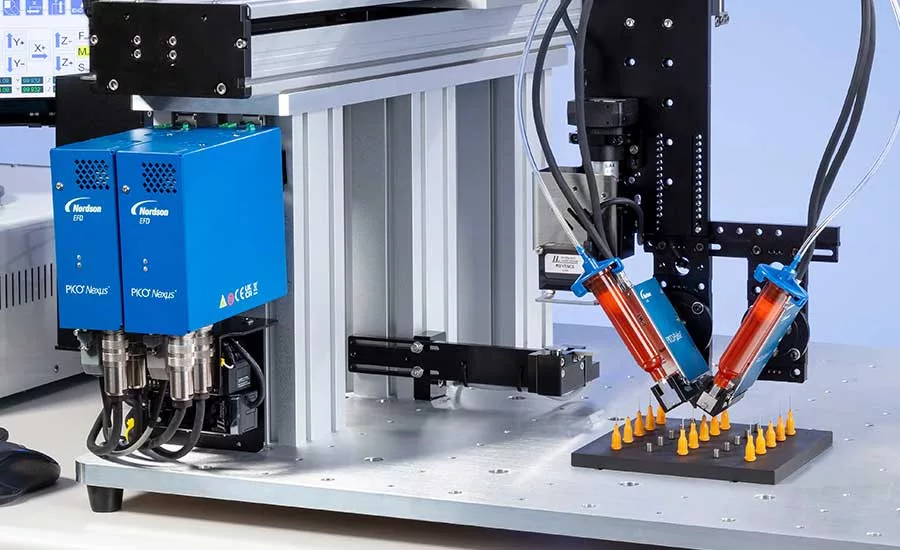
Assembly automation for medical device manufacturing is illustrated in this highly precise needle bonding application executed by two PICO Nexus controllers and two angled PICO XP jet valves.
There is explosive demand for highly engineered products in industries such as electronics and medical devices. This level of consumer demand has motivated manufacturers to reassess their fabrication operations to accommodate the upsurge in wearables, sensors, fiber optics, POC diagnostic devices, and more. Forward-thinking engineering teams are aligning technology strategies and the required expertise to leverage these growth opportunities. The need to guarantee quality assembly is a critical, real-world challenge and requires extensive fluid process and dispensing expertise.
Assembly and quality control can no longer be downstream considerations in the product development cycle. For example, the electronics assembly process requires an array of specialty operations such as underfill and encapsulation. New adhesives, epoxies, and other bonding formularies are also hitting the marketplace to increase assembly efficiencies and shore up structural component integrity. Product development teams often lack expertise in fluid process applications, so early collaboration with experts in this field is essential to build a tactical roadmap for a streamlined prototype-to-production scale-up.
In applications laboratories worldwide, Nordson EFD (East Providence, Rhode Island) fluid process engineers analyze touchpoints along the product development path to analyze and solve fluid-based assembly issues using their engineered dispensing technology. Their broad knowledge of assembly applications, fluid viscosity and rheology, and how to dispense a wide spectrum of formulations is leveraged by manufacturers to automate production, ensure bond consistency, and reduce operational waste. This extensive know-how has been captured in the following three principles to inform your next quality assembly strategy.
1. Size Matters in Fluid Assembly
In assembly production, size matters. Right-sizing fluid dispensing components is not optional. It is fundamental. To place an accurate bead of fluid, size selection is critical for single-use plastic components like dispense tips used with hand-held dispensers or the most sophisticated automation systems. Serving as the "point-of-dispense," dispense tips also come in a multitude of styles, lengths, and outer/inner diameters. Tips are instrumental in controlling how a fluid leaves a syringe barrel or valve as it is deposited onto a substrate. The miniaturization of products, especially in the medical and electronics space, has created demand for even smaller, more precise tips to dispense without overflow in hard-to-reach areas.
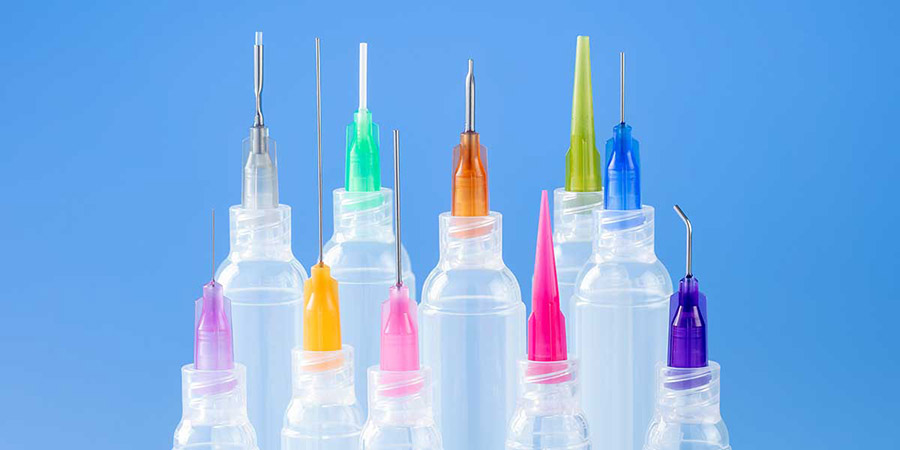
Nordson EFD’s engineered dispensing tip styles range from 14 ga to 37 ga to accommodate a wide range of assembly fluids with unique viscosities.
Image: Nordson Corporation; Nordson EFD
The customer's unique assembly application always drives the sizing requirements. If the manufacturer is assembling thousands of parts a day versus a few hundred, a cartridge may be another option for the dispensing system. Formulators of fluids like epoxies and adhesives typically package this material in either a syringe barrel or cartridge when working with a single or pre-mixed fluid. Syringe barrel volumes range from 3cc to 70cc, and cartridges vary from 2.5 fl oz to 32 fl oz. The upper volume range in syringe barrels, such as the popular 70 cc size, provides the flexibility needed to add more dispense capacity to each cycle, which translates to less downtime as the fluid body is switched out less frequently. For smaller batch dispensing, syringe barrels may be the better fit. A general rule of thumb is to dispense fluid containers from full-to-empty in any given shift achieving maximum value-dispensing to the very last deposit. This practice reduces fluid waste and saves money on syringe barrel or cartridge usage.
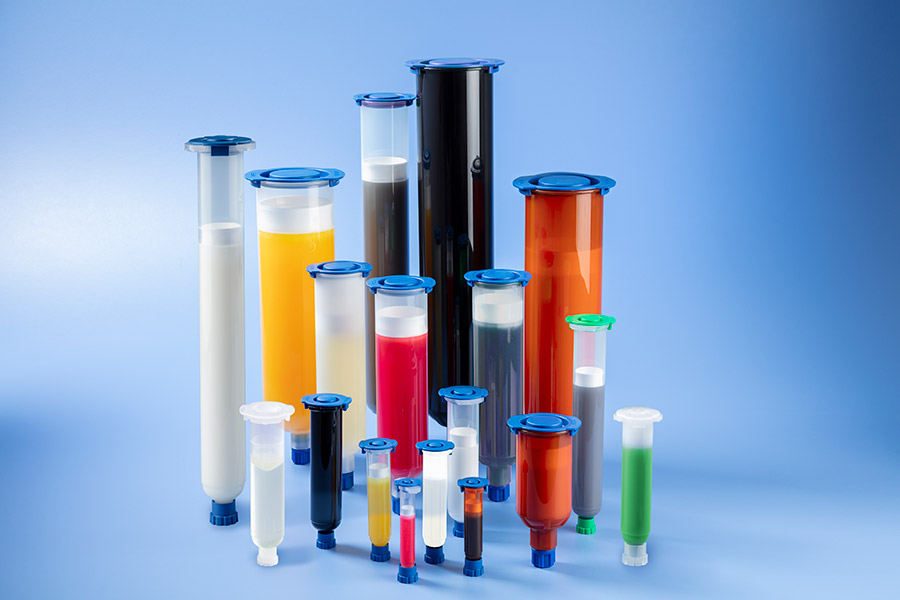
Available from 3cc to 70cc capacities, Nordson EFD syringe barrels are designed and molded to provide exceptional clarity and chemical compatibility. These reservoirs are clear in color for most fluid dispense applications, but also available in UV/light blocking amber and opaque black for complete light blocking.
Image: Nordson Corporation; Nordson EFD
Choosing the correct syringe barrel system is not just about volume capacity but influenced by how a bonding material behaves during the dispensing process. For instance, one of Master Bond's low-viscosity epoxy systems (EP21LSCL-2Med) is safe to use in the assembly of wearable medical devices. The non-cytotoxic encapsulant is qualified for skin-contact applications and has capillary flow characteristics to ensure the intricate spaces found in smart wearable sensors are filled without voids. Small 3cc syringes are used to precisely dispense the specialized epoxy on miniaturized sensors utilized inside a wearable. The material's low-temperature heat-curing profile (below 80 °C) protects sensitive electronics from thermal damage. The two-part epoxy is pre-mixed and packaged in syringe barrels before being frozen, then stored at -40 °C until use. This method allows technicians to thaw only what is needed for their immediate assembly task, significantly reducing waste and eliminating the variability of on-site mixing.
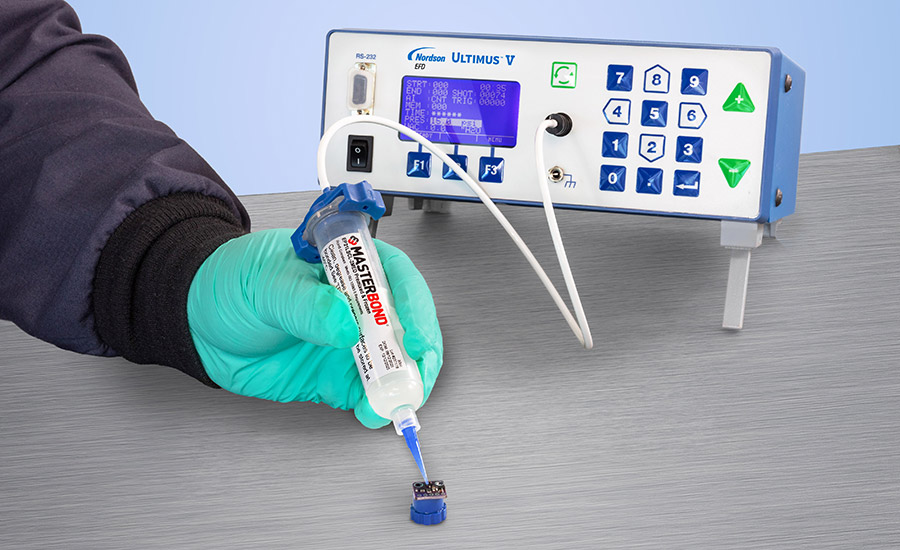
A 30cc Optimum syringe barrel is used to apply a pre-mixed epoxy for the encapsulation of a small electronic component found in a wearable device.
Image: Nordson Corporation; Nordson EFD
2. Evolutionary Design Drives New Bonding Liquids and Dispensing Technologies
It is an exciting time to be a design engineer. Trends in multiple industries are pushing the innovation envelope for more advanced components and devices, many with embedded sensors. This evolutionary design era is fueled by technological disruptions such as IIoT and AI, creating a flywheel effect that has catalyzed more new processes and products to sustain this growth. In the fluid-based assembly realm, new formulations have hit the market for bonding substrates, encapsulating sensors, or applying conformal coatings. Master Bond (Jersey City, New Jersey), a key player in the industry, specializes in over 3,000 custom formulations including epoxies, silicones, and light-curing compounds.
"The fluidic assembly marketplace is absolutely customer-driven, and solutions are determined for each specific application," states Rohit Ramnath, Sr. Product Development Engineer, Master Bond. "If a customer needs to dispense an epoxy within an hour into 100 parts, we will determine the proper material. Nordson EFD will test the material with their dispensing technologies, then validate the process and a solution in their applications laboratory."
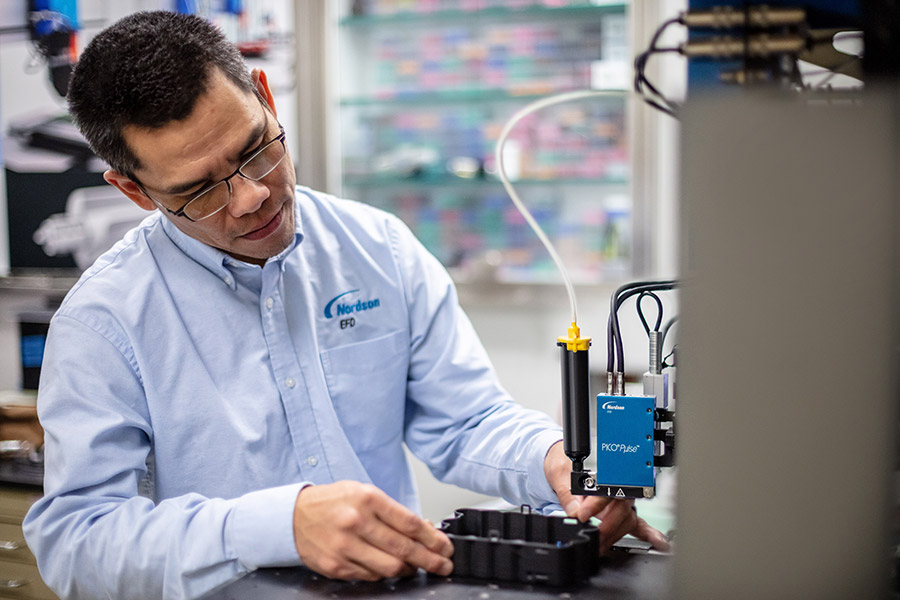
With more than 50 locations worldwide, Nordson applications laboratories provide an innovation ecosystem connecting their global client base to in-house fluid process experts with the dispense technology infrastructure needed to tackle design challenges coming from diverse engineering teams.
Image: Nordson Corporation; Nordson EFD
"Our fast-curing adhesives can setup in 3 to 5 minutes, which is very advantageous for some customers. On the other hand, if a manufacturer is invested in dispensing automation, an alternative formulation can be mixed and it sets up within a minute after dispense. If the customer’s specifications change during the scale-up phase or they require a faster dispense application, we collaborate and adjust on both ends to come up with the desired resolution," concluded Ramnath.
Novel specialty epoxies and other bonding formulations have also prompted the creation of engineered dispensing consumables and technologies targeted toward specific use cases. For example, the electronics manufacturing industry has unique needs and special assembly operations such as underfill, encapsulation, potting, solder paste, and Thermal Interface Materials (TIMs) applications. These processes improve product reliability by protecting against heat and environmental damage, ensuring high-yield production of PCBs, smartphones, and semiconductor packaging.
Serving this sector for decades, Nordson EFD has innovated technologies to improve the micro-dispensing process and enable precise, automated assembly for miniaturized sensor components and beyond. High-performance non-contact jetting systems and manual-to-automated dispensers are used to ensure the accurate, consistent, and void-free application of conductive adhesives, sealants, and more. The company also formulates solder pastes for micro-component soldering, improving bond reliability and throughput.
3. Quality Assembly Automation Requires End-to-End Engineered Parts
The science of engineered fluid dispensing builds the knowledge base and the tech tools needed to ensure every drop of liquid — down to the nanoliter — counts. This proficiency has bottom-line ramifications for device construction from reducing waste of expensive fluids to increased production speeds. Placing a nanoliter (one billionth of a liter) of a bonding liquid on substrates or materials repeatably for one billion cycles is a master feat of precision system engineering. Nordson EFD automated dispensing systems that are used to precisely assemble a delicate wearable device rely on engineered parts throughout the entire delivery system from the carefully curated draft of a tiny 33 ga dispense tip to barrels manufactured to precise tolerances from industrial-grade polymers.
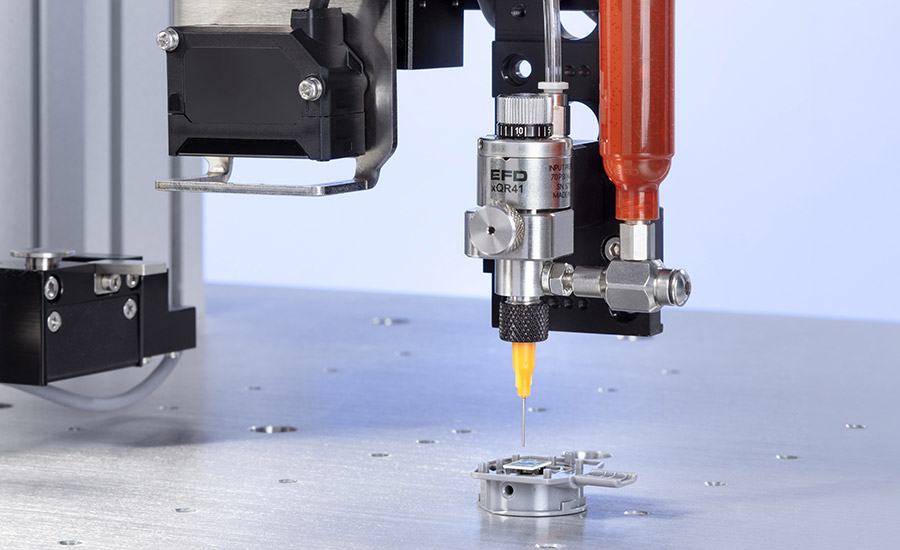
The vision-guided GV Series gantry robot can work as a standalone dispensing system or for fully automated, conveyer-fed assembly production. The configuration includes an engineered needle valve and tip for precision fluid dispensing in an electronics application.
Image: Nordson Corporation; Nordson EFD
In essence, quality starts with engineered components. Taking a holistic approach to quality control in micro-dispense automation removes guesswork from the equation. These dispense automation platforms are validated by systematic lifetime testing procedures to substantiate long-term durability for high production environments. The opportunity for failure is vastly reduced by ensuring engineered components comprise the entirety of the original automation system — from the smallest dispense tip to a two-component mixer to robotic belts. Unknown sources or less expensive parts may sound like a viable alternative for consumable components or maintenance, but this can open the door to uncertainty. Manufacturers on the hook to produce upwards of 500,000+ wearable units per year are usually not looking for shortcuts. Downtime is a costly result that no manager wants to deal with — especially when holding the line on operational efficiencies is job one.
Keeping Assembly Operations Top of Mind
As engineering teams continue to push design boundaries that foster collaborative experimentation, innovations in the fluid-based assembly industry will be required to facilitate these advancements. According to a Grand View Research report, the global fluid dispensing equipment market is expected to grow at a compound annual growth rate (CAGR) of 5.6% from 2025 through 2033. This projection appears to be in alignment with rising consumer demand for next-generation products such as specialized sensors, semiconductors, smart medical monitoring devices, and fiber optics.
These core principles shine a light on the path toward producing highly engineered parts and products with confidence and quality. The competitive reality for OEMs and contract manufacturers lies in prioritizing assembly earlier in the development cycle to streamline time to market. Getting ahead of the process control curve simply saves time and money in the long run.
ADDITIONAL RESOURCES:
Take a deeper dive into why quality matters with dispensing components
Understand how micro dispensing systems improve electronics assembly
Discover how to easily scale up from manual to automated dispensing
About the Author:

Felicitas Stuebing, Nordson EFD
Felicitas Stuebing is the Global Product Line Manager of one-component dispensing at Nordson EFD. She oversees the end-to-end strategy, development and performance of the consumables product portfolio. She joined Nordson EFD in 2015 and is based in East Providence, RI.
Looking for a reprint of this article?
From high-res PDFs to custom plaques, order your copy today!