Smart Adhesives with Strong Hold
Paper and packaging companies need strong, sustainable and cost-efficient adhesive alternatives.

Depending on the applications and requirements, today’s custom-made adhesives require special formulations based on several chemical substances. For materials made of paper and cardboard to bond reliably and durably to each other, the adhesive joint should be firm yet flexible. The paper and packaging industry also needs its products to be environmentally friendly and sustainable-especially where the transport and storage of food is concerned.

Consumer behavior is also giving the packaging industry a boost, as more and more items are being purchased online. Corrugated paper, in particular, is the packaging material of choice for delivering these goods, accounting for just under 70% of transport packaging. According to the VDW, tricolored and multicolored printed corrugated paper is also becoming increasingly popular.
In addition to an adhesive’s processing and handling properties, another factor energizing today’s packaging industry is environmental protection. This applies particularly to materials that come in contact with food, because it is almost impossible to transport, store or sell food without protective packaging. However, food poses special challenges for packaging. On the one hand, the coverings must protect their contents; on the other hand, the chemical substances in the packaging should not migrate (i.e., get into the milk, pasta, bread, etc.).
“Lowering the migration of chemicals from packaging to food is currently an important topic in Europe,” says Laugerette. The European Union’s Migresives research project focuses on this topic, aiming to test and assess the migration of food packaging adhesive components and eventually regulate adhesives’ migration potential.
“Unlike plastics, adhesives have so far not been specifically regulated,” explains Arno Prumbach, head of development at EUKALIN, an adhesive manufacturer located in Eschweiler, Germany. “Formulating adhesives requires several substances. A single adhesive can consist of up to 15 individual components.”
Thus, when developing a formulation for an adhesive, both the individual components and their interaction in the end product must be investigated and thoroughly tested. “Consequently, another packaging trend has developed-the use of adhesives that contain fewer additives,” says Laugerette. Using fewer additives means that the migration potential of fewer individual substances must be tested. In addition, the entire formulation process is simplified for the adhesives manufacturer when fewer additives are needed.
“In dispersions based on vinyl acetate/ethylene (VAE) copolymers, the ethylene units in the polymer chains act as internal, tightly integrated plasticizers,” explains Gerhard Kögler, Ph.D., head of technical service for adhesives in Europe at WACKER POLYMERS. “These polymer-chain components ensure permanent flexibility of the polymer and thus also of the adhesive joint without any plasticizing additives.” The tightly bonded copolymers also ensure a notably low migration potential.
The VAE dispersions’ film formation capabilities mean that film-forming aids also become redundant in the formulation of adhesives. This makes the new product line particularly interesting for developing plasticizer-free, aqueous adhesives for the paper and packaging industry. Until now, the binder of choice for simple paper and packaging applications has been adhesives based on polyvinyl acetate (PVAc). Due to comparatively high costs, VAE-based dispersions were seldom chosen or only used for higher demands.
The technology offers a good alternative that also provides benefits for adhesives manufacturers. To meet their demands, WACKER regularly collaborates closely with adhesives partners in developing innovative products. This association is essential for keeping up to date with current market challenges and for tailoring products exactly to the industry’s requirements.
“Cost-in-use and related criteria such as setting speed or machine running properties are key factors for machine utilization,” explains Laugerette.
“Once an adhesive has been chosen, it’s difficult to modify the machine for another,” adds Prumbach. That is why experts are eager to intensively test the products and eliminate any pitfalls early in the development phase.
When developing VINNAPAS® XD 05, Kögler’s team of specialists developed a cost-efficient polymer dispersion from the monomeric vinyl acetate and ethylene. The new product allows customers to develop plasticizer-free adhesives that display good adhesion and cohesion, high setting speed, and good machine application properties. This bestows economic and environmental advantages on the product, which is not only increasingly important for the packaging industry but also for the consumer.
“We value environmental compatibility and sustainability very highly,” says Kögler. “We are always working on developing optimized or new products and production processes.”
For more information, contact Wacker Chemie AG at Hanns-Seidel-Platz 4, 81737 München, Germany; phone (49) 89-62790; fax (49) 89-6279-1770; or visit www.wacker.com.
Depending on the applications and requirements, today’s custom-made adhesives require special formulations based on several chemical substances. For materials made of paper and cardboard to bond reliably and durably to each other, the adhesive joint should be firm yet flexible. The paper and packaging industry also needs its products to be environmentally friendly and sustainable-especially where the transport and storage of food is concerned.
Peel strength testing. (Photo courtesy of Wacker Chemie AG.)
Packaging Protects and Identifies
Without boxes and cartons made of paper and cardboard, the transport, storage and sale of numerous products would be nearly impossible. For the packaging to remain tightly sealed and not fall apart, it needs adhesives. In addition, cardboard boxes and paper bags are often more than just transportation packaging; they also send advertising messages to the consumer. The packaging doesn’t just identify what it contains; the protective covering itself can also depict a trademark and help give the product its identity. In fact, according to the VDW (a German association of corrugated paper manufacturers), attractively designed corrugated paper stimulates sales where up to 70% of all purchases are decided: in front of supermarket shelves.Consumer behavior is also giving the packaging industry a boost, as more and more items are being purchased online. Corrugated paper, in particular, is the packaging material of choice for delivering these goods, accounting for just under 70% of transport packaging. According to the VDW, tricolored and multicolored printed corrugated paper is also becoming increasingly popular.
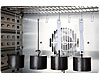
Heat stability testing. (Photo courtesy of Wacker Chemie AG.)
New Trends
“Bonding is essential for producing paper and cardboard packaging,” says Thierry Laugerette, global market manager for adhesives at WACKER POLYMERS. “Currently, there are several packaging industry trends for the choice of adhesive (such as high productivity and competitiveness). To achieve these advantages, the adhesive must have specific characteristics, such as good machine running properties and a quick increase of adhesive strength.”In addition to an adhesive’s processing and handling properties, another factor energizing today’s packaging industry is environmental protection. This applies particularly to materials that come in contact with food, because it is almost impossible to transport, store or sell food without protective packaging. However, food poses special challenges for packaging. On the one hand, the coverings must protect their contents; on the other hand, the chemical substances in the packaging should not migrate (i.e., get into the milk, pasta, bread, etc.).
“Lowering the migration of chemicals from packaging to food is currently an important topic in Europe,” says Laugerette. The European Union’s Migresives research project focuses on this topic, aiming to test and assess the migration of food packaging adhesive components and eventually regulate adhesives’ migration potential.
“Unlike plastics, adhesives have so far not been specifically regulated,” explains Arno Prumbach, head of development at EUKALIN, an adhesive manufacturer located in Eschweiler, Germany. “Formulating adhesives requires several substances. A single adhesive can consist of up to 15 individual components.”
Thus, when developing a formulation for an adhesive, both the individual components and their interaction in the end product must be investigated and thoroughly tested. “Consequently, another packaging trend has developed-the use of adhesives that contain fewer additives,” says Laugerette. Using fewer additives means that the migration potential of fewer individual substances must be tested. In addition, the entire formulation process is simplified for the adhesives manufacturer when fewer additives are needed.
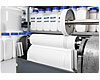
A roll coater is used to test the dispersion's machine running properties. (Photo courtesy of Wacker Chemie AG.)
Dispersion Advances
“Many German industry associations have voluntarily committed themselves to not using a specific plasticizer (DIBP) in adhesives,” says Prumbach. However, these additives must be compensated for in the packaging adhesives. To combat this challenge, WACKER recently introduced VINNAPAS® XD 05, a copolymer dispersion based on the monomers vinyl acetate and ethylene.“In dispersions based on vinyl acetate/ethylene (VAE) copolymers, the ethylene units in the polymer chains act as internal, tightly integrated plasticizers,” explains Gerhard Kögler, Ph.D., head of technical service for adhesives in Europe at WACKER POLYMERS. “These polymer-chain components ensure permanent flexibility of the polymer and thus also of the adhesive joint without any plasticizing additives.” The tightly bonded copolymers also ensure a notably low migration potential.
The VAE dispersions’ film formation capabilities mean that film-forming aids also become redundant in the formulation of adhesives. This makes the new product line particularly interesting for developing plasticizer-free, aqueous adhesives for the paper and packaging industry. Until now, the binder of choice for simple paper and packaging applications has been adhesives based on polyvinyl acetate (PVAc). Due to comparatively high costs, VAE-based dispersions were seldom chosen or only used for higher demands.
Cost Savings
The new dispersion technology provides an improved manufacturing process that enables VAE dispersions to be tailored to the special requirements of the packaging industry while keeping costs for the adhesive base at a competitive level. “Adhesives account for less than 1% of costs in packaging,” says Prumbach. “But due to the packaging industry’s high throughput, this can still account for significant savings. The VINNAPAS® XD 05 VAE dispersion is a real alternative to conventional systems. Furthermore, it can be used to process printed, high-quality, corrugated paper.”The technology offers a good alternative that also provides benefits for adhesives manufacturers. To meet their demands, WACKER regularly collaborates closely with adhesives partners in developing innovative products. This association is essential for keeping up to date with current market challenges and for tailoring products exactly to the industry’s requirements.
“Cost-in-use and related criteria such as setting speed or machine running properties are key factors for machine utilization,” explains Laugerette.
“Once an adhesive has been chosen, it’s difficult to modify the machine for another,” adds Prumbach. That is why experts are eager to intensively test the products and eliminate any pitfalls early in the development phase.
When developing VINNAPAS® XD 05, Kögler’s team of specialists developed a cost-efficient polymer dispersion from the monomeric vinyl acetate and ethylene. The new product allows customers to develop plasticizer-free adhesives that display good adhesion and cohesion, high setting speed, and good machine application properties. This bestows economic and environmental advantages on the product, which is not only increasingly important for the packaging industry but also for the consumer.
“We value environmental compatibility and sustainability very highly,” says Kögler. “We are always working on developing optimized or new products and production processes.”
For more information, contact Wacker Chemie AG at Hanns-Seidel-Platz 4, 81737 München, Germany; phone (49) 89-62790; fax (49) 89-6279-1770; or visit www.wacker.com.
Links
Looking for a reprint of this article?
From high-res PDFs to custom plaques, order your copy today!