Flexible Options
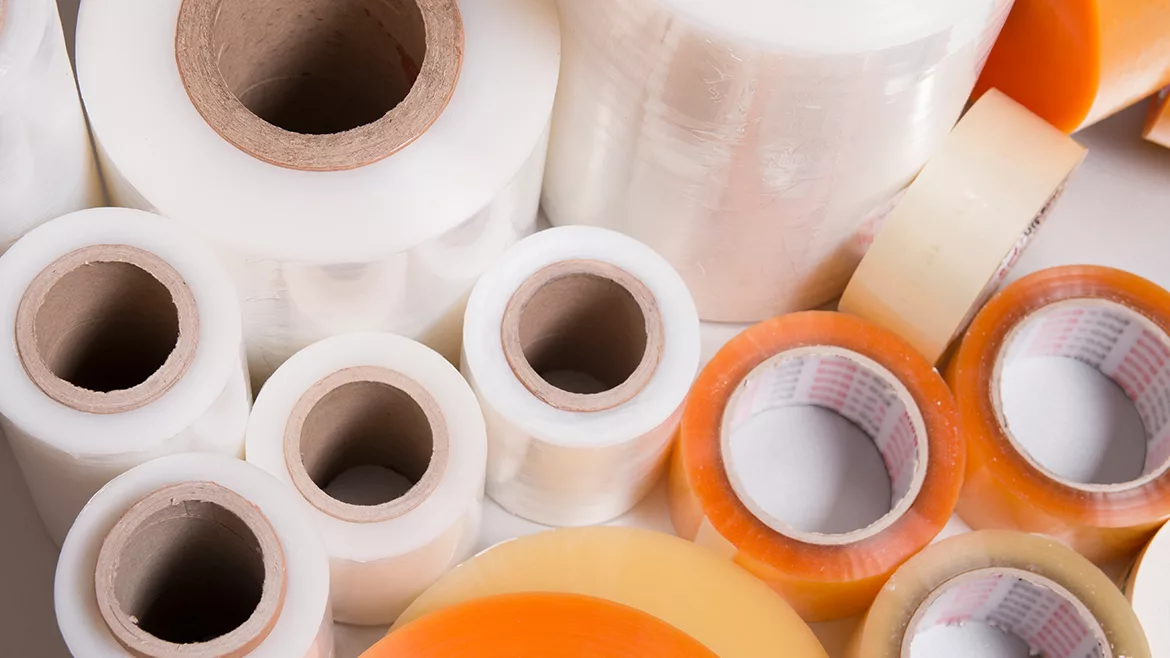
Flexible packaging offers considerable value and sustainability benefits.
Ensuring a secure, safe environment is paramount to consumers, retailers and manufacturers alike. Recent developments in packaging technology satisfy these safety concerns while providing a greener footprint. Traditionally, many adhesive and sealant manufacturers have used pails and drums for transporting their products. Although these containers provide many benefits, other products can better satisfy a large gap in the market—sustainability. Flexible packaging offers considerable value and sustainability benefits to manufacturers, retailers and consumers while addressing the many packaging challenges faced by the adhesives and sealants industry.
Multiple Benefits
Residue control is a substantial problem for the adhesives and sealants industry. Various components used to manufacture adhesives and sealants can contaminate a steel drum or pail, making it difficult to reuse, recondition or recycle. Flexible packaging keeps drums and pails clean, eliminating container cleaning costs and resulting in immediate reuse of drums and pails.
Product purity is essential to maintaining product quality and performance; flexible packaging preserves and protects products. In addition, full product recovery is vital for valuable raw materials, and flexible packaging increases product recovery.
Flexible packaging also offers several less obvious benefits that are strong sustainability advantages. Flexible packaging materials weigh significantly less than other packaging formats, and they ship and store flat, so transportation and warehouse efficiency is maximized. Flexible packaging is also manufactured with less energy than rigid packaging and containers. Carbon dioxide emissions are further reduced by the space savings advantage created by using flexible packaging over pails and drums. Flexible packaging also provides important source reduction benefits. Source reduction is the Environmental Protection Agency’s preferred waste management strategy.
Liners
Flexible packaging exists in a number of formats: liners for pails, drums, intermediate bulk containers and bag-in-box systems, and inserts for pails and drums. Liners are heat sealed, include seams and have wall thicknesses ranging from 4-12.8 mil. Liners are available for 5-gal pails; 12-, 16-, 30-, 55- and 85-gal drums; 55- to 300-gal intermediate bulk containers; and 1.25-, 2.5- and 5-gal bag-in-box systems.
Liner types include flat seamed, round bottom, cube shaped and pillow shaped. Flat-seamed and round-bottom liners for pails and drums are designed for easy installation and can be simply twisted and tied off to protect contents. Cube-shaped liners are manufactured to form fit the internal shape of an intermediate bulk container or bag-in-box system. No pockets or folds trap residual product while emptying cube-shaped liners. Pillow-shaped liners for intermediate bulk containers and bag-in-box systems take the form of a pillow when filled. Pillow-shaped liners are typically constructed with two or three plies of linear low-density polyethylene and a barrier film when used for aseptic and oxygen-barrier applications.
Liners are manufactured through a heat-sealing process, where a thin, clear thermoplastic sheet is bonded by heat, time and pressure to form a closure. Heat-sealing technology is simple in concept and provides cost-effective products, but the process is not trivial. Tight tolerances, proven materials, precise timing and temperature control all play key roles in providing products that meet demanding requirements. A variety of films can be heat sealed, including metalized polyester and foil laminates for moisture protection, conductive laminates and anti-static films for volatile materials, nylon and co-extruded films for chemical resistance, polypropylene for high-temperature requirements, and low-density polyethylene for general use.
Inserts
Inserts are vacuum formed or blow molded, seamless and have wall thicknesses ranging from 10-24 mils. Inserts are available for 2- to 6-gal pails and 12-, 16-, 30- and 55-gal drums. The four types of drum inserts include: straight sided, accordion, combination and vented. Straight-sided inserts fit smoothly into new drums and are ideal when using follower plates. Accordion inserts have flexible, pleated side walls that accommodate variations in reconditioned drum heights. Combination inserts combine a straight-sided design with a band of accordion pleats to accommodate both drum height variations and follower plate use. Vented inserts include four holes near the top to vent trapped air during a fill, allowing drums to be filled with the lid on.
Blow molding is the process used to manufacture inserts. Blow molding technology provides extra performance in maintaining package integrity and durability. With this technology, components are typically cylindrical, but square or rectangular shapes can be made.
In extrusion blow molding (EBM), plastic is melted and extruded into a hollow tube (a parison). This parison is then captured by closing it into a cooled metal mold. Air is then blown into the parison, inflating it into the shape of the hollow bottle, container or part. After the plastic has cooled sufficiently, the mold is opened and the part is ejected. EBM processes may be either continuous (constant extrusion of the parison) or intermittent.
Compared to injection molding, blow molding is a low-pressure process, with typical blow air pressures of 25-150 psi. This low-pressure process allows the production of economical low-force clamping stations, while parts can still be produced with textured surface finishes. The resulting low stresses in the molded parts also help make the containers resistant to strain and environmental stress cracking.
Although injection molding is probably the most popular form of plastics processing, it is not conducive to liner manufacturing. In order to form a part as tall as a drum, the walls would have to be much thicker than is needed in thermoforming or blow molding, which would increase the part cost. Thicker parts also mean longer cycle times, which also increases costs. Injection molds are also typically more expensive and generally require more taper than thermoforming molds, so the liner will not fit the drum as well. In addition, inherent stress points at the sprue and gate (injection points) may cause a fracture point and consequently a leak point.
Sustainable Solutions
Flexible packaging offers significant value and sustainability benefits to consumers, retailers and manufacturers by reducing waste, energy use, and greenhouse gas emissions. Flexible packaging is an excellent sustainable choice that satisfies the adhesives and sealants industry’s packaging challenges while providing a greener footprint.
For additional information, contact CDF Corp. at 77 Industrial Park Rd., Plymouth, MA 02360; phone (800) 443-1920; email custserv@cdf1.com; or visit www.cdf1.com.
Looking for a reprint of this article?
From high-res PDFs to custom plaques, order your copy today!