Adhesives Mag logo
search
cart
facebook twitter linkedin youtube
  • Sign In
  • Create Account
  • Sign Out
  • My Account
Adhesives Mag logo
  • NEW PRODUCTS
  • NEWS
    • Adhesives & Sealants Headlines
    • Mergers/Acquisitions
    • Market Trends
    • TOP 20
  • TOPICS
    • Finished Adhesives and Sealants
    • Pressure-Sensitive Adhesives (PSAs)
    • Coatings
    • Raw Materials and Chemicals
    • Materials Handling/Processing
    • Meter/Mix/Dispense
    • Curing
    • Testing/Quality Control
    • Packaging of Adhesives & Sealants
    • Converting/Packaging
    • Composites
    • Sustainability
  • EVENTS
    • MAX
    • ASI Academy
    • Events Calendar
  • COLUMNS
    • European Perspectives
    • Strategic Solutions
    • Supply Chain Strategies
    • Tape Talk
  • MULTIMEDIA
    • Videos
    • Podcasts
    • Webinars
    • eBooks
  • EXPLORE
    • Adhesives in Action
    • Blog
    • ASI Store
    • Industry Links
    • Market Research
    • Classifieds
  • DIRECTORIES
    • Buyers' Guide
    • Global Adhesives & Sealants Directory
    • Raw Materials, Chemicals, Polymers and Additives Handbook
    • Equipment Handbook
    • Distributor Directory
  • EMAGAZINE
    • EMAGAZINE
    • ARCHIVE ISSUES
    • ADVERTISE
      • Custom Content & Marketing Services
    • CONTACT
  • SIGN UP!
Adhesives and Sealants TopicsInfo For...ColumnsFinished Adhesives and SealantsRaw Materials and ChemicalsFormulatorsEnd User Features

Q&A About Polyurethanes

Polyaspartic Coatings

The polyaspartic coatings technology has been available since the 1990s and is an extension of polyurethane chemistry.
By Dr. Jeffrey F. Dormish
Polyaspartic Coatings
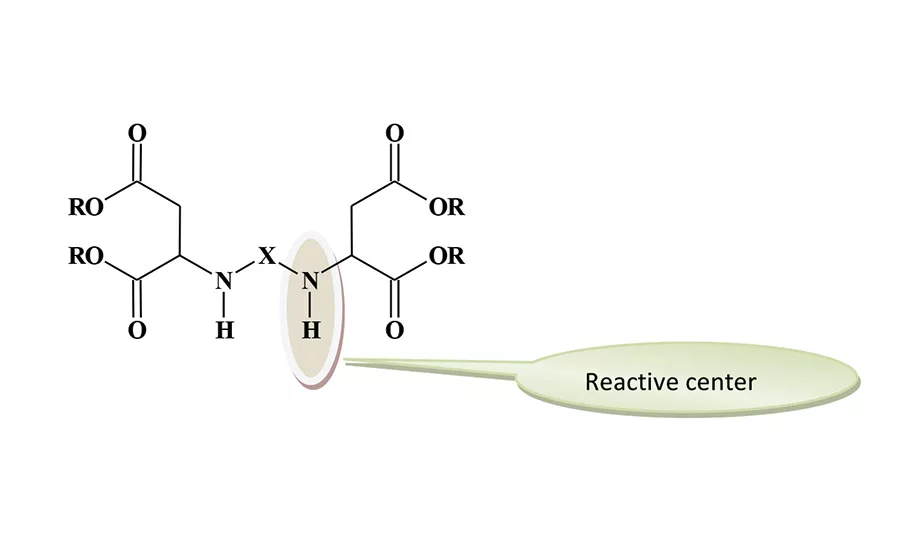
Figure 1. The polyaspartic ester structure showing the reactive center.
March 1, 2016

I work in the technical department developing coatings based on various polymer backbones. I am familiar with typical polyurethane raw materials, but have recently become aware of polyaspartic coatings. Could you provide an overview of this technology?


The polyaspartic coatings technology has been available since the 1990s and is an extension of polyurethane chemistry. It is based on aliphatic polyisocyanates and a specialized type of co-reactant: polyaspartic esters, which are amine functional. These two-component systems are known for fast curing speeds, leading to significant increases in productivity. They are used in a range of applications, including metal coatings in bridge beams, rail cars, sports stadiums, offshore marine applications, and a variety of concrete coatings.

The productivity increases are not based on fast curing speeds alone. This technology has permitted for some basic changes as to how the finished coating is produced. Polyaspartic technology has made it possible in some instances to move from a conventional three-layered paint system (zinc-rich primer/epoxy/polyurethane topcoat) to a two-layer system consisting of the zinc-rich primer/polyaspartic topcoat. This has been achieved in the highly demanding corrosion protection on steel application. Direct-to-metal (DTM) coating applications are also possible with polyaspartics, and productivity is improved with the elimination of a primer step. The DTM process produced a 30% reduction in labor time in a railcar application. A generic structure for the polyaspartic ester is shown in Figure 1.

The reactive groups are the secondary amines. The sterically hindered environment of these groups reduces their reactivity compared to the reaction of typical secondary amines with polyisocyanates. The overall reactivity of the aspartates can be adjusted by changing the “X” group to influence the degree of steric hindrance. In general, the reactivity falls between the very fast curing of a polyurea polymer and the slower reaction rate of a typical polyurethane. The available grades of polyaspartic esters were designed to produce different reaction rates and can be blended to achieve the desired curing profile. The degree of steric hindrance has a limited influence on the film properties of the coating film.

The curing rate of a polyaspartic ester coating is strongly influenced by environmental conditions. As with most systems, the curing rate increases with temperature, but in this instance the rate is also greatly accelerated with increasing humidity. The second generation of polyaspartic ester technology produces formulations that are more robust and show more consistent curing times over a range of humidity levels.

Polyaspartic ester coatings formulations are unique in that they cure at a relatively high rate, but at the same time have a long enough pot life that they can be applied without the need for plural-component impingement mixing equipment. The pot life in general terms is comparable to the drying time of the coating. Once the coating is applied to the substrate, it is exposed to the catalytic influence of ambient water and the curing reaction accelerates. This curing profile permits polyaspartic coatings to be applied manually with a brush or roller. Polyaspartic coating technology should be considered if the application calls for a high-performance coating with a long open time and a fast cure profile.


For additional information on the topics addressed or to ask another question, email jeff.dormish@covestro.com with the subject line “Polyurethane Q&A.”


Any views or opinions expressed in this column are those of the author and do not represent those of ASI, its staff, Editorial Advisory Board or BNP Media.

KEYWORDS: performance coatings polyurethanes

Share This Story

Looking for a reprint of this article?
From high-res PDFs to custom plaques, order your copy today!

Dormish

Jeffrey F. Dormish, Ph.D., holds the position of Research Fellow and is responsible for the development of new polyurethane adhesive applications, with a focus on waterborne raw materials.

Dr. Dormish joined Covestro LLC (then known as Bayer) in 1980. Since that time, he has held various research and application development positions of increasing responsibility, and worked in polyurethane research at Bayer AG in Germany for two years. He has a bachelor’s degree in chemistry from the University of Dayton and a doctorate in chemistry from the Pennsylvania State University. For additional information on the topics addressed or to ask another question, email jeff.dormish@covestro.com with the subject line “Polyurethanes Q&A.” 

Recommended Content

JOIN TODAY
to unlock your recommendations.

Already have an account? Sign In

  • mouse in hole

    Using Foam Sealants for Pest Prevention

    According to the National Pest Management Association,...
    Finished Adhesives and Sealants
    By: Kevin Corcoran
  • linked network nodes

    Using the Power of AI for Adhesive and Sealant Formulation

    With the help of software solutions, adhesive formulators...
    Finished Adhesives and Sealants
    By: Karen Parker
  • top20-hero.jpg

    2024 ASI Top 20: Leading Global Manufacturers of Adhesives and Sealants

    ASI's annual ranking of the top 20 global adhesive and...
    Pressure-Sensitive Adhesives (PSAs)
Manage My Account
  • eMagazine Issues
  • Newsletters
  • Online Registration
  • Manage My Preferences
  • Subscription Customer Service

More Videos

Popular Stories

image of a graph representing markets

Sika Announces Acquisition of Gulf Seal in Saudi Arabia

Picture of two men and one woman in dark suits

Bodo Möller Chemie Makes Management Change for CASE Business Unit

news on internet screen

Henkel Posts Positive Organic Growth for Third Quarter, Driven by Adhesives Technologies Business

ASI Top 20 website

Events

January 1, 2030

Webinar Sponsorship Information

For webinar sponsorship information, visit www.bnpevents.com/webinars or email webinars@bnpmedia.com.

View All Submit An Event

Products

Structural Adhesives: Properties, Characterization and Applications

Structural Adhesives: Properties, Characterization and Applications

See More Products

ASI CASE EBOOK

Related Articles

  • bayer jeff dormish

    Q&A About Polyurethanes: Coatings Raw Materials

    See More
  • Dormish headshot

    Q&A About Polyurethanes: Increasing Market Requests for Sustainable Adhesives

    See More
  • Bayer equation

    Q&A About Polyurethanes

    See More

Related Products

See More Products
  • acc.jpg

    Adhesives, Coatings and Consolidants, 3E

  • nanostructured.jpg

    Nanostructured Thin Films and Coatings Mechanical Properties

  • 9780367877118.jpg

    Corrosion Control Through Organic Coatings

See More Products
×

Keep the info flowing with our newsletters!

Get the latest industry updates tailored your way.

JOIN TODAY!
  • RESOURCES
    • Advertise
    • Contact Us
    • Directories
    • Manufacturing Division
    • Store
    • Want More
  • SIGN UP TODAY
    • Create Account
    • eMagazine
    • Newsletters
    • Customer Service
    • Manage Preferences
  • SERVICES
    • Marketing Services
    • Reprints
    • Market Research
    • List Rental
    • Survey & Sample
  • STAY CONNECTED
    • LinkedIn
    • Facebook
    • Youtube
    • X (Twitter)
  • PRIVACY
    • PRIVACY POLICY
    • TERMS & CONDITIONS
    • DO NOT SELL MY PERSONAL INFORMATION
    • PRIVACY REQUEST
    • ACCESSIBILITY

Copyright ©2025. All Rights Reserved BNP Media.

Design, CMS, Hosting & Web Development :: ePublishing