Coming Clean
A
new styrene dissolver can save time and money for manufacturers.
 For today’s resin
manufacturers, fouled reactors after production batches are a given. The
advancement of resin formulations to meet durability, performance and
environmental standards has resulted in production tanks and reactors that are
more difficult to clean, causing production downtime issues. When a reactor is
not in full production mode, it is not generating profit. The importance of
dependable cleaning performance is increased even more during peak demand
times, when reactor availability for production is crucial.
For today’s resin
manufacturers, fouled reactors after production batches are a given. The
advancement of resin formulations to meet durability, performance and
environmental standards has resulted in production tanks and reactors that are
more difficult to clean, causing production downtime issues. When a reactor is
not in full production mode, it is not generating profit. The importance of
dependable cleaning performance is increased even more during peak demand
times, when reactor availability for production is crucial.
As such, progressive manufacturers know that vessel cleaning cannot be an afterthought; a program must be in place to effectively manage this natural cost center, like any other activity in the plant. The ongoing dilemma is how to do it quickly, completely and compliantly.
PICO Chemical Corp., a specialty manufacturer of technologically advanced coatings removers, works with plants to provide efficient and cost-effective cleaning solutions. Through the implementation of environmentally compliant, water-based chemical concentrate formulations, PICO has helped plants achieve significantly reduced reactor downtime and waste disposal through the development of customized cleaning formulations. Recently, the company worked with a plant that was struggling to find an answer for their reactor cleaning difficulties. The result was the development of a new styrene dissolver, PICO PS 1025 Reactor Cleaning Accelerator.
Flammable solvents are risky to work with. Further, they are inefficient on today’s advanced water formulations. Contracting out the cleaning may get the job done, but it generally means a long period of downtime and an expensive fixed charge per occurrence. In addition, plants lose control and still have liability concerns. Straight caustic boilouts are generally time consuming, incomplete and dangerous. The caustic does not rinse free from the interiors, often requiring another process in passivation and extensive rinsing. Further, the material gets saturated quickly, requiring frequent disposal. At times, avoidance is the option of choice if there is no confident and reliable way to get the job done. Unfortunately, the buildup issues don’t go away, and this practice will catch up with plants quickly.
High production demands made reactor time or availability paramount. However, efforts to clean the reactors reliably, particularly stubborn styrene resins, were futile and resulted in long periods of costly downtime and risky, laborious manual followup. The cleaning attempts lasted as long as 24 hours and left incomplete results. Accumulations were compounding on baffles, agitator shafts and blades, creating a snowball buildup effect, which then caused heat transfer issues that led to much longer production process times. Reduced production capacity, filtering woes and contamination threats also surfaced.
The company contacted PICO. An initial meeting took place at the manufacturing site to survey the plant capacities and understand the cleaning objectives. Representative resin product samples were provided to PICO for laboratory work. Using the field samples, PICO chemists simulated the reactor fouling and conditions to prepare for cleaner testing. The company engineered a single water-based material to perform maximum cleaning effectiveness on the entire line of resins. In addition to its quick, complete performance, the material meets all environmental compliance standards. As a result, PICO PS 1025 Reactor Cleaning Accelerator was developed. It performed convincingly, quickly, completely and reliably in repeated lab studies, and was presented to the customer for acceptance.
The customer decided to use the reactor cleaning accelerator. The reactor was filled with a dilution of the product concentrate in water. The reactor was heated to 180°F with mild agitation applied. After eight hours of cleaning time, the operators were pleased with the results and decided to drain the reactor. The PS 1025 cleaned the entire interior, removing and disintegrating all recent and aged accumulations from every crevice of space. No manual follow up was required; the residue-free surface was ready for immediate production.
The cleaning solution was sent to a holding tank for later use. Upon cool down, the PS 1025 is designed to make the removed reactor resins “settle out” of the cleaner solution in a dissolved slurry state. The customer removes the accumulation as it increases, and continues to reuse the cleaner. As part of the entire service package, field samples are submitted to the PICO lab for maintenance work. An optimum concentration of the reactor cleaner based on field feedback is established that can clean within the desired time frame. The PS 1025 has performed many subsequent times in this plant without failure for complete and reliable removal of not only styrenes but the entire product line. This extended reuse has further accelerated the return on investment. As a result, the cost to clean on a per-cleaning basis is down sharply. The cleanings are not measured as a fixed cost now but a variable cost, translated to meaning the more cleanings performed, the lower the cost per cleaning.
“There is a lot of responsibility that PICO accepts because our customers depend on us to help them have reliably clean tanks and reactors to meet production demands,” says Ted Meehan, vice president-Sales. “Our goal is to delight them through innovative technologies, prompt delivery and unwavering service.”
While cleaning dirty reactors is a less glamour part of the coatings business, he said, the company provides its customers great value and directly bolsters their bottom line.
“And there is a lot of glamour to be found in saving time and money,” Meehan said.
For more information, phone (708) 757-4910 or e-mail info@picochemical.com.
Before
After
As such, progressive manufacturers know that vessel cleaning cannot be an afterthought; a program must be in place to effectively manage this natural cost center, like any other activity in the plant. The ongoing dilemma is how to do it quickly, completely and compliantly.
PICO Chemical Corp., a specialty manufacturer of technologically advanced coatings removers, works with plants to provide efficient and cost-effective cleaning solutions. Through the implementation of environmentally compliant, water-based chemical concentrate formulations, PICO has helped plants achieve significantly reduced reactor downtime and waste disposal through the development of customized cleaning formulations. Recently, the company worked with a plant that was struggling to find an answer for their reactor cleaning difficulties. The result was the development of a new styrene dissolver, PICO PS 1025 Reactor Cleaning Accelerator.
A Backdrop
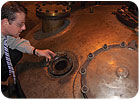
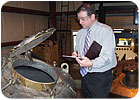
While a company may make the same line of products in plants locally and internationally, with processes streamlined for uniformity, each plant might address reactor cleaning differently. Often, plants deal with the issues in isolation and may not know where to turn for assistance. However, they are not alone in dealing with the common issues and goals associated with cleaning. Some of these issues include retaining product quality, reliable scheduling to meet deadlines, safety and environmental concerns, and minimizing waste and disposal. Some goals for vessel cleaning include minimizing downtime from activities associated with cleaning, maximizing site production output, optimization of return on plant assets and producing a meaningful return on capital investments.On-site analysis of a reactor.
Dirty Little Secrets
When cleaning dirty reactors, many variables must be considered in order to accurately identify the actual costs incurred that impact the bottom line. That is, the cost of cleaning reactors is not limited to what’s on the invoice. The true cost includes the purchase of cleaning material(s), direct labor, the amount of cleaning time required (including setup/take down), cleaning performance (“results”), production opportunity lost through downtime, reliability of scheduling, meeting order ship dates, waste disposal, contamination potential (scrapped/reworked batches), efficiency of temperature transfers (process times), product quality, filtering, confined space entry risks, safety, equipment, training, and intangibles.A Historical Perspective
Past vessel-cleaning methods have proven to be time consuming, incomplete, hazardous, dangerous and pricey. Previously, direct manual labor or confined space entry has and may still be used. For safety and liability reasons alone, this method isn’t practical or prudent today. High-pressure water blasting or cryogenics may chunk off accumulations, but they will not get hard-to-reach places such as under agitator blades or behind baffles. In addition, heaps of solids at the bottom of the reactor are not pumpable, often requiring manual entry for removal.Flammable solvents are risky to work with. Further, they are inefficient on today’s advanced water formulations. Contracting out the cleaning may get the job done, but it generally means a long period of downtime and an expensive fixed charge per occurrence. In addition, plants lose control and still have liability concerns. Straight caustic boilouts are generally time consuming, incomplete and dangerous. The caustic does not rinse free from the interiors, often requiring another process in passivation and extensive rinsing. Further, the material gets saturated quickly, requiring frequent disposal. At times, avoidance is the option of choice if there is no confident and reliable way to get the job done. Unfortunately, the buildup issues don’t go away, and this practice will catch up with plants quickly.
A Case Study
A global company manufactures a combination of various acrylics, vinyls, emulsions and styrene resins. In addition, they make several other product lines in reactors that are not dedicated and where production is arbitrary, driven by customer orders. As a result, they have a random product mix and large amounts of resin buildup.High production demands made reactor time or availability paramount. However, efforts to clean the reactors reliably, particularly stubborn styrene resins, were futile and resulted in long periods of costly downtime and risky, laborious manual followup. The cleaning attempts lasted as long as 24 hours and left incomplete results. Accumulations were compounding on baffles, agitator shafts and blades, creating a snowball buildup effect, which then caused heat transfer issues that led to much longer production process times. Reduced production capacity, filtering woes and contamination threats also surfaced.
The company contacted PICO. An initial meeting took place at the manufacturing site to survey the plant capacities and understand the cleaning objectives. Representative resin product samples were provided to PICO for laboratory work. Using the field samples, PICO chemists simulated the reactor fouling and conditions to prepare for cleaner testing. The company engineered a single water-based material to perform maximum cleaning effectiveness on the entire line of resins. In addition to its quick, complete performance, the material meets all environmental compliance standards. As a result, PICO PS 1025 Reactor Cleaning Accelerator was developed. It performed convincingly, quickly, completely and reliably in repeated lab studies, and was presented to the customer for acceptance.
The customer decided to use the reactor cleaning accelerator. The reactor was filled with a dilution of the product concentrate in water. The reactor was heated to 180°F with mild agitation applied. After eight hours of cleaning time, the operators were pleased with the results and decided to drain the reactor. The PS 1025 cleaned the entire interior, removing and disintegrating all recent and aged accumulations from every crevice of space. No manual follow up was required; the residue-free surface was ready for immediate production.
The cleaning solution was sent to a holding tank for later use. Upon cool down, the PS 1025 is designed to make the removed reactor resins “settle out” of the cleaner solution in a dissolved slurry state. The customer removes the accumulation as it increases, and continues to reuse the cleaner. As part of the entire service package, field samples are submitted to the PICO lab for maintenance work. An optimum concentration of the reactor cleaner based on field feedback is established that can clean within the desired time frame. The PS 1025 has performed many subsequent times in this plant without failure for complete and reliable removal of not only styrenes but the entire product line. This extended reuse has further accelerated the return on investment. As a result, the cost to clean on a per-cleaning basis is down sharply. The cleanings are not measured as a fixed cost now but a variable cost, translated to meaning the more cleanings performed, the lower the cost per cleaning.
On-site analysis of a reactor.
The Bottom Line
After implementing the PS 1025 reactor cleaner, the customer has experienced a measurable increase in process efficiencies and production capacity. Specifically, the previous practice of cleaning once per week for 24 hours with marginal results is now once per week for eight hours with convincing results. In effect, they have gained 16+ hours per week of additional production capacity without the addition of any capital or staffing. The payback has been immediate.“There is a lot of responsibility that PICO accepts because our customers depend on us to help them have reliably clean tanks and reactors to meet production demands,” says Ted Meehan, vice president-Sales. “Our goal is to delight them through innovative technologies, prompt delivery and unwavering service.”
While cleaning dirty reactors is a less glamour part of the coatings business, he said, the company provides its customers great value and directly bolsters their bottom line.
“And there is a lot of glamour to be found in saving time and money,” Meehan said.
About the Company
PICO Chemical Corp., Chicago Heights, IL, is a leader of cleaning technology for the removal of paint, ink, resin and adhesives for the coatings industry worldwide since 1976. PICO has an extensive and established line of Workhorse® products for cleaning all resin and coatings types from materials of construction, including stainless steel, carbon steel, plastic, aluminum, and glass.For more information, phone (708) 757-4910 or e-mail info@picochemical.com.
Looking for a reprint of this article?
From high-res PDFs to custom plaques, order your copy today!