How Incomplete Mixing Impacts Adhesive & Sealant Performance
The mixing process of an adhesive or sealant can make or break the product.
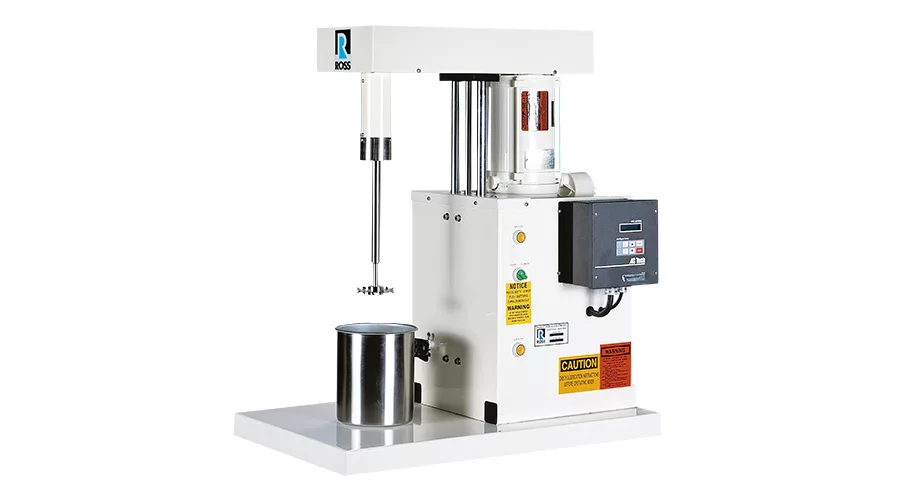
The ROSS Laboratory High Speed Disperser.
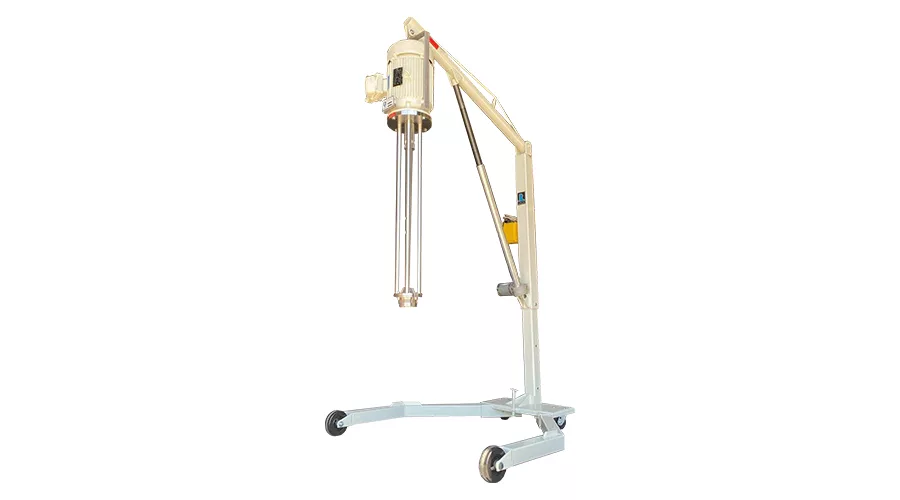
The ROSS High Shear Mixer with Mobile Lift.
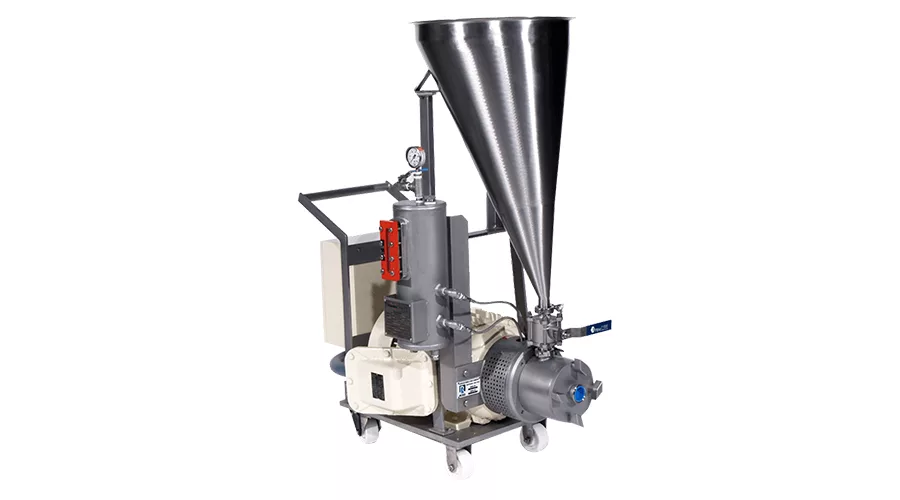
The ROSS Inline High Shear Mixer with SLIM Powder Injection Technology.
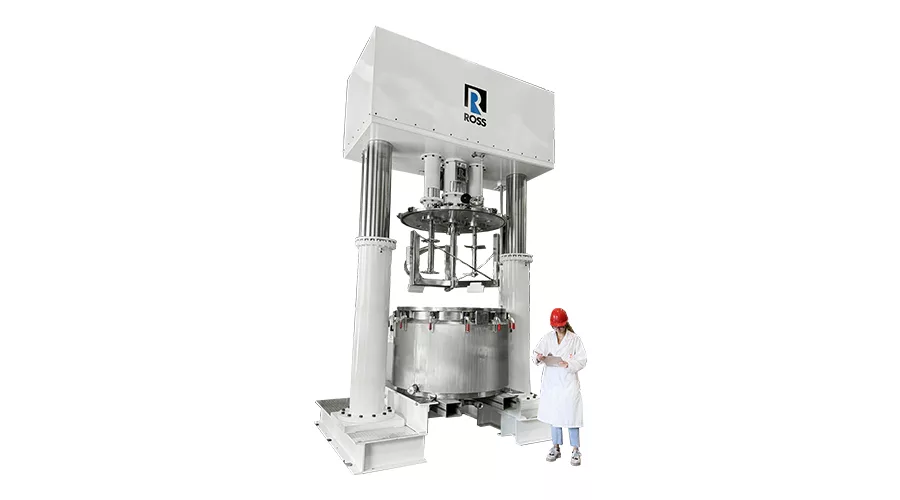
The ROSS 300-gallon VersaMix Multi Shaft Mixer.
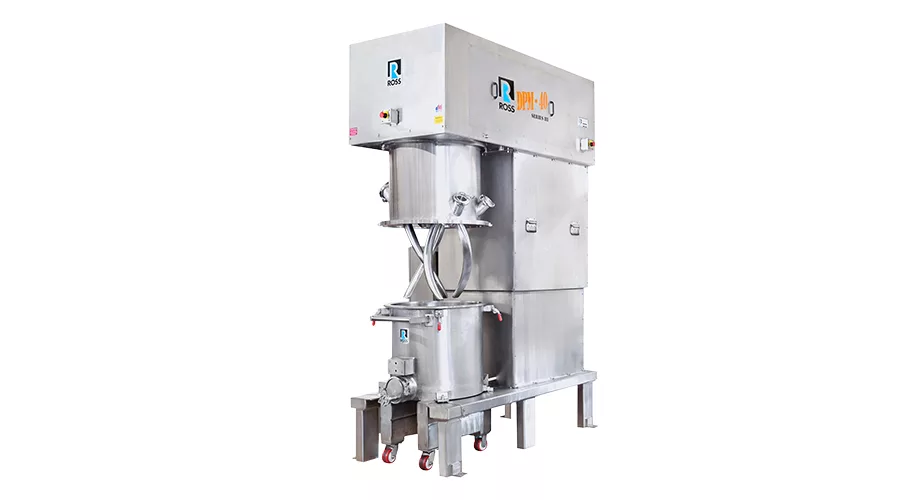
The ROSS 40-gallon Double Planetary Mixer with “HV” High-Viscosity Blades.
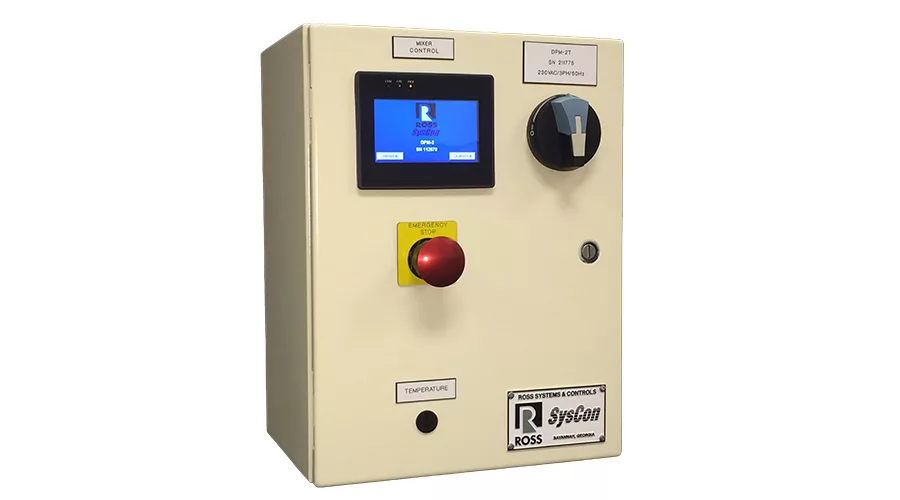
ROSS SysCon NEMA 12 Control Panel with Touchscreen.
The manufacturing of adhesives and sealants is a fine balance of raw materials and complete mixing to achieve the correct viscosity, cure rate, bond strength, and shelf stability. While the formulation technology gets much attention, the mixing process can quite literally make or break a product.
From the homogenization of adhesive emulsions to the dissolution of polymers into solvents, or mastication of rubber and let-down of master batches, the type of mixing equipment directly impacts the final product's performance, appearance, and stability. This article explores the pitfalls of improper mixing, its causes and offers solutions to ensure high-performance products.
The Consequences of Incomplete Mixing
Incomplete mixing can show up in many ways including visible agglomerates, entrapped air, or phase separation. Even when defects aren’t visible to the eye, they can still result in performance and stability issues. Poor dispersion of fillers, thickeners, catalysts, or hardeners can lead to uneven viscosity or inconsistent curing often resulting in weak bonds, reduced durability, and unpredictable performance. This is especially true in high-performance adhesive formulations used in structural bonding, electronics, aerospace, or automotive sealing, where consistency and reliability are extremely critical.
Root Causes of Common Processing Issues
More often than not, mixing problems arise from equipment that's not compatible with the material, not from the formulation. Adhesives span a wide range of viscosities, from thin resins to heavy pastes, and each demands a tailored approach. Low shear mixers may be ineffective at dispersing fine solid or generating stable emulsions, while high shear mixers can damage shear-sensitive ingredients. In some cases, extended mixing is necessary for full incorporation. In other applications, overmixing can raise temperatures, cause curing, or affect rheology. Preventing these problems starts with understanding the material’s behavior and matching it with the appropriate mixer, along with carefully controlling speed, time, and temperature.
.
Equipment Selection and Best Practices
Successful mixing requires matching equipment capabilities to specific formulation demands. No single mixer design suits every application, making proper selection critical for optimal results.
High-speed dispersers are commonly used for blending low to medium-viscosity adhesives, films, coatings and polymers. The saw-tooth open disc blades travel at roughly 5,000 feet per minute and are designed to induce vigorous turbulent flow within a low-viscosity batch. It creates a vortex into which dry ingredients like fillers, pigments, and thickeners can be poured for fast wetting while shear forces help break up agglomerates.
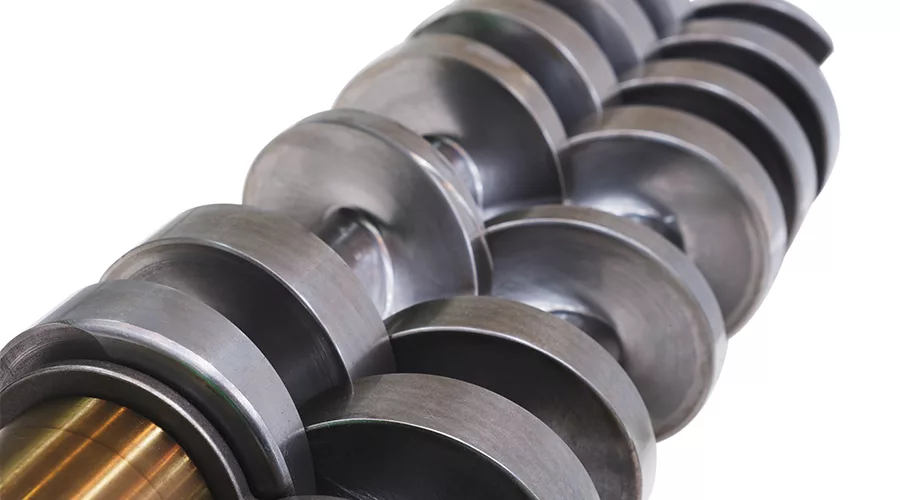
High shear mixers provide specialized solutions for challenging powder wetting applications. ideal for reducing the size of agglomerates and droplets in fine dispersions and emulsions to create scalable, highly repeatable products. Comprised of a rotor that turns at high speed within a stationary stator, materials are continuously drawn into one end of the mixing head and expelled at high velocity through the openings of the stator. As fast as material is expelled, more is drawn into the bottom of the rotor/stator generator, which promotes continuous flow and complete mixing.
Sub-surface powder injection systems maximize the efficiency of high shear mixers when incorporating powdered materials. The modified rotor/stator assembly is specially designed to create negative pressure (vacuum) behind the rotor, which can be used as the motive force to inject powdered (or liquid) ingredients directly into the high shear zone. This approach eliminates powder dusting, reduces air entrainment, and ensures immediate exposure to maximum shear forces resulting in faster incorporation times, improved dispersion quality, and reduced overall processing cycles.
Multi-shaft mixers are ideal for mixing adhesive slurries, cements and pastes that are high-solids, viscous formulations that cannot be processed in a single disperser or rotor/stator mixer. They combine a high-speed disperser and/or a high shear rotor stator with a low-speed anchor blade. This highly customizable configuration is effective for medium- to high-viscosity materials that require both shear and bulk movement. The anchor feeds the product towards the disperser blade and rotor stator ensuring that the mixture is constantly in motion.
Double planetary mixers are designed to handle extremely thick, non-flowing materials such as filled epoxies, silicone sealants, rubber-based adhesives, or reactive urethanes. The mixing blades revolve on their own axes while orbiting the vessel, imparting intense kneading and turnover with minimal heat buildup. These mixers are often equipped with vacuum capability and jacketed vessels for temperature control.
Control Key Process Parameters
Consistent adhesive quality depends not only on the mixer type, but also on how well the mixing process is controlled. Modern mixing systems are often equipped with automated control panels and programmable logic controllers (PLCs) that allow operators to set and monitor multiple parameters throughout the mix cycle. These systems can regulate motor speeds, switch between mixing stages, apply vacuum or inert gas environments, and manage heating or cooling cycles — all from a centralized interface. Advanced panels may include recipe storage, real-time data logging, and touchscreen interfaces for intuitive operation.
Automation improves repeatability and gives operators greater flexibility to fine-tune the process for different adhesive formulations or batch sizes. It also enhances safety by minimizing human error and ensuring the process stays within the desired operational limits.
Ultimately, the best mixer for a given adhesive depends on a variety of factors — viscosity, solids loading, reactivity, sensitivity to shear or temperature, order of material addition, vacuum/pressure, and batch size, to name a few. Evaluating these characteristics during mixer selection or scale-up can help avoid dispersion issues and improve overall product performance.
To learn more about Charles Ross & Son Company, visit www.mixers.com.
Looking for a reprint of this article?
From high-res PDFs to custom plaques, order your copy today!