Trends Transforming the Adhesives Industry
Three interconnected forces are driving the transformation of the adhesives industry.

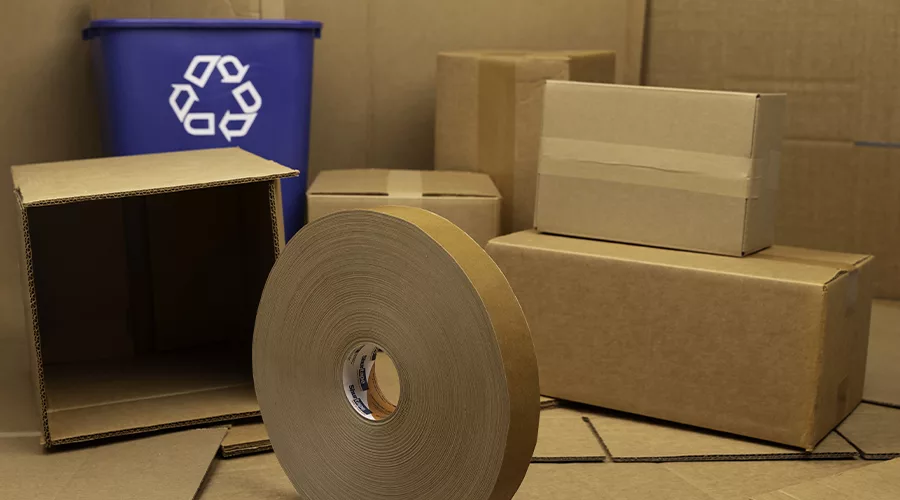
Recycled Series Film Tapes are manufactured from 90% Post-Consumer Recycled Polyester sourced from PET bottles.
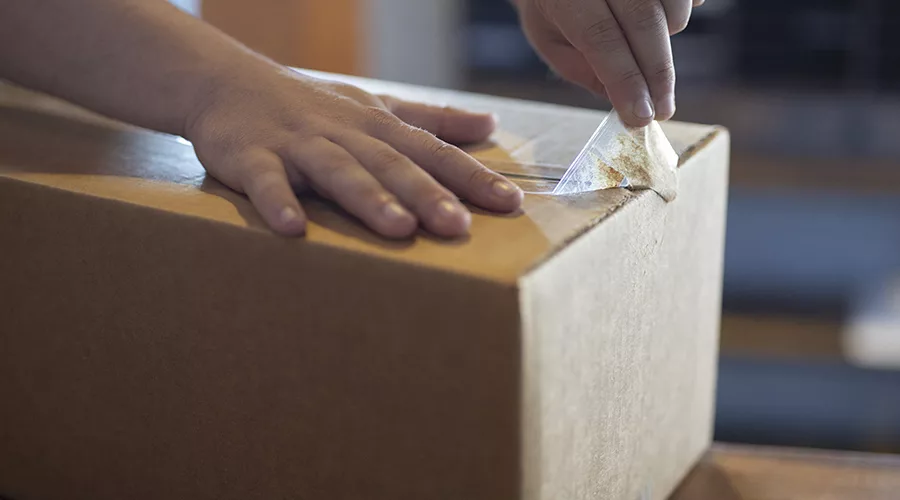
A knifeless opening seal protects workers from injury.
The adhesive industry stands at a pivotal moment. As consumer expectations evolve and regulatory landscapes shift, manufacturers are discovering that the traditional approaches to packaging tape development and application are no longer sufficient. Today's market demands solutions that not only perform exceptionally but also address critical concerns around safety, sustainability, and operational efficiency.
This transformation is being driven by three interconnected forces: the urgent need for environmental responsibility, the initiative to enhance workplace safety, and the pursuit of operational excellence through automation. Manufacturers are increasingly recognizing these as separate considerations. These three forces work best when woven together into a unified strategy that addresses the complete needs of modern packaging operations.
The importance of this shift is significant. Extended Producer Responsibility (EPR) regulations are placing new accountability on manufacturers for the entire life cycle of their packaging materials1. At the same time, workplace safety incidents continue to drive up costs and liability concerns, while competitive pressures demand greater efficiency and waste reduction. The companies that will thrive in this evolving landscape recognize these challenges not as obstacles, but as opportunities to innovate and differentiate.
At the heart of this evolution lies a fundamental shift in how we approach packaging tape development. The focus has expanded beyond basic performance metrics like adhesion strength and durability to encompass recyclability, automation compatibility, and injury prevention.
Recyclable and Responsible Materials
The packaging industry's growing need has facilitated a fundamental reimagining of tape construction and materials. Where virgin plastics once dominated, sustainable alternatives are now taking center stage, driven by both consumer demand and regulatory pressure.
The rise of sustainable tape backings represents one of the most significant developments in the adhesive industry. These innovative materials, crafted from renewable and recycled sources, demonstrate that environmental responsibility and performance excellence are not mutually exclusive. Many of these sustainable alternatives exceed the performance benchmarks set by their traditional counterparts.
Leading this transformation are products like Shurtape's FSC® Certified Curbside Series Paper Tapes (FSC-C154304), which revolutionize the end-of-life experience for packaging materials. These tapes can be recycled directly on the box, eliminating the time-consuming and often overlooked step of tape removal before recycling. This simple innovation addresses a major pain point in the recycling process while maintaining the strength and adhesion properties that packaging operations demand.
Equally impressive are the Recycled Series Film Tapes, manufactured from 90% Post-Consumer Recycled Polyester sourced from PET bottles. These products exemplify the circular economy in action, transforming waste streams into high-performance packaging solutions.
This shift toward sustainable materials is being accelerated by changing consumer values and increasingly stringent EPR regulations. Manufacturers are finding themselves accountable not just for product performance, but for their entire environmental life cycle. This accountability extends from raw material sourcing through end-of-life disposal or recycling1.
The environmental benefits extend far beyond waste reduction. By incorporating post-consumer recycled materials, these sustainable tapes significantly reduce the demand for virgin plastic in case sealing operations. This reduction has cascading effects throughout the supply chain, from decreased petroleum consumption to reduced carbon emissions from plastic production.
The credibility of these environmental claims is reinforced by rigorous third-party certifications. FSC Certification ensures that paper-based products come from responsibly managed forests, while Western Michigan University curbside recyclability certifications provide verified assurance that these products can indeed be processed through existing municipal recycling infrastructure. These certifications are becoming increasingly important as greenwashing concerns rise and stakeholders demand transparency in environmental claims2.
Perhaps most importantly, these sustainable materials demonstrate that environmental responsibility doesn't require performance compromises. Modern recycled and renewable materials maintain the adhesion strength, temperature resistance, and durability that packaging operations require while delivering superior environmental profiles.
Automation Meets Adhesives
The integration of automation technology with adhesive applications is transforming packaging operations, delivering unprecedented levels of efficiency while simultaneously reducing waste and enhancing safety3. This convergence represents a fundamental shift from manual, intuition-based tape application to precise, data-driven systems that optimize every aspect of the packaging process.
ShurSEAL® Packaging Solution by Shurtape exemplifies this evolution, demonstrating how intelligent automation can revolutionize tape application. The system maximizes wipe-down effectiveness while minimizing tape waste, a combination that seemed contradictory under traditional manual application methods. Through precise control of application pressure, speed, and positioning, automated systems ensure consistent, optimal tape placement that maximizes adhesion while using exactly the amount of tape required for secure package closure.
This precision enables right-sizing of tape application, a concept that represents a paradigm shift in packaging efficiency. Rather than applying tape with generous margins to account for human variability and ensure adequate coverage, automated systems can calculate and apply the precise amount needed for each specific package configuration. The result is significant tape waste reduction without compromising package security.
Beyond efficiency gains, automation is addressing one of packaging operations' most persistent safety challenges: knife-related injuries. Traditional tape application often requires workers to cut tape by hand, creating numerous opportunities for lacerations and other injuries. These incidents not only cause human suffering but also impose significant costs through workers' compensation claims, productivity losses, and regulatory compliance issues.
Folded Edge® Technology from Shurtape represents an innovative approach to this safety challenge. By folding the edges of the packaging tape as it's applied to the box, this knifeless opening seal protects workers from injury; the technology protects workers from injury while maintaining operational efficiency. The reduction in knife injury risk has far-reaching implications, protecting not just people, but also products from contamination risks and profits from the hidden costs of workplace injuries.
Taking automation capabilities even further, EGT20/30U Case Erectors and SGT20/30U Case Sealers by Shurtape offer unprecedented flexibility by providing the option to seal both RSC Regular Slotted Container (RSC) and Half Slotted Container (HSC) corrugated cases with either pressure-sensitive tapes or hot-melt glue on the same machine. This dual-capability approach eliminates the need for separate equipment while providing manufacturers with the flexibility to optimize their sealing method based on specific product requirements, shipping conditions, or cost considerations.
The versatility extends to recipe management, with the ability to save up to 30 carton recipes for various products that can be sealed with either method. This feature enables manufacturers to quickly switch between different package configurations and sealing approaches without manual recalibration, significantly reducing changeover time and minimizing the potential for human error.
Tool-free quick changeovers further enhance operational efficiency, allowing operators to switch between different case sizes and sealing configurations without requiring specialized tools or extensive downtime. Combined with automatic case squaring capabilities that ensure consistent, professional-looking packages regardless of corrugated material variations, these systems deliver the reliability and consistency that modern packaging operations demand.
Looking Ahead: Sustainability and Efficiency in Sync
The adhesive industry is experiencing a fundamental shift where sustainability, automation, and safety work together rather than compete. Modern eco-friendly packaging tapes now match or exceed conventional alternatives in performance while delivering superior environmental benefits, debunking the myth that sustainable materials compromise quality.
Automation technologies are enhancing rather than replacing human capabilities, creating safer and more productive work environments. The most successful companies are integrating sustainability, automation, and safety into unified solutions, positioning themselves as industry leaders, while those treating these as separate concerns risk obsolescence.
Continuous advancement in materials and systems is essential for competitiveness. However, technology alone isn't sufficient. Successful implementation requires comprehensive training, change management, and stakeholder engagement to properly integrate new solutions into existing workflows.
Sustainable packaging tapes and automated application systems have evolved from trends to industry standards. Early adopters are already seeing significant benefits in cost reduction, risk mitigation, and market positioning, with advantages only increasing as technologies mature.
Organizations that view this transformation as an opportunity rather than a challenge will thrive by embracing integrated solutions. The industry's accelerating evolution demands immediate action. The question isn't whether this transformation will happen, but whether companies will lead it or be left behind.
As a product manager for Industrial Packaging Tapes at Shurtape Technologies, LLC, Joe Garvey is responsible for the product development and marketing support of the Shurtape Brand Packaging Tapes and ShurSEAL equipment categories. Learn more at https://www.shurtape.com/.
Article images courtesy of Shurtape.
References:
- Jones, M. (2025, April 24). Commentary: How EPR is transforming the packaging industry. Recycling Today. https://www.recyclingtoday.com/news/how-sustainability-regulations-are-reshaping-the-packaging-industry
- WMU Paper Pilot Plant. Western Michigan University. https://wmich.edu/pilotplants/recycling
Looking for a reprint of this article?
From high-res PDFs to custom plaques, order your copy today!