Optimizing Adhesives for Tankless Dispensing Systems
Tankless systems offer benefits including better adhesive flow without char, reduced energy usage, and elimination of popopens.


Technology is evolving rapidly—not only in the adhesive dispensing world, but in all of manufacturing—to meet ever-changing customer demands. New products launch more frequently than in the past, bringing new features and advanced controls to the market every few years.
As plants struggle to do more with less, managers must thoroughly evaluate all their equipment choices, looking for machines that operate at maximum efficiency while minimizing costs. Technology has developed a variety of ways to meet this need, and customers are increasingly requesting adhesive dispensing equipment that is easy to use, waste-reducing and low-maintenance. This equipment exists in the form of tankless dispensing systems, and demand is growing for adhesives that can work in these advanced systems.
How Tankless Technology Works
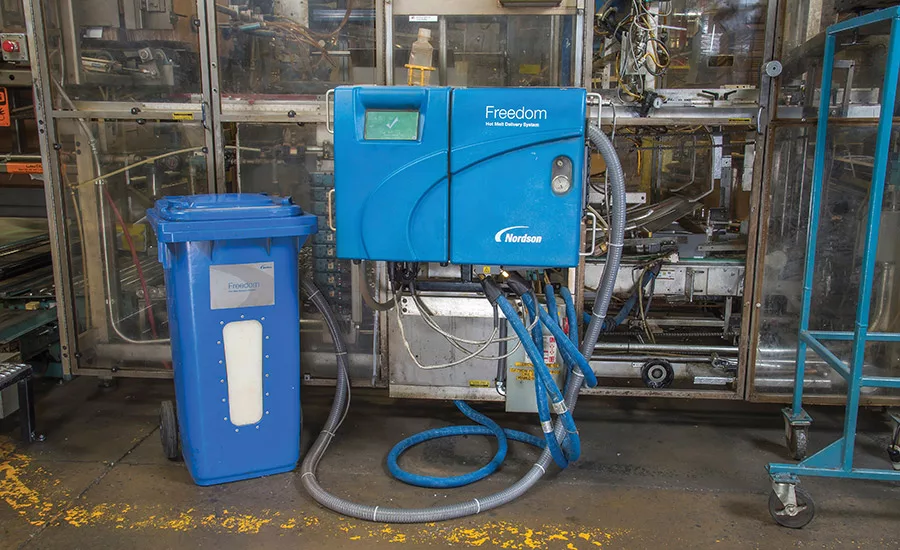
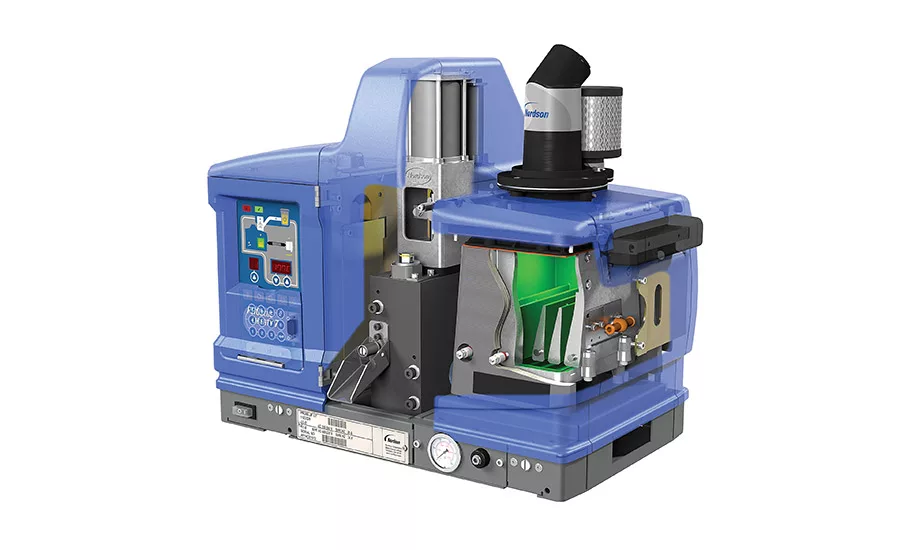
Reducing waste is key to an efficient manufacturing process; tankless adhesive dispensing systems offer customers a variety of ways to achieve this goal. A tankless system uses a melt-on-demand heated grid and a small reservoir to efficiently melt the adhesive granulate and then keep a small amount of molten adhesive ready for dispensing.
The reservoir holds an estimated 1 lb of molten adhesive, compared to the 5-20 lbs held by a traditional tank melter. A sensor monitors the level of adhesive and sends a low-level signal to the system to add a small amount of granulate. This process occurs at frequent intervals to keep the amount of molten adhesive relatively consistent and minimize thermal shock, which happens when a large amount of cold adhesive is introduced to the tank at once, dropping the temperature. The bulk adhesive granulate is stored in a large container at ambient temperature until it is automatically fed into the melter using pneumatic transport technology.
Click here for VIDEO: Tankless Hot Melt Systems
Tankless Benefits
Small reservoirs can reduce energy usage by an average of 10-38%; some tankless melters can reach the “ready” state up to 50% faster than a traditional tank melter. This results in more production uptime for the packaging line, and less energy wasted on keeping large volumes of adhesive melted. Advanced systems also have temperature setback settings, which can be used to keep adhesive warm during breaks without wasting energy holding the entire system at full temperature.
Adhesive degradation is one of the most visible signs of money loss in a melter. Each piece of char that breaks loose and clogs the system—causing downtime and maintenance—has a dollar amount attached to it. Melting adhesive on demand keeps char and sludge from developing inside the system, which reduces nozzle clogs and damaged modules—and lowers the amount of filter changes and system flushes that are required to keep the system fully operational.
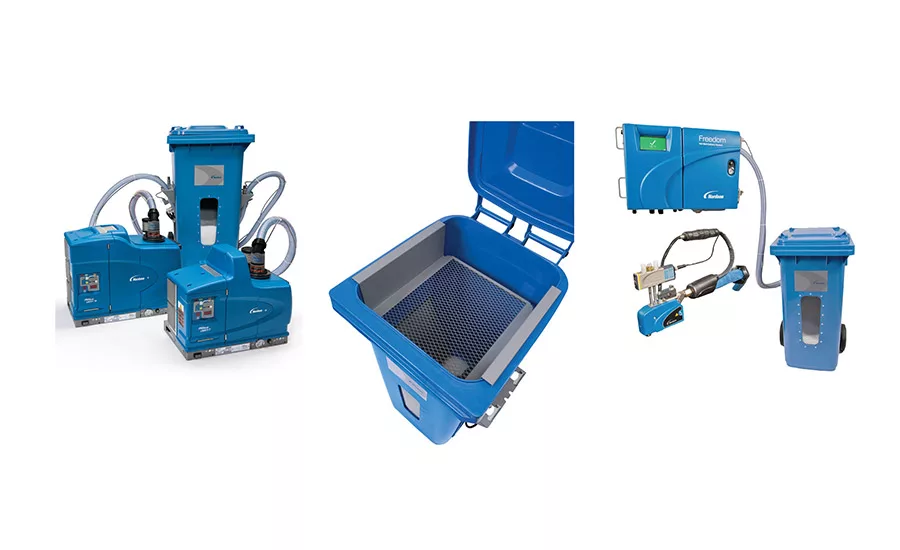
Tankless systems also incorporate auto-fill technology, which creates a closed system that keeps airborne particles and debris out of the adhesive, further reducing nozzle clogs and increasing uptime. Auto-fill systems improve operator safety by enabling the melter to be mounted out of the way—either inside or on top of the parent machine—reducing contact with hot surfaces and minimizing the amount of adhesive spilled on the floor. Automatic filling keeps adhesive levels and temperature consistent, improving the package bond strength and leading to less scrap or bad product that takes additional time to re-work.
A tankless system can also feature integrated components and intuitive controls. Operators are able to have full control of the dispensing process and adjust patterns with a few taps, switching to a stitched adhesive pattern immediately. By using intermittent beads, packagers are able to use their adhesive more precisely and efficiently to create a strong bond. It is no longer acceptable or affordable to apply excessive amounts of adhesive to seal a box. Adhesive costs have been volatile in the early 21st century, and manufacturers want to maximize their resources in anticipation of price spikes.
Compatible Adhesives
As previously mentioned, tankless systems typically incorporate auto-fill systems. The air-conveyed automatic filling process does limit the amount of adhesive styles that are currently compatible with tankless systems—pellets, pastilles and mini-slats are the current ideal shapes. However, even these preferred adhesives can create problems in the system. Adhesive granulate tackiness at elevated plant ambient temperatures and molten adhesive stability at the application temperature are also important factors in system performance. However, adhesive suppliers are realizing the benefits that tankless and auto-fill systems provide to their customers and are developing adhesives optimized and tested for these applications. In Europe, these fill-friendly adhesives are the norm. The rest of the globe is quickly catching up.
Powder and “fines” that are added to prevent the adhesive from sticking to itself can clog up auto-fill system filters during vacuum transfers. Adhesives that are tacky—especially when at elevated ambient temperatures—create bridging, “rat holing” and clumping, preventing adhesive from transferring into the melter. These adhesives can also clump and stick to the adhesive level sensor in the melter and potentially the inlet tube to the melter.
Technology has developed rapidly to address these adhesive compatibility issues. Large adhesive storage containers and optimized pump inlets minimize bridging and “rat holing” to keep adhesive flowing smoothly during the container-to-reservoir transfer. Improved thermal and ventilation management of melter lids help minimize sticky condensate issues.
Large grates at the top of the adhesive storage containers sift the adhesive granules apart as they are poured into the system, separating large clumps. This helps break apart the bits of adhesive that started sticking together in the bag, but it does not help keep the adhesive from re-clumping inside the system’s storage container as it waits to be transferred to the melter. An adhesive that’s developed and tested to be more resistant to sticking at elevated ambient temperatures can help prevent additional clumping issues.
Looking Ahead
Demand for adhesives that are optimized for tankless systems is rapidly growing, as reported tankless melter sales continue to grow beyond 20% of all melter sales. Soon, one in four melters sold will be a tankless dispensing system. As older tank melters need replacing, companies are recapitalizing with tankless systems.
Companies that have made the switch have noticed that adhesive is cleaner and flows better without char, energy usage is reduced, and pop-opens are basically eliminated. Operators are able focus on tasks more important than refilling the melter. Plants are able to meet strict energy usage regulations dictated by local governments, and using reliable adhesives in these systems can further maximize uptimes. Although tankless dispensing may not work for every adhesive and every application, opportunities abound.
For more information, visit www.nordson.com.
Looking for a reprint of this article?
From high-res PDFs to custom plaques, order your copy today!