Forty Years in the Real World: Why Silicone Sealants Still Lead the Way
A landmark study looks at how long sealants used in the construction industry can last.
As today's buildings become taller and more complex, with more intricate glazing creating ever more ambitious projects, the performance of adhesives and sealants has never been more crucial in the construction industry. These products play a vital part in ensuring long-term performance, preserving the integrity of the building envelope, maintaining energy efficiency, preventing moisture intrusion, all while resisting ever-higher wind pressures and accommodating structural movement.
And yet, the longevity of sealant performance can be hard to determine, and the question that always needs answering is how long they can actually last?
A landmark weathering study, conducted at the Atlas Weathering Test Site in Florida and now into its fifth decade, offers perhaps the most definitive answer to date. The long-term exposure study compares the performance of silicone, polyurethane, and acrylic-based construction sealants, revealing how different chemistries hold up against four decades of intense UV, humidity, temperature shifts, and storms. For architects, façade engineers, and specifiers, the results offer more than just lab data — as the test results clearly show, silicone sealants truly withstand the test of time.
The Test of Time
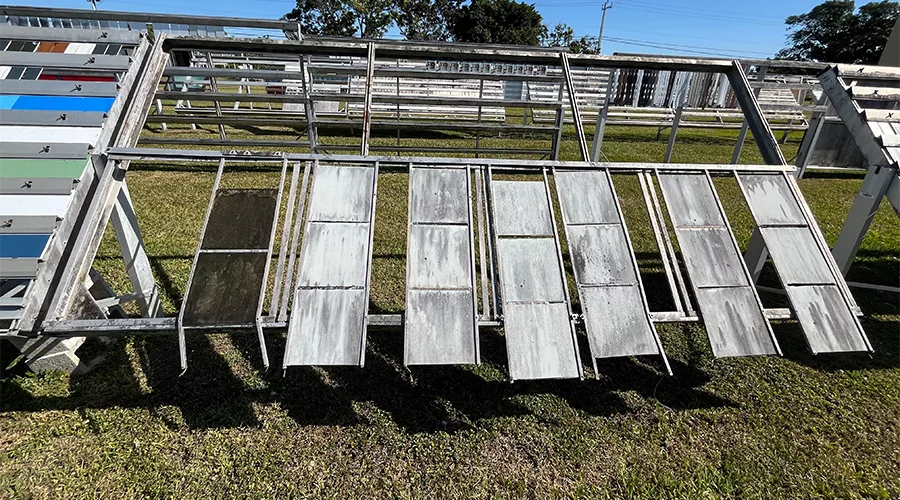
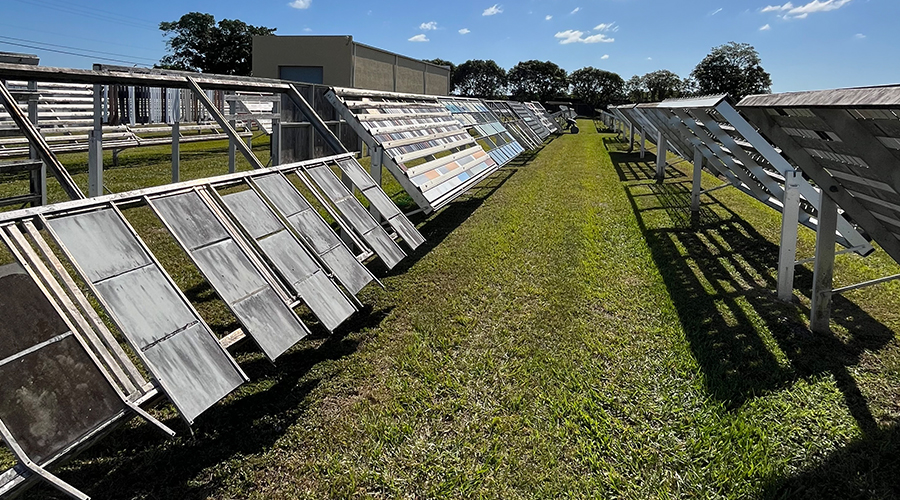
The comparative weathering study was launched in 1983 by GE Silicones and continued by Momentive Performance Materials when they acquired the business in 2006. The test features 13 commercially available sealants — nine silicones, three polyurethanes, and one acrylic — which were applied as sealant joints between glass and painted aluminum test panels. These were mounted outdoors at a 45° south-facing angle at the Atlas site in Florida, a subtropical region known for high levels of UV, humidity, and temperature. The 22-acre Atlas Weathering Test Site is also the first approved testing facility for the Cool Roof Rating Council.
The sealants came from six different manufacturers and included various chemistries such as acetoxy, alkoxy, and acetoamide silicones, with nine of the original 13 sealants still commercially available in 2025. The objective was to track how these materials aged over time in real-world conditions. Assessments were conducted at 22, 30, and most recently at 41 years, measuring adhesion, flexibility, resilience, surface condition, and overall structural integrity.
Results: Silicone Leads by a Wide Margin
Across nearly every performance metric, silicone sealants demonstrated excellent durability compared to their polyurethane and acrylic counterparts.
Key Findings:
- Adhesion Retention: Silicone sealants maintained cohesive or mixed failure modes far more consistently than polyurethanes and acrylics, which often suffered adhesive failures.
- Elastic Recovery: Most silicone samples showed 100% elastic recovery after a 180° bend, even after 40 years.
- Flexibility & Toughness: Silicones retained their flexibility without cracking or gouging, whereas alternative chemistries stiffened significantly or broke down under stress.
- Surface Integrity: Despite significant dirt pickup, silicone samples maintained smooth surfaces with minimal cracking or discoloration. Polyurethane and acrylic samples, on the other hand, showed severe degradation, with some failing visually and structurally.
-
Hardness Stability: While some alkoxy silicones increased in hardness, the change remained within acceptable limits. In contrast, polyurethanes experienced dramatic shifts — some softening by over 60%, others hardening by more than 100%, indicating loss of flexibility and plasticizer migration.

Cohesion vs. Adhesion: Why It Matters
In façade systems, the way a sealant fails can be as important as when it fails. Cohesive failure, where the sealant breaks within itself but remains bonded to the substrate, is considered safer (predictable) than adhesive failure (unpredictable), where the bond to the building surface is lost entirely.
The study showed that silicone sealants consistently maintained cohesive or mixed failures, indicating sustained bonding power even after decades of exposure. In contrast, acrylic and polyurethane sealants more frequently exhibited adhesive failures, representing a higher risk for water intrusion into the building envelope.
Sustainability, Lifecycle Costs and Green-Building Credits
Silicone sealants are more than just high-performance — they can also offer sustainability advantages. Their extended lifespan can reduce the need for frequent replacements, cutting down on waste, embodied carbon, and labor-intensive repairs.
Neutral cure alkoxy silicones, such as those produced by Momentive, are also low-VOC and can support green certifications like LEED, making them a smart option for sustainable construction.
Implications for Future Façade Design
As buildings become more dynamic, incorporating larger glass panels, higher movement tolerances, and more aggressive climate challenges, the role of sealants becomes even more critical. The 40-year results prove that silicones, with their elasticity, weathering resistance, and substrate compatibility, are uniquely suited to meet these growing demands. For specifiers and engineers, using long-term empirical data like this study ensures informed decisions that align with both performance and sustainability goals.
Conclusion: Silicone Sets the Standard
The results of this 40-year outdoor exposure test speak for themselves: silicone sealants deliver exceptional, long-lasting performance across every critical measure, including durability, elasticity, UV resistance, and adhesion retention. When compared to polyurethane and acrylic alternatives, silicone consistently outperforms, particularly in demanding environments and structural applications.

For professionals involved in the specification, design, or maintenance of structural glazing and façade systems, the conclusion is clear: silicone sealants provide a reliable and robust solution for long-term building performance.
Moreover, the same proven silicone chemistries are used widely across adhesives and coatings, reinforcing their versatility and superiority. Whether in sealing, bonding, or protecting, silicone technology offers unmatched resilience and consistency, making it the material of choice across a wide range of construction applications. Errol Bull, author of this article, has participated as a voting member in the ASTM C24 committee on Building Seals and Sealants since 1999 and on the similar ISO committee on Sealants since 2012 — TC59/SC8 Sealants.
Momentive's Legacy in Silicone Innovation
Momentive is at the forefront of silicone technology for the construction industry. Since acquiring GE Silicones in 2006, the company has continued the legacy, and today its 100% silicone-based construction sealants and coatings have been trusted by architects, unitizers, contractors, building owners, and facility managers to extend the life and enhance the performance of all kinds of buildings all over the world.
Momentive's heritage begins with GE, and the pioneering research chemist Eugene G Rochow, who not only invented the polymer that is used in all construction silicone sealants today by all manufacturers — polydimethylsiloxane, aka PDMS — but also discovered the direct process for manufacturing silicone on an industrial scale.
In the decades that followed, GE continued to innovate with a series of silicone firsts — from the first space boots (moon landing) to the first two-component high-performance silicone sealants for the construction industry. Those pioneering solutions developed for the construction industry form the foundations of Momentive's business to this day.
Momentive has continued to build on that heritage, producing solutions that are an integral part of successful new construction and restoration projects, from the smallest buildings to some of the world's most iconic structures.
Together, the company continues to help the world's construction industry push the boundaries of design, performance, lifespan, and sustainability, working tirelessly to deliver Solutions for a Sustainable World™.
For more information, visit https://siliconesforbuilding.com/ and https://www.momentive.com/en-us.
Article images courtesy of Momentive.
Test Disclaimer
Performance results will vary depending on a number of process-related factors. Prospective customers should rely solely upon their own evaluative techniques to determine what processing parameters are attainable and optimal to their specific needs.
Looking for a reprint of this article?
From high-res PDFs to custom plaques, order your copy today!