Host–Guest Complexation Chemistry Enables Next-Generation Recyclable Industrial Adhesives
Researchers in Japan report the invention of a new polymeric adhesive that can be reused repeatedly.
Adhesives that can strongly bond to surfaces, be peeled off, and then reused are in high demand for industrial applications, and this technology of reversible adhesion presents certain challenges.
The strong bonds formed by conventional adhesives are permanent, such that these adhesives cannot be reused, which can be a problem for recycling and repairing. But now, in a study published in the journal Advanced Materials, researchers at The University of Osaka report the invention of a new polymeric adhesive that can be reused repeatedly.
When two materials come into contact with each other, an interface forms between them that contains molecules of both materials. When the interface is wide, it is difficult to pull the materials apart, and they are considered to adhere strongly to each other. Adhesion between materials can be activated and deactivated by introducing reversible bonds into this interface.
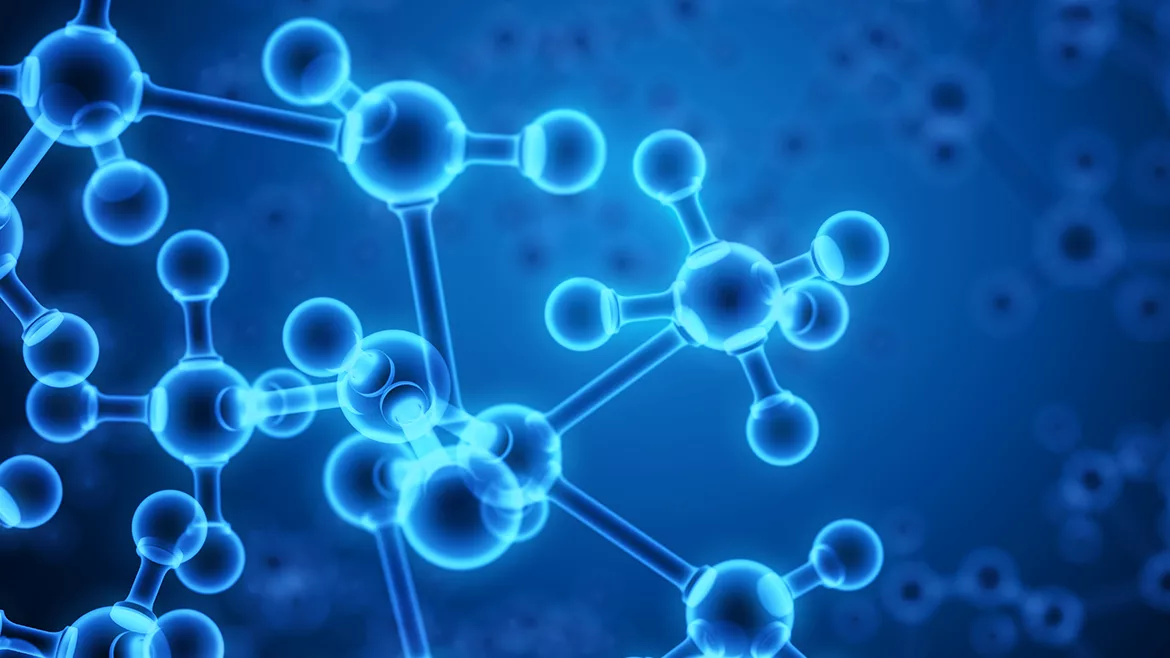
Reversible bonds are bonds that break and reform under specific conditions. Host–guest complexation is one way of creating reversible bonds. A "host" is typically a large molecule with a cavity into which a smaller "guest" molecule can fit, analogous to a lock and a key. The guest molecule seated in the host forms a host–guest complex.
"Guest and host molecules need to be able to move toward each other for these complexes to form, but polymer molecules are bulky and cannot move easily," explained lead author of the study, Kenji Yamaoka. "Thus, complex formation at polymer–polymer interfaces is inefficient, making it difficult to engineer reversible adhesion in polymer systems."
At the glass-transition temperature (Tg), segments of polymer chains go from being in a frozen glass-like state to moving freely. The higher the polymer temperature is above Tg, the more easily the segments can move.
The research team fabricated two polymers that can reversibly bond with each other. The researchers adjusted Tg to help the polymers move freely toward each other. Then, to fully understand the mechanism behind reversible adhesion, the team deflected neutrons off the interface to visualize how the sticking and peeling occurred at a molecular level.
"We found that controlling the temperature or adding/removing chemicals enables complexes to break and reform, resulting in peeling and re-adhesion on demand," said Yoshinori Takashima, senior author of the paper. "Our findings are exciting because this would be useful for many industries."
The novel adhesive can be decomposed on demand and reused multiple times, which could improve the manufacturing yield of precision devices, reduce costs, and minimize waste. The team's research will no doubt be of interest to manufacturers, but also will aid waste reduction and recycling.
The article, "Supramolecular Interface Engineering via Interdiffusion for Reusable and Dismantlable Polymer Adhesion," was published in Advanced Materials. To access the article, click here.
Looking for a reprint of this article?
From high-res PDFs to custom plaques, order your copy today!