BASF and Avery Dennison Collaboration Leads to Acrylates Based on Renewable Electricity
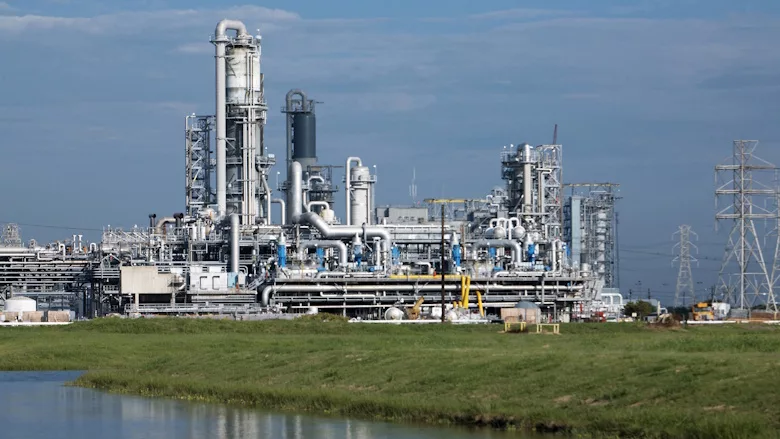
BASF Corp. is launching Butyl acrylate RE and 2-Ethylhexylacrylate RE (Renewable Electricity), two new products that are manufactured at BASF’s Freeport, Texas, site with electricity attributed from renewable sources. The use of renewably attributable electricity reduces CO2 emissions in the manufacturing process and improves the products’ carbon footprint compared to conventionally produced acrylic acid esters.
For products with the suffix RE, renewable electricity generated from wind and solar sources in Texas was attributed to the RE products to replace 100% of their consumption at the Freeport site.[1]
BASF reports that it Butyl acrylate RE and 2-Ethylhexylacrylate RE are completely equivalent to their conventionally produced counterparts in terms of quality and performance and can be used in a wide variety of polymer dispersion applications, with the coatings and adhesives industries as the primary target.
According to BASF, Avery Dennison has successfully pioneered the commercialization of these products manufactured with renewable energy. This achievement marks a step forward in the company’s commitment to reduce its Scope 3 GHG emissions by 30% and accelerates the use of more sustainable raw materials across the adhesives and sealants value chain.
“This announcement demonstrates how our collaboration with Avery Dennison fosters meaningful progress toward a lower-carbon future,” said Michael Limbach, vice president, Industrial Petrochemicals, BASF North America. “This accomplishment highlights the power of investing in responsible production and efficient, future-ready operations, enabling BASF to deliver high-performance acrylates that Avery Dennison and the North American market expect.”
“The collaboration with BASF demonstrates our commitment to introducing more sustainable materials throughout our integrated supply chain,” said Collins Oluka, vice president of Procurement at Avery Dennison Materials Group North America and Global Chemicals. “Innovations such as renewable-energy-enabled acrylic esters help advance our long-term sustainability goals. We look forward to collaborating further with BASF as we scale more sustainable material solutions for our customers.”
BASF and Avery Dennison have comprehensive environmental goals aimed at reducing emissions across operations and supply chains. BASF is investing in renewable energy supply, electrified production technologies, and circular feedstock pathways, while Avery Dennison is actively pursuing decarbonization across raw materials, manufacturing processes, and logistics.
For more information about BASF’s North American operations, visit basf.com/us. To learn more about Avery Dennison, visit averydennison.com.
[1] Renewable electricity from BASF Power Purchase Agreement contracts in Texas are attributed to products in accordance with their prior-year electricity consumption at the Freeport production site as determined by BASF SCOTT methodology. In a methodology review, TÜV Rheinland has certified that the PCF methodology SCOTT developed and used by BASF SE for calculating the PCFs of BASF products is scientifically-based, is in accordance with ISO 14067:2018 and the Together for Sustainability - The Product Carbon Footprint Guideline for the Chemical Industry, version 3.0 - December 2024, and reflects the state of the art (ID-Nr. 0000080389: BASF SE-Certipedia).
Looking for a reprint of this article?
From high-res PDFs to custom plaques, order your copy today!