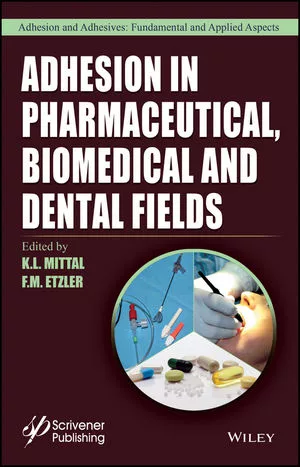
Dispensing Automation
In-depth knowledge is required to control and apply the dispensed liquid in medical applications.
Over the last few years, the medical industry has advanced to fully automate a variety of applications, including the dispensing process. Dispensing liquid or viscous fluids, such as epoxies, silicones, polyurethanes, greases, oils, lacquers, or one- or two-component materials, has become increasingly significant in the medical industry. As the trend toward smaller end products continues, the dispensed volume decreases and applications become progressively more complex. This means in-depth knowledge is required to control and apply the dispensed liquid. In many cases, customized solutions are necessary.
In situations where two-component products are dispensed manually, the preparation of the homogenous mix in the proper ratio requires a skilled operator. Due to the manual nature of the process, the risk of improper handling enters into the equation while the operator is exposed to the materials during preparation and application. Such personal contact with resins can create drastic difficulties.
Economically speaking, the process of manually weighing, mixing, and pouring polymers into syringes is also wasteful and time consuming. The product is mixed in large quantities, yet only a small amount of the mixture is useful since its physical properties change. In addition, the product reaches its pot life (double viscosity) much sooner than if it were mixed in a smaller quantity.
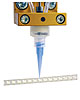
In this instance, two cartridges are filled with the associated product to be dispensed, and the prepackaged cartridges are placed on two numerical-volumetric dispensing heads. The resin and hardener are dispensed into a mixing chamber by programmable mixing ratio and thoroughly mixed just before they are applied to the product. This device allows dynamic mixing of small volumes for two-component products.
The quality of the mix can be achieved by altering the mixing time or speed, or the size of the mixing chamber. For some products, it is important to mix with a low speed to prevent cavitations and degassing. The ratio of the product can be freely programmed and does not depend on the sizes of the dispensing units.
Automation provides two main advantages: the mixed product is very small (maximum of 2,300 mm3), and the materials are mixed just before dispensing. In addition, the repeatability of the dispensed volume is always constant and does not depend on the viscosity of the material. Other advantages include volumetric piston pump dispensing, piston and liner in Al2O3, no moving seals, a liner driven by a stepper drive, and all wetted parts reduced to PTFE/PVDF/PP/V2A and Al2O3 materials.
Because the chamber is of such low volume (as low as 60 mm3), only the volume that is going to be dispensed is actually mixed. Therefore, the mixing chamber is completely flushed, and the product within the chamber is constantly renewed. Since it is designed as a consumable, it is not necessary to use any hazardous or expensive cleaning agents after use. In addition, the mixing chamber is chemically inert with a design based on PTFE/PVDF, PP and stainless steel. The operator does not come into contact with the adhesive or have any direct physical access to the metering and mixing process, thus eliminating all possible errors that could result from improper handling.
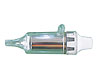
Another medical application is the filling of a medical pump with a two-component epoxy (Delo Duopox 1895), which requires great precision and accuracy. Here, a two-component dispenser is needed to dispense the product into a small hole to fill up a cavity while avoiding any air bubbles; the mixture and ratio of the two-component product needs to be perfect. In addition, the tolerances of quantity to dispense are very small. The previously described dispensing process resolved these issues with ease.
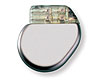
In the vascular field, pacemakers often require RTV-silicone mono-component to be dispensed. The complex nature of pacemakers often benefits from peripheral automation, including conveyorization and clean room compatibility. The recentering of the part and tip can be also performed with visual aids. All of these actions are crucial to the accurate execution of the dispensing processes with 3-D interpolation and predefined trace pattern.
When volumes increase and throughput demand is high, a robotic cell with automated handlers-ranging from z-movement to full-scale robotics with rotary tables, conveyors and choice of dispensing heads-is customizable for virtually any production line job. In any case, the automation of dispensing within the medical device arena is moving forward at a rapid pace and continues to show drastic repeatability and throughput superiority over manual operations.
For more information, contact mta automation inc. at 50-1 River St., Old Saybrook, CT 06475; call (860) 399-1141; email info@mtaautomation.com; or visit www.mtaautomation.com.
Over the last few years, the medical industry has advanced to fully automate a variety of applications, including the dispensing process. Dispensing liquid or viscous fluids, such as epoxies, silicones, polyurethanes, greases, oils, lacquers, or one- or two-component materials, has become increasingly significant in the medical industry. As the trend toward smaller end products continues, the dispensed volume decreases and applications become progressively more complex. This means in-depth knowledge is required to control and apply the dispensed liquid. In many cases, customized solutions are necessary.
In situations where two-component products are dispensed manually, the preparation of the homogenous mix in the proper ratio requires a skilled operator. Due to the manual nature of the process, the risk of improper handling enters into the equation while the operator is exposed to the materials during preparation and application. Such personal contact with resins can create drastic difficulties.
Economically speaking, the process of manually weighing, mixing, and pouring polymers into syringes is also wasteful and time consuming. The product is mixed in large quantities, yet only a small amount of the mixture is useful since its physical properties change. In addition, the product reaches its pot life (double viscosity) much sooner than if it were mixed in a smaller quantity.
The filling of this medical pump with a two-component epoxy requires precision and accuracy.
The End of Manual Dispensing
Full automation of the mixing and dispensing processes eliminates operator exposure and the need to manually handle the resin and hardener. These types of applications illustrate the need for highly precise, easy-to-use mixing and metering dispensing systems. When dispensing volumetrically via positive displacement, a specific amount of product can be mixed and dispensed within the same machine, which ensures repeatability and consistent physical properties.In this instance, two cartridges are filled with the associated product to be dispensed, and the prepackaged cartridges are placed on two numerical-volumetric dispensing heads. The resin and hardener are dispensed into a mixing chamber by programmable mixing ratio and thoroughly mixed just before they are applied to the product. This device allows dynamic mixing of small volumes for two-component products.
The quality of the mix can be achieved by altering the mixing time or speed, or the size of the mixing chamber. For some products, it is important to mix with a low speed to prevent cavitations and degassing. The ratio of the product can be freely programmed and does not depend on the sizes of the dispensing units.
Automation provides two main advantages: the mixed product is very small (maximum of 2,300 mm3), and the materials are mixed just before dispensing. In addition, the repeatability of the dispensed volume is always constant and does not depend on the viscosity of the material. Other advantages include volumetric piston pump dispensing, piston and liner in Al2O3, no moving seals, a liner driven by a stepper drive, and all wetted parts reduced to PTFE/PVDF/PP/V2A and Al2O3 materials.
Because the chamber is of such low volume (as low as 60 mm3), only the volume that is going to be dispensed is actually mixed. Therefore, the mixing chamber is completely flushed, and the product within the chamber is constantly renewed. Since it is designed as a consumable, it is not necessary to use any hazardous or expensive cleaning agents after use. In addition, the mixing chamber is chemically inert with a design based on PTFE/PVDF, PP and stainless steel. The operator does not come into contact with the adhesive or have any direct physical access to the metering and mixing process, thus eliminating all possible errors that could result from improper handling.
Pacemakers like this one often require RTV-silicone mono-component to be dispensed.
Field Applications
Many examples of required precision in dispensing can be found in the field. One such application includes dispensing fluid product to produce contact lenses. The objective is to have a very high accuracy of the dispensed product with low deviation-less than 1%-from nominal volume. Nominal volumes are generally less than 40 mm3 and operate in clean room class 10,000.Another medical application is the filling of a medical pump with a two-component epoxy (Delo Duopox 1895), which requires great precision and accuracy. Here, a two-component dispenser is needed to dispense the product into a small hole to fill up a cavity while avoiding any air bubbles; the mixture and ratio of the two-component product needs to be perfect. In addition, the tolerances of quantity to dispense are very small. The previously described dispensing process resolved these issues with ease.
In the vascular field, pacemakers often require RTV-silicone mono-component to be dispensed. The complex nature of pacemakers often benefits from peripheral automation, including conveyorization and clean room compatibility. The recentering of the part and tip can be also performed with visual aids. All of these actions are crucial to the accurate execution of the dispensing processes with 3-D interpolation and predefined trace pattern.
Automation Solutions
In general, automation of the dispensing process can be achieved in one of three ways: semi-automatic in-line, semi-automatic manual and fully automatic. For dispensing operations that cannot be integrated into fully automatic production lines, tabletop solutions offer maximum flexibility.When volumes increase and throughput demand is high, a robotic cell with automated handlers-ranging from z-movement to full-scale robotics with rotary tables, conveyors and choice of dispensing heads-is customizable for virtually any production line job. In any case, the automation of dispensing within the medical device arena is moving forward at a rapid pace and continues to show drastic repeatability and throughput superiority over manual operations.
For more information, contact mta automation inc. at 50-1 River St., Old Saybrook, CT 06475; call (860) 399-1141; email info@mtaautomation.com; or visit www.mtaautomation.com.
Links
Looking for a reprint of this article?
From high-res PDFs to custom plaques, order your copy today!