Adhesives Mag logo
search
cart
facebook twitter linkedin youtube
  • Sign In
  • Create Account
  • Sign Out
  • My Account
Adhesives Mag logo
  • NEW PRODUCTS
  • NEWS
    • Adhesives & Sealants Headlines
    • Mergers/Acquisitions
    • Market Trends
    • TOP 20
  • TOPICS
    • Finished Adhesives and Sealants
    • Pressure-Sensitive Adhesives (PSAs)
    • Coatings
    • Raw Materials and Chemicals
    • Materials Handling/Processing
    • Meter/Mix/Dispense
    • Curing
    • Testing/Quality Control
    • Packaging of Adhesives & Sealants
    • Converting/Packaging
    • Composites
    • Sustainability
  • EVENTS
    • MAX
    • ASI Academy
    • Events Calendar
  • COLUMNS
    • European Perspectives
    • Strategic Solutions
    • Supply Chain Strategies
    • Tape Talk
  • MULTIMEDIA
    • Videos
    • Podcasts
    • Webinars
    • eBooks
  • EXPLORE
    • Adhesives in Action
    • Blog
    • ASI Store
    • Industry Links
    • Market Research
    • Classifieds
  • DIRECTORIES
    • Buyers' Guide
    • Global Adhesives & Sealants Directory
    • Raw Materials, Chemicals, Polymers and Additives Handbook
    • Equipment Handbook
    • Distributor Directory
  • EMAGAZINE
    • EMAGAZINE
    • ARCHIVE ISSUES
    • ADVERTISE
      • Custom Content & Marketing Services
    • CONTACT
  • SIGN UP!
Finished Adhesives and SealantsEnd User FeaturesInfo for Construction

Flexible Formulation of Waterborne Caulks and Sealants

Eliminating external plasticizers can improve performance in waterborne caulks and sealants.

By Rick Miner
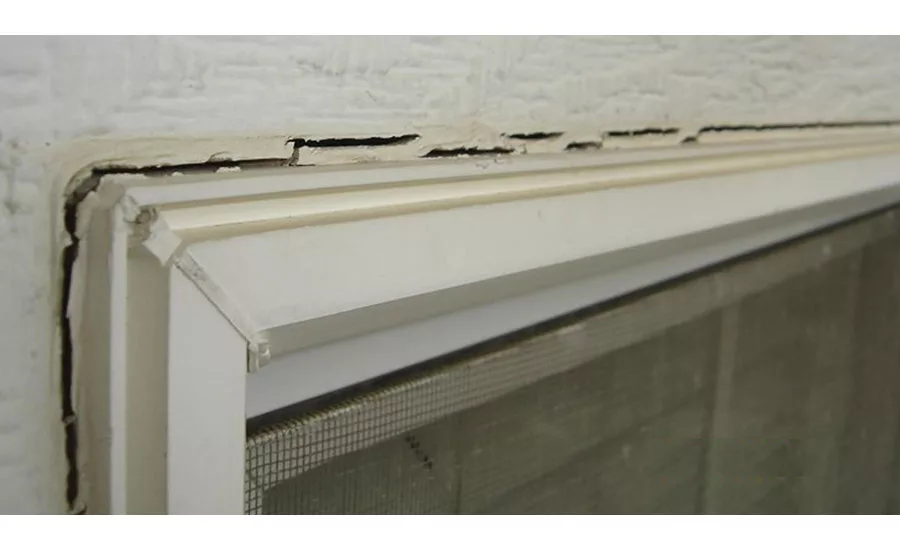
mildew growth
Typical dirt pickup and mildew growth over externally plasticized sealant joints.
Joint failure
Joint failure due to sealant hardening with age.
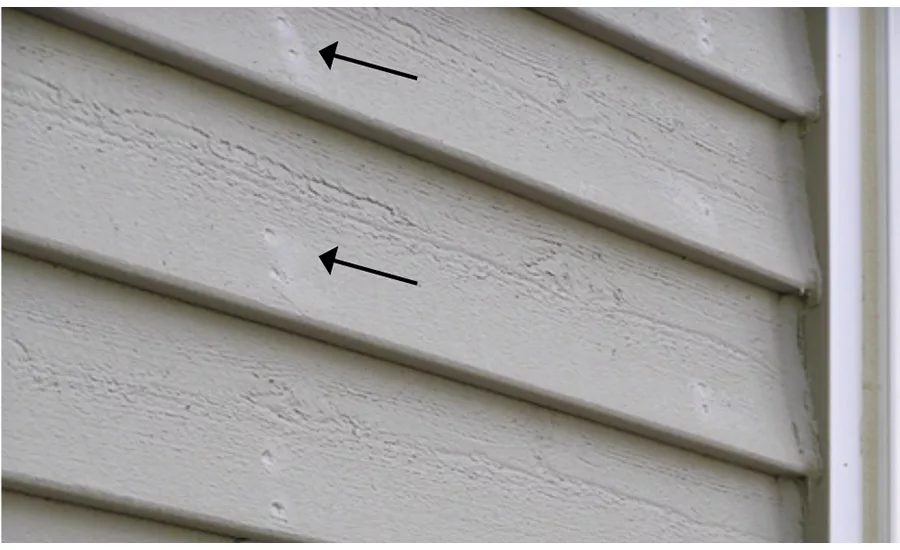
Paint glossing
Paint glossing over caulked nail heads.
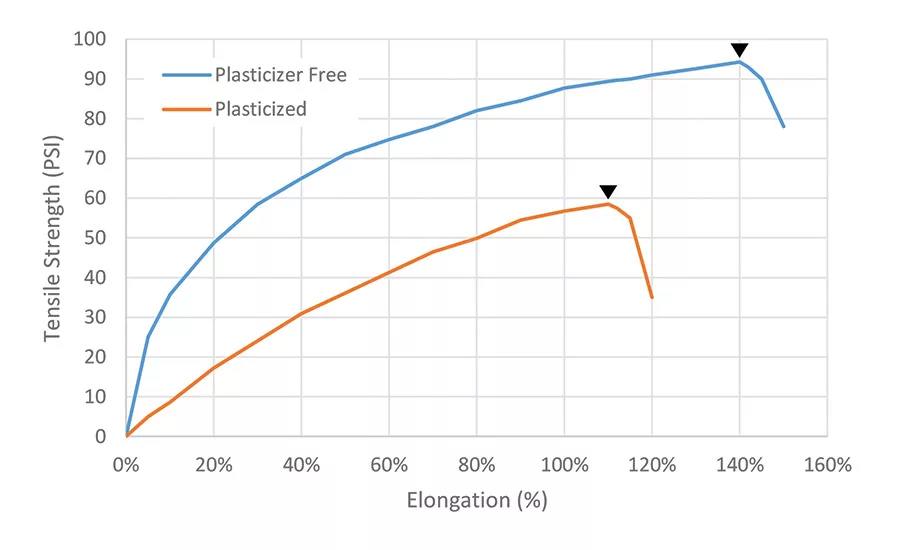
Figure 1
Figure 1. Comparison of the tensile-elongation of externally plasticized (30% based on polymer solids) and plasticizer-free sealant formulated with the latex.
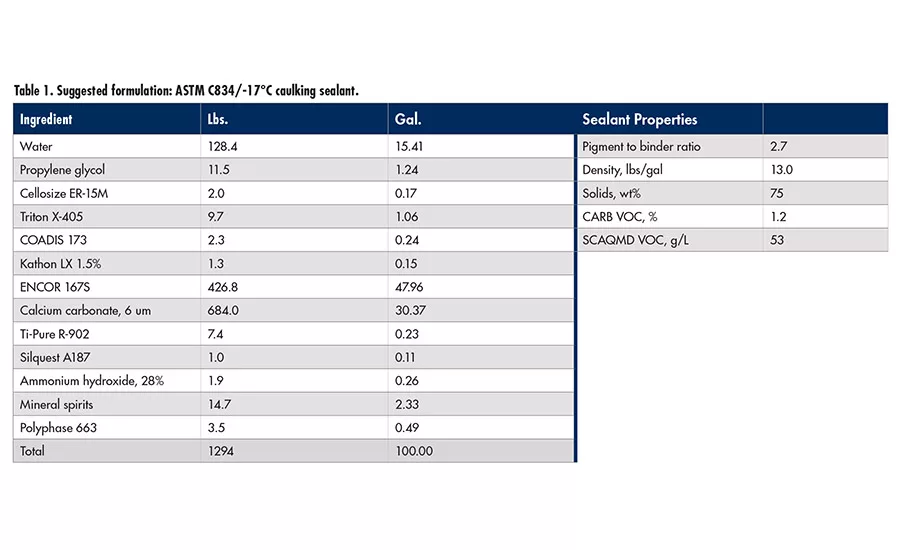
Table 1
Table 1. Suggested formulation: ASTM C834/-17°C caulking sealant.
Figure 2.
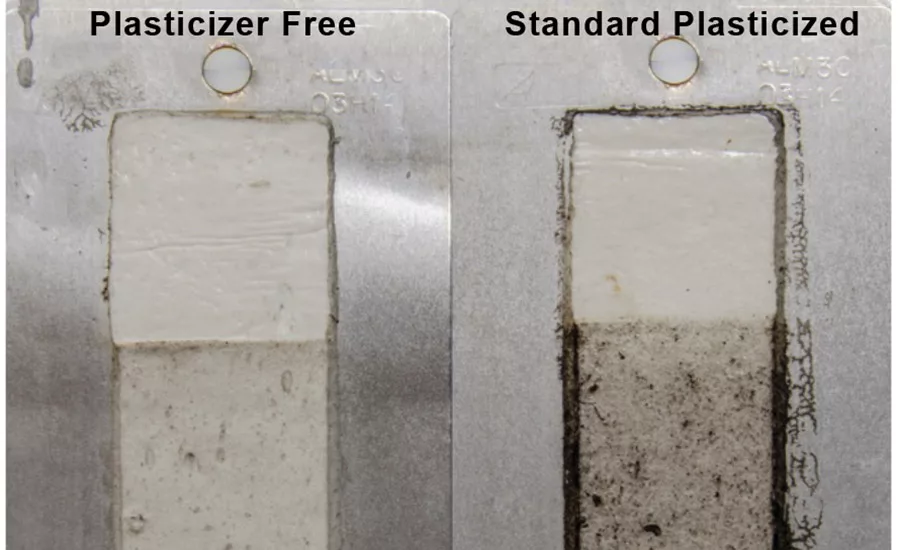
Figure 2. Comparison of dirt pickup and mildew resistance of externally plasticized (30% based on polymer solids) and plasticizer-free sealants after 24 months of north vertical exterior exposure in Cary, N.C.
Figure 3
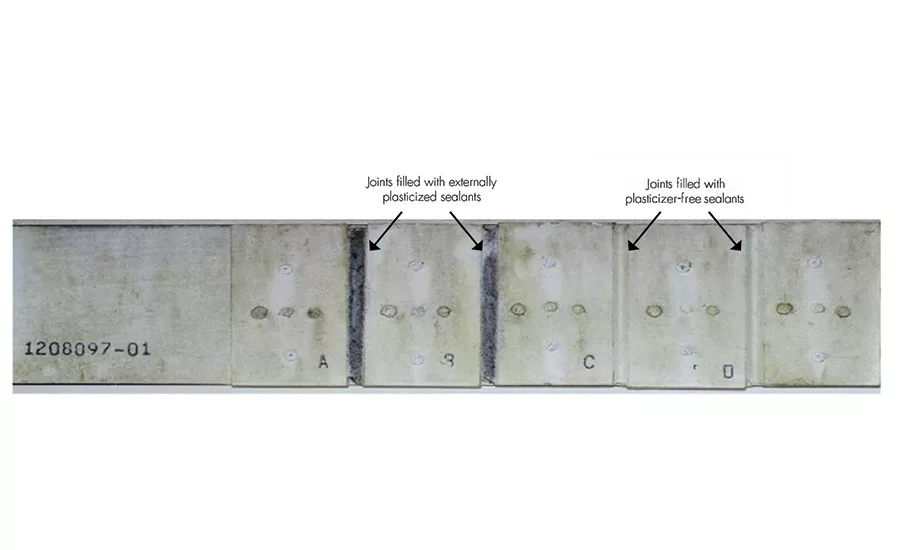
Figure 3. Comparison of dirt pickup, mildew and crack resistance of externally plasticized (caulk samples A and B) and plasticizer-free (caulk samples C and D) after 48 months of north vertical exterior exposure in Cary, N.C.
Table 2
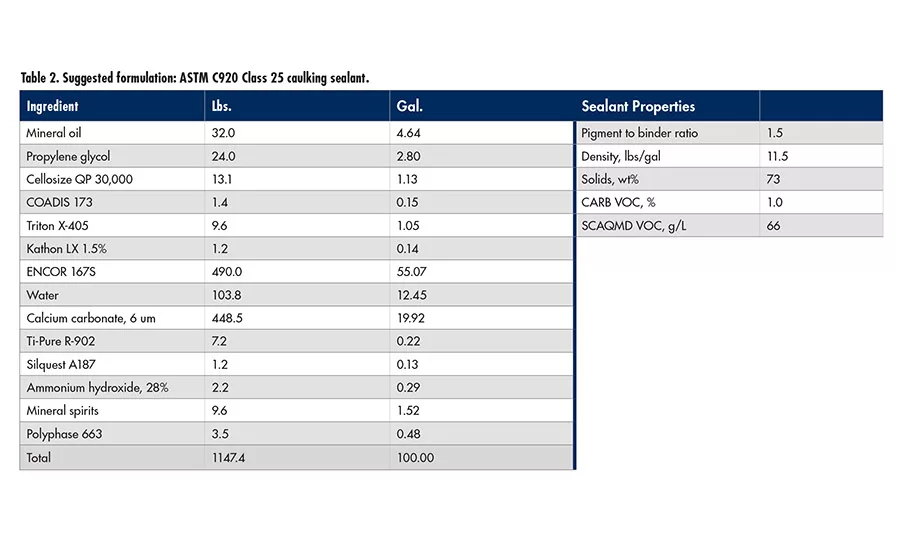
Table 2. Suggested formulation: ASTM C920 Class 25 caulking sealant.
Figure 4
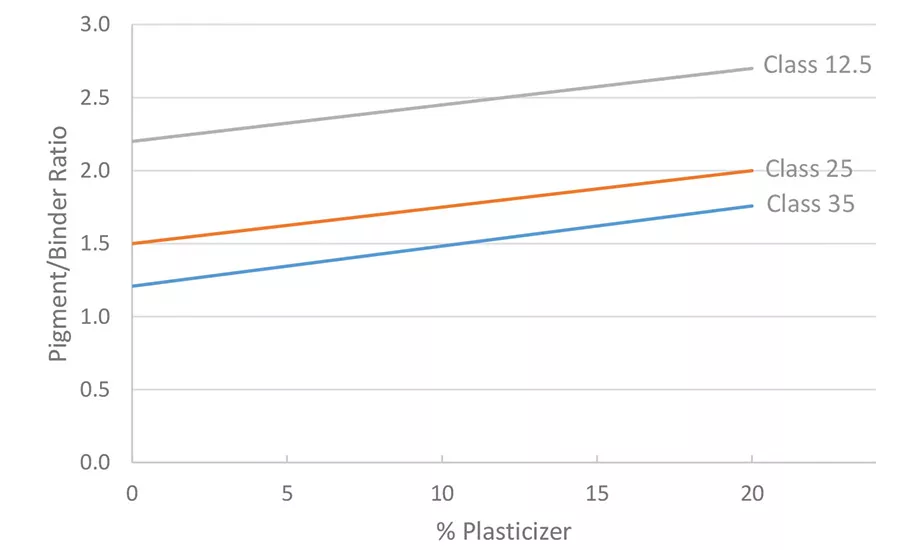
Figure 4. Formulation guidelines for achieving adequate low-temperature flexibility.
mildew growth
Joint failure
Paint glossing
Figure 1
Table 1
Figure 2.
Figure 3
Table 2
Figure 4
July 3, 2017

A caulking sealant has three basic functions: filling a gap between two or more substrates; forming a barrier through the physical properties of the sealant itself and by adhesion to the substrate; and maintaining sealing properties for the expected lifetime, service conditions, and environments. To help maintain flexibility at low temperatures and to retain performance, most pigmented acrylic latex sealants on the market today are formulated with a supplementary external plasticizer. When properly chosen and formulated, plasticizers such as benzylbutyl phthalate, dipropylene glycol dibenzoate or others effectively lower the glass-transition temperature (Tg) of acrylic polymers and thus “soften” the composition.

Related Content

 
Polychloroprene Contact Adhesives

At the same time, heavy reliance on plasticizers in a sealant formulation can result in negative side effects, such as mildew growth or glossing. In addition, the use of phthalate plasticizers has recently come under scrutiny due their poor toxicological profile. For these reasons, product developers are beginning to look at new latex binders that allow for the elimination or significant reduction of plasticizers from the formulation. New technologies in this area offer many benefits and may help formulators improve product performance while still achieving the flexibility of high-plasticizer products.

It is first important to understand the historical importance of plasticizers and how they are used today. Waterborne acrylic latex sealants generally offer excellent durability in terms of ultraviolet light resistance and chemical resistance. Further, they offer desirable application properties such as ease of gunning, tooling and cleanup; the elimination of solvent odors and flammability; and the ability to be painted shortly after joint placement. Highly plasticized systems yield flexible sealants with movement capability of ± 35% and the ability to meet the performance requirements of high-performance sealants such as ASTM C 920.

Plasticizer Migration

It is not uncommon for acrylic-based sealant formulations to contain as much as 40 wt% plasticizer. However, the reliance on high levels of external plasticizer to achieve acceptable low-temperature flexibility may create a host of problems, including:

  • Dirt pickup and mildew growth
  • Hardening on aging
  • Paint discoloration
  • Glossing

Plasticizer migration is key to all of these problems.  Plasticizer migration to the sealant’s surface can promote microbial growth by acting as a nutrient or merely by increasing surface tack such that airborne nutrients adhere to the sealant. Thus, they can impart their own biological properties to an otherwise inert polymer system. Factors that can influence the rate of microbiological growth include: moisture, temperature, nutrients and the presence of anti-microbial additives.

Plasticizer exudation also results in hardening of the sealant with age, which risks cohesive or interfacial joint failure. This aging can be dramatic and can occur in as little as a few years. It is possible for externally plasticized acrylic sealants to lose as much as 25% of their flexibility due to plasticizer migration.

Finally, exudation and migration of plasticizer from the sealant can impact the appearance of paints applied over the sealant. The plasticizer can soften the paint film, increasing its tendency to pick up dirt and support mildew growth. Plasticizer can also discolor or increase the gloss level of the paint film.

Reducing or Eliminating External Plasticizers

Due to the many detrimental effects experienced through the use of external plasticizers, their elimination would be expected to improve the performance characteristics of a sealant, provided the polymer is sufficiently soft to ensure adequate flexibility. As a result, product developers in the industry have developed binder solutions that do not require the use of external plasticizers. For example, a recently introduced latex* for high-performance caulks and sealants offers excellent exterior durability and adhesion while enabling formulators to prepare a range of ASTM C834- and C920-compliant sealants. Its low Tg temperature allows for the formulation of sealants with outstanding low-temperature flexibility without the need for external plasticizers.

The toughness of sealants formulated with external plasticizers is generally much poorer than those without them. As a result, sealants free of external plasticizer can exhibit much higher elongation without compromising their tensile strength (see Figure 1, p. 19).

The elimination of external plasticizer has the added benefit of improved dirt pickup and mildew resistance. This is illustrated by comparing the dirt pickup and mildew resistance of a conventional, externally plasticized sealant to one formulated with this latex and no external plasticizer (see Figure 2).

This improvement in dirt pickup and mildew resistance is irrelevant if the sealant does not demonstrate acceptable flexibility. Figure 3 shows four years of exterior durability testing that demonstrate the sealant formulations based on the latex not only yield excellent dirt pickup and mildew resistance, but also excellent crack resistance.

As illustrated in Tables 1-2, sealant formulations that meet the performance requirements of ASTM C 834 and C 920 are readily prepared with the latex without the need for external plasticizer. The addition of inert fillers can significantly lower the cost of a sealant formulation, but this comes at the expense of low-temperature flexibility. Formulators may choose to use external plasticizer with the latex to achieve acceptable performance at higher pigment to binder ratios. The latex is compatible with many of the newer non-phthalate plasticizers. Due to its inherent flexibility and toughness, the latex has been found to require lower levels of external plasticizer to achieve good low-temperature flexibility at any given P/B ratio. ASI


For more information, visit www.arkema.com.

KEYWORDS: additives caulks plasticizer sealants in construction

Share This Story

Looking for a reprint of this article?
From high-res PDFs to custom plaques, order your copy today!
Rick Miner is the Technical Account Coordinator, Construction Products, at Arkema Coating Resins.

Recommended Content

JOIN TODAY
to unlock your recommendations.

Already have an account? Sign In

  • mouse in hole

    Using Foam Sealants for Pest Prevention

    According to the National Pest Management Association,...
    Adhesives and Sealants Topics
    By: Kevin Corcoran
  • linked network nodes

    Using the Power of AI for Adhesive and Sealant Formulation

    With the help of software solutions, adhesive formulators...
    Finished Adhesives and Sealants
    By: Karen Parker
  • top20-hero.jpg

    2024 ASI Top 20: Leading Global Manufacturers of Adhesives and Sealants

    ASI's annual ranking of the top 20 global adhesive and...
    Pressure-Sensitive Adhesives (PSAs)
Manage My Account
  • eMagazine Issues
  • Newsletters
  • Online Registration
  • Manage My Preferences
  • Subscription Customer Service

More Videos

Popular Stories

image of a graph representing markets

Sika Announces Acquisition of Gulf Seal in Saudi Arabia

Picture of two men and one woman in dark suits

Bodo Möller Chemie Makes Management Change for CASE Business Unit

news on internet screen

Henkel Posts Positive Organic Growth for Third Quarter, Driven by Adhesives Technologies Business

ASI Top 20 website

Events

January 1, 2030

Webinar Sponsorship Information

For webinar sponsorship information, visit www.bnpevents.com/webinars or email webinars@bnpmedia.com.

View All Submit An Event

Products

Structural Adhesives: Properties, Characterization and Applications

Structural Adhesives: Properties, Characterization and Applications

See More Products

ASI CASE EBOOK

Related Articles

  • New Low-NCO Prepolymers Ideal For Flexible Sealants And Caulks

    See More
  • asi0520-SS-img

    Formulation and Availability of Building and Construction Adhesives, Sealants, and Other Materials

    See More
  • NPCA's Caulks, Sealants and Adhesives Committee Has Firm Grip on Issues

    See More

Related Products

See More Products
  • 9780080447087.jpg

    Volume 2: Handbook of Adhesives and Sealants, 1st Edition

  • handbook advesives and sealants.gif

    Volume 1: Handbook of Adhesives and Sealants, 1st Edition

  • technology-of-pressure-sens.gif

    Technology of Pressure-Sensitive Adhesives and Products

See More Products

Related Directories

  • Formulator Software LLC

    At Formulator Software, we understand the precision and complexity involved in perfecting formulations. Our software is designed specifically for chemists, lab technicians, researchers, and manufacturers, providing essential tools to streamline the entire formulation process. Formed in 2002, Formulator Software is trusted by thousands to manage their raw materials, formulations, QC, SDS, COA, costing and more!
×

Keep the info flowing with our newsletters!

Get the latest industry updates tailored your way.

JOIN TODAY!
  • RESOURCES
    • Advertise
    • Contact Us
    • Directories
    • Manufacturing Division
    • Store
    • Want More
  • SIGN UP TODAY
    • Create Account
    • eMagazine
    • Newsletters
    • Customer Service
    • Manage Preferences
  • SERVICES
    • Marketing Services
    • Reprints
    • Market Research
    • List Rental
    • Survey & Sample
  • STAY CONNECTED
    • LinkedIn
    • Facebook
    • Youtube
    • X (Twitter)
  • PRIVACY
    • PRIVACY POLICY
    • TERMS & CONDITIONS
    • DO NOT SELL MY PERSONAL INFORMATION
    • PRIVACY REQUEST
    • ACCESSIBILITY

Copyright ©2025. All Rights Reserved BNP Media.

Design, CMS, Hosting & Web Development :: ePublishing