The testimony focused on encouraging ITC to adopt the Rules of Origin from the United States-Mexico-Canada Agreement (USMCA) in future free trade agreements.
October 20, 2020
Society of Chemical Manufacturers & Affiliates (SOCMA) recently testified before the U.S. International Trade Commission (ITC) on the “Economic Impact of Trade Agreements Implemented Under Trade Authorities Procedures, 2021 Report.”
The signatories are requesting urgent resolution of implementation issues in a database designed to support the circular economy as expressed in the European Green Deal.
September 29, 2020
A coalition of 40 industry organizations, including Afera (The European Association for the Self Adhesive Tape Industry), recently wrote a letter to European Commission President Ursula von der Leyen calling for decisive action to solve implementation issues within the EU Waste Framework Directive (WFD), specifically the Substances of Concern in Products (SCIP) database.
The focus of the Pharma Working Group will be to prepare the pharmaceutical industry for the Drug Supply Chain Security Act, which will go into effect in 2023.
August 26, 2020
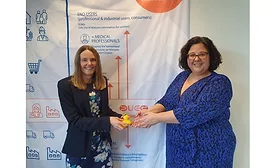
FLEXcon Co., Inc. recently announced that Lori Bitar, Market Development manager, has been appointed by AIM North America to serve as chair of its Pharma Working Group.
The report is intended to outline the main findings of the risk assessment and explain that human exposure to cyclic esters from polyester pre-polymers in food packaging adhesives is not relevant from a toxicological point of view.
July 3, 2020
FEICA, the Association of the European Adhesive and Sealant Industry, recently announced that it has published a Summary Report of a FEICA risk assessment carried out on cyclic esters potentially present in polyester adhesives intended to be used in food contact materials.
The amendments are expected to reduce emissions of hazardous air pollutants from the source category by 107 tons per year, which includes reductions in ethylene oxide emission of approximately 0.76 tons per year.
June 15, 2020
The U.S. Environmental Protection Agency (EPA) recently announced final amendments to the Miscellaneous Organic Chemical Manufacturing National Emission Standards for Hazardous Air Pollutants to reduce hazardous air pollutants.
The EPA reports that this new rule will increase the transparency of the agency’s practices around guidance and will improve its process for managing guidance documents.
May 27, 2020
The U.S. Environmental Protection Agency (EPA) recently announced its a proposed rule to establish consistent requirements and procedures for the issuance of guidance documents.
Engineers, architects, specifiers, facility managers, and homeowners must spend time analyzing what performance levels can be obtained by the adhesive and sealant products that are available to them for the environments in which they are being used.
With increasing consolidation among adhesives manufacturers and the raw material suppliers that support them, global product formulation and availability of materials used in these formulations continue to grow in importance.
Epoxy silanes like GLYMO and GLYEO are adhesion promoters used in food packaging, but safety issues have prompted the development of new alternatives.
April 21, 2020
Consumers expect the food industry to provide safe products that comply with the latest regulations. FEICA, the Association of the European Adhesive and Sealant Industry, recommends avoiding the use of epoxy silanes in food contact applications, and the European Union is expected to set new limits during the course of this year. These limits will require complex testing methods that lead to challenges for converters and packaging manufacturers.
The EPA plans to initiate a new rulemaking process to consider proposing exemptions to the current TSCA Fees Rule’s self-identification requirements associated with EPA-initiated risk evaluations for certain manufacturers.
April 6, 2020
The U.S. Environmental Protection Agency (EPA) recently announced a plan to consider a proposed rule that would look at potential exemptions to the TSCA Fees Rule in response to stakeholder concerns about implementation challenges.