The Role of Biodegradable Hot-Melt Adhesives in Sustainable Packaging Design
As converters pursue circular packaging solutions, biodegradable hot-melt adhesives are emerging as a critical driver of sustainability, recyclability, and operational efficiency.
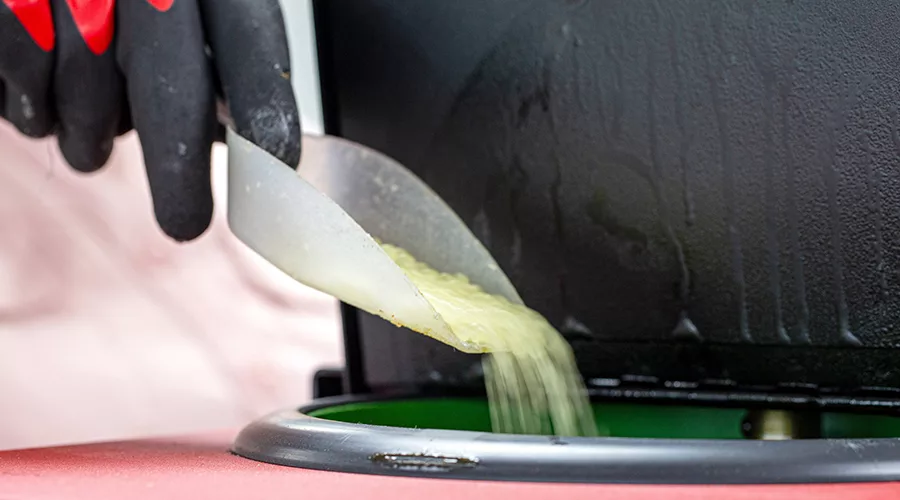
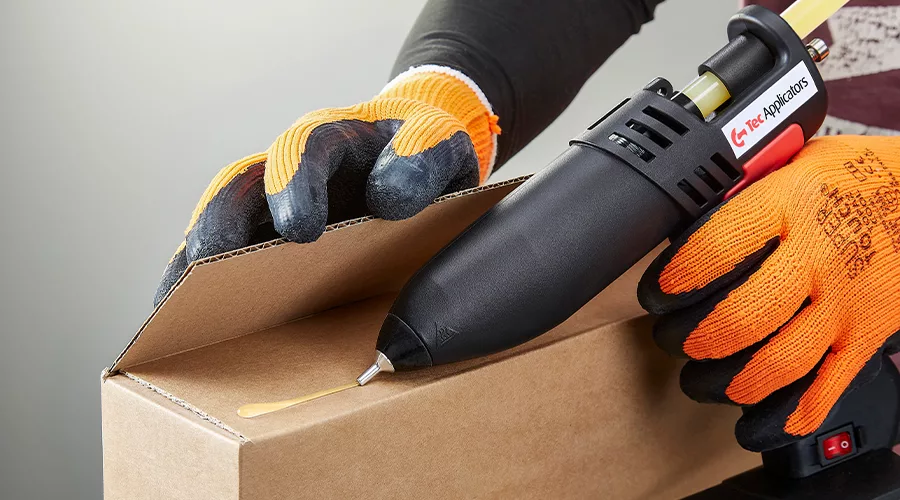
Biodegradable and compostable adhesives work well for fiber-based secondary packaging formats
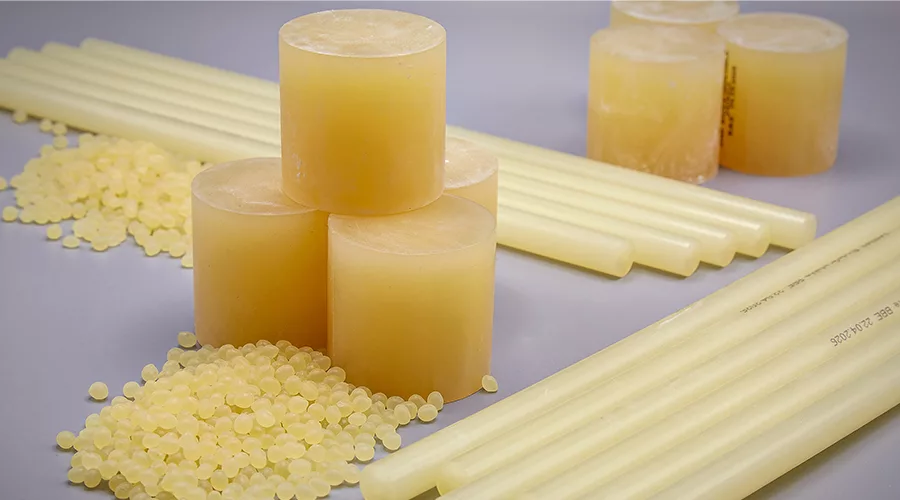
Shaped formats require minimal investment and can be used with existing handheld applicators.
As sustainability continues to drive innovation in packaging, every component of the packaging system is now under scrutiny, from fiber substrates to water-based inks and compostable films. Yet, adhesives often remain the overlooked element in conversations around circular design, waste reduction, and regulatory compliance.
While adhesives typically make up a small percentage of overall packaging weight, their impact on recyclability, compostability, and energy consumption can be disproportionately large. For converters and packaging manufacturers striving to meet both environmental and operational goals, hot-melt adhesive technology is emerging as a key enabler of more sustainability focused packaging solutions.
For packaging to be truly circular, each material must contribute to its responsible end-of-life handling, whether that's through mechanical recycling, composting, or energy recovery. In the past, adhesives were viewed primarily in terms of bond strength and production speed. Today, manufacturers are looking to adhesives that align with broader environmental strategies, including Scope 3 emissions reduction and lifecycle performance.
Adhesives used in case sealing, tray erection, carton closing, and POS display units must now do more than hold structures together, they must also work in harmony with substrates and recovery systems. If the adhesive used interferes with fiber recovery or leaves behind persistent microplastics during composting, it can compromise the environmental integrity of the entire pack.
How Biodegradable Hot Melts Fit the Circular Model
Biodegradable hot-melt adhesives represent a major step forward in closing this gap. These materials are formulated to break down into environmentally benign substances, such as water, carbon dioxide, and non-harmful organic material, when exposed to specific conditions found in industrial composting environments.
A key milestone in this space came in 2024 with the launch of Tecbond 214B, the world's first fully certified biodegradable hot-melt adhesive containing 45% biobased content. It meets both ASTM D6400 and EN 13432 standards, meaning it has passed rigorous testing for compostability and will biodegrade in an industrial composting facility without leaving harmful residues or microplastics.
Such formulations are ideal for fiber-based secondary packaging formats where composting is a viable and growing end-of-life option. Wrap-around trays, shelf-ready packaging, and shipping cartons can all benefit from a bonding solution that supports downstream waste reduction initiatives.
Composting and Waste Infrastructure Considerations
It's important to note that not all biodegradable adhesives are suitable for direct contact with food or for home composting environments. They are best used in secondary packaging systems where the entire pack, including board, ink, and coatings, has been designed with compostability in mind and where infrastructure exists for collection and processing.
Municipal and industrial composting facilities, common in many European markets, are capable of handling these materials at scale. In such contexts, compostable adhesives help divert packaging from landfill and reduce contamination in compost streams.
Performance Matters: Energy, Efficiency, and Application
While environmental credentials are essential, adhesives must also deliver on core performance metrics, fast set times, clean application, compatibility with a wide range of substrates, and suitability for high-throughput operations.
Products like Tecbond 110B-PR demonstrate how sustainability and performance can be combined. Although it does not contain biobased content, the adhesive is formulated for low-temperature application. This enables converters to reduce energy consumption during production, extend equipment life, and lower their carbon footprint, all without compromising bond strength or run speed.
Low-temperature hot melts are particularly valuable in energy-intensive environments or where machine wear and operator safety are a concern. They allow packaging engineers to achieve incremental energy savings while maintaining line performance.
Substrate Compatibility: Current Limits and Future Expansions
At present, biodegradable adhesives are best suited to bonding paper and board-based materials. Some current formulations, like Tecbond 214B, can bond to selected coated and laminated substrates, but compatibility may vary depending on the material's surface treatment and finish.
This is an area of active development, and next-generation products are being formulated specifically to expand compatibility with more challenging substrates, including high-gloss, metallized, or coated boards, which are common in premium food and beverage packaging.
Converters considering a shift to biodegradable adhesives should consult with suppliers early to understand how current and forthcoming grades will integrate with their packaging portfolio.
Bulk vs Shaped Formats: Choosing the Right Delivery System
One of the practical advantages of today's biodegradable adhesive offerings is their availability in both shaped and bulk formats.
Shaped formats (such as sticks or slugs) are ideal for lower-volume operations, trials, or manual assembly environments. They require minimal investment and can be used with existing handheld applicators.
Bulk formats (such as pillows or prills) are better suited to high-volume, automated packaging lines. They reduce packaging waste, require less frequent reloading, and can offer more consistent flow through large-scale applicators and folder gluers.
Converters should assess run sizes, application temperatures, storage capacity, and level of automation when determining which format is most appropriate for their operations. In many cases, a combination of both can be used to support flexible production models.
Integration Without Disruption
Another key advantage of biodegradable hot-melt adhesives is that they can often be integrated into existing systems without significant changes to equipment. Most products are engineered to be compatible with standard hot-melt applicators, whether that's tank-based bulk systems or handheld glue guns.
This ease of integration lowers the barrier to trial and adoption. Converters can begin working with biodegradable adhesives on selected lines or SKUs and gradually expand their use without disrupting broader production operations.
Some adhesive suppliers also offer in-house testing, application guidance, and tailored formulations to support smoother integration into existing workflows.
Adhesives and Recycling: Reducing Contamination
In mechanical recycling, the presence of incompatible adhesives can contaminate recovered fibers, reduce pulp quality, or damage recycling equipment. While many adhesives are "recycling compatible" under general conditions, few are designed to leave no trace behind.
Biodegradable adhesives provide an advantage here as well. In recycling environments where adhesives are skimmed off with other contaminants, biodegradable materials can break down faster and more completely, reducing the long-term impact on waste streams and recovered material quality.
Additionally, biodegradable adhesives can support packaging design that is closer to mono-material construction, making de-inking and separation more efficient.
Aiding Lifecycle Reporting and ESG Performance
Sustainability reporting is becoming increasingly data-driven, with brands under pressure to provide transparent accounting of the environmental impact of all packaging components, including adhesives. Scope 3 emissions, in particular, require converters to examine material choices at a granular level.
By adopting adhesives with biodegradable content or low-energy application properties, converters can contribute measurable improvements to a pack's environmental profile. This supports environmental, social and governance (ESG) frameworks and helps end-user brands build stronger sustainability claims backed by credible data.
Converters that integrate sustainable adhesives into their offering are also better positioned to win work from environmentally conscious brands who are being pressured to improve by a more informed and eco-aware consumer, particularly in the food and beverage, retail, and personal care sectors.
Market Readiness and the Path Ahead
The shift toward sustainable adhesives is no longer hypothetical. Across Europe and North America, brands are revisiting packaging specifications to ensure they align with circular economy goals. Regulations are evolving, extended producer responsibility (EPR) frameworks are tightening, and customer demand for more sustainably sourced materials is growing.
Adhesive innovation is keeping pace. From biobased formulations and compostable performance to low-energy applications and greater substrate compatibility, the range of solutions is expanding. For packaging converters, now is the time to explore how adhesive selection can support both operational efficiency and environmental progress.
As more advanced biodegradable adhesives reach the market, and infrastructure for composting and advanced recycling matures, the role of adhesives in packaging's sustainability story will only grow more prominent.
A Small Change with Big Potential
Adhesives may still be hidden within a package, but their significance is rising. Whether the goal is reducing landfill waste, improving recyclability, lowering energy use, or supporting certified compostability, the right adhesive can help unlock performance gains at both the factory and product level.
With hot-melt adhesive technologies evolving rapidly, converters and packaging professionals have an opportunity to make informed choices that reflect both their production needs and their environmental commitments.
Choosing adhesives that support circular outcomes is no longer just about compliance, it's about future-proofing packaging strategies in a resource-conscious world.
Learn more about Power Adhesives and the products the company offers at www.poweradhesives.com.
Article images are provided courtesy of Power Adhesives.
Looking for a reprint of this article?
From high-res PDFs to custom plaques, order your copy today!