Challenges to Consider When Selecting a Feeder
The correct feeder features can mitigate problems associated with moving difficult dry bulk materials.
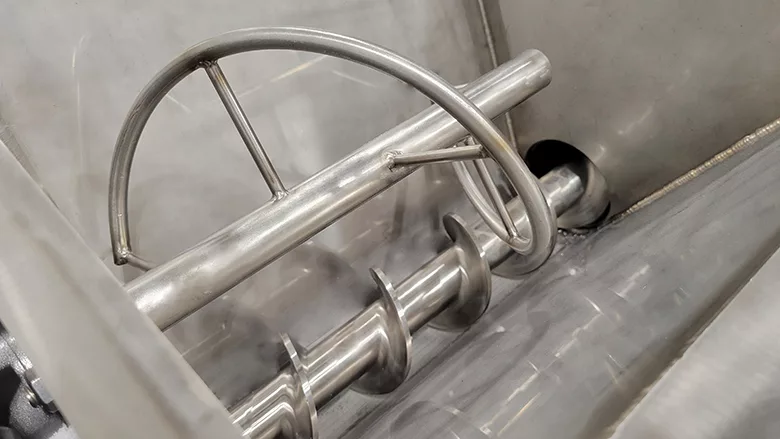
Inside PosiPro with agitator.
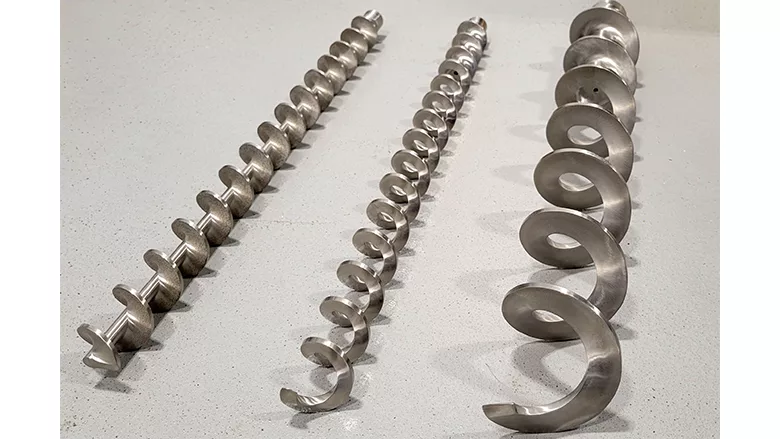
Different screw types allow the handling of a range of material properties.
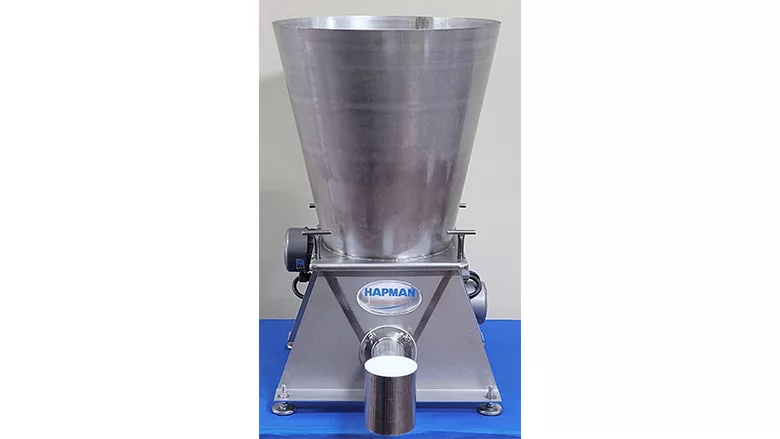
The PosiPro with hopper.
Moving dry bulk materials in industrial settings comes with unique challenges, especially when handling substances that are abrasive, sticky, or prone to clumping. These difficult-to-handle materials can disrupt operations, decrease efficiency, and cause excessive wear on equipment. Choosing the right feeder to address these challenges is critical for ensuring consistent performance and minimizing downtime.
Dosing feeders are designed to tackle these challenges head-on. This article explores the common issues encountered when moving difficult dry bulk materials and explains how selecting the right feeder features can mitigate these problems, improve process efficiency, and enhance operational safety.
Common Challenges When Handling Difficult Materials
Clumping and Material Bridging
Materials like flour, cocoa powder, and sugar often clump and bridge within hoppers, particularly when exposed to moisture or pressure. This behavior disrupts feeding consistency, leading to uneven distribution and process interruptions. For industries such as food production or chemical manufacturing, these inconsistencies can significantly affect product quality and throughput.
Inconsistent Material Flow
Achieving a uniform flow rate is essential for production environments. However, materials with varying densities or adhesive properties, such as powders with high fat content, can create blockages that disrupt feeding. These interruptions lead to operational inefficiencies and complications in downstream processes.
Abrasive and Corrosive Wear
Handling abrasive or corrosive materials poses a significant challenge to feeders, often leading to rapid equipment wear and contamination risks. This issue is particularly critical in industries such as pharmaceuticals or food production, where hygiene and material purity are paramount.
Maintenance and Safety Concerns
Balancing ease of maintenance with operational safety is another challenge. Traditional feeders may require frequent disassembly for cleaning or repairs, increasing the risk of accidents and downtime. Ensuring compliance with safety standards while maintaining efficiency can be a difficult equilibrium to achieve.
Key Features to Address Challenges
Selecting a dosing feeder with specific design features can help overcome these obstacles. Below are some key considerations.
An internal agitation system is essential for breaking up clumps and preventing bridging. Agitators, driven by independent motors, ensure a consistent flow of material into the screw, even for sticky or cohesive powders. Adjustable agitation speeds allow operators to adapt to varying material properties, enhancing feeder versatility.
Dosing feeders with independent motor controls for the screw and agitator provide greater flexibility and precision. By adjusting these components separately, operators can fine-tune feeding rates to match material characteristics, reducing over-agitation and optimizing performance.
Stainless steel construction, particularly grades 304 and 316, offers excellent resistance to corrosion and is easy to clean. This durability ensures that feeders can handle abrasive materials and meet strict hygiene standards required in sensitive industries.
Volumetric and gravimetric feeding systems provide tailored solutions for maintaining consistent feed rates. Gravimetric feeders use weight-based measurements for high precision control, making them ideal for applications where ingredient consistency is critical, such as pharmaceuticals or specialty chemicals.
Modern dosing feeders incorporate enhanced bolt-on safety features, such as nozzles and bar grates, that reduce maintenance complexity while protecting operators. These features prevent accidental exposure to moving parts and ensure compliance with safety standards without compromising operational efficiency.
Customizable components, such as different screw types or extension hoppers, allow dosing feeders to handle a wide range of material properties. Whether it’s a progressive pitch screw for low-density powders or an extension hopper for increased storage, customization ensures optimal performance.
Best Practices for Feeder Operation
Beyond selecting the right feeder, following best practices is crucial to ensure long-term reliability and efficiency:
- Avoid Material Buildup: Regularly clearing hoppers of residual materials prevents clogging and contamination.
- Conduct Material Testing: Testing materials for bulk density, moisture content, and flow characteristics helps optimize feeder configurations.
- Schedule Routine Maintenance: Periodic inspections and cleaning ensure components remain in peak condition, minimizing downtime.
A Comprehensive Solution
Hapman’s PosiPro® dosing feeder is engineered to address the challenges of handling difficult dry bulk materials. Its advanced design features, including independent motor controls and robust agitation systems, ensure consistent material flow and adaptability for a wide range of applications. Constructed with durable stainless steel, the dosing feeder offers resistance to corrosion and ease of cleaning, making it ideal for industries requiring strict hygiene standards. For additional material storage Hapman offers a conical extension hopper with the PosiPro Feeder. The conical shape of the hopper allows for unrestricted flow of material into the feeder and eliminates harborage areas for material to gather.
By incorporating bolt-on safety features and offering customizable components, the dosing feeder minimizes maintenance requirements while enhancing operational safety. Additionally, Hapman provides material testing services to help customers identify the optimal feeder configurations for their specific needs.
For industries seeking a reliable solution to the challenges of moving difficult materials, the Hapman dosing feeder delivers consistent performance, durability, and precision. By addressing these challenges head-on, operators can improve production efficiency, reduce downtime, and ensure long-term operational success.
Learn more about Hapman by visiting the company’s website at https://hapman.com.
Looking for a reprint of this article?
From high-res PDFs to custom plaques, order your copy today!