Packaging That Performs: Making Sustainability Work Across the Full Tape Lifecycle
Advances in recycled-content films, paper-backed tapes, and case sealing automation are reshaping sustainable packaging operations.
Packaging manufacturers face greater pressure to meet sustainability goals due to new regulations, company commitments, and shifting customer expectations. Many businesses now set public targets to reduce packaging waste, use more recycled materials, and make packaging easier to recycle. Consumers are paying closer attention, too. Recent surveys show that people consider sustainability when shopping, and packaging impacts their view of brands.[1]
Extended producer responsibility (EPR) laws are speeding up this change with states such as California,[2] Colorado,[3] and Oregon[4] setting up programs that move the cost of packaging waste from local governments to producers. These laws require companies to join approved systems, report data, and help fund recycling programs. Companies have a bottom-line reason to use less material, make packaging easier to recycle and avoid packaging components that raise costs.
These rules and market demands make material more important than ever. For packaging tape, this means looking at the whole lifecycle, from sourcing materials to how the tape performs and what happens at the end-of-life disposal.
Recycled-Content Film Tapes: Performance with Reduced Virgin Plastic
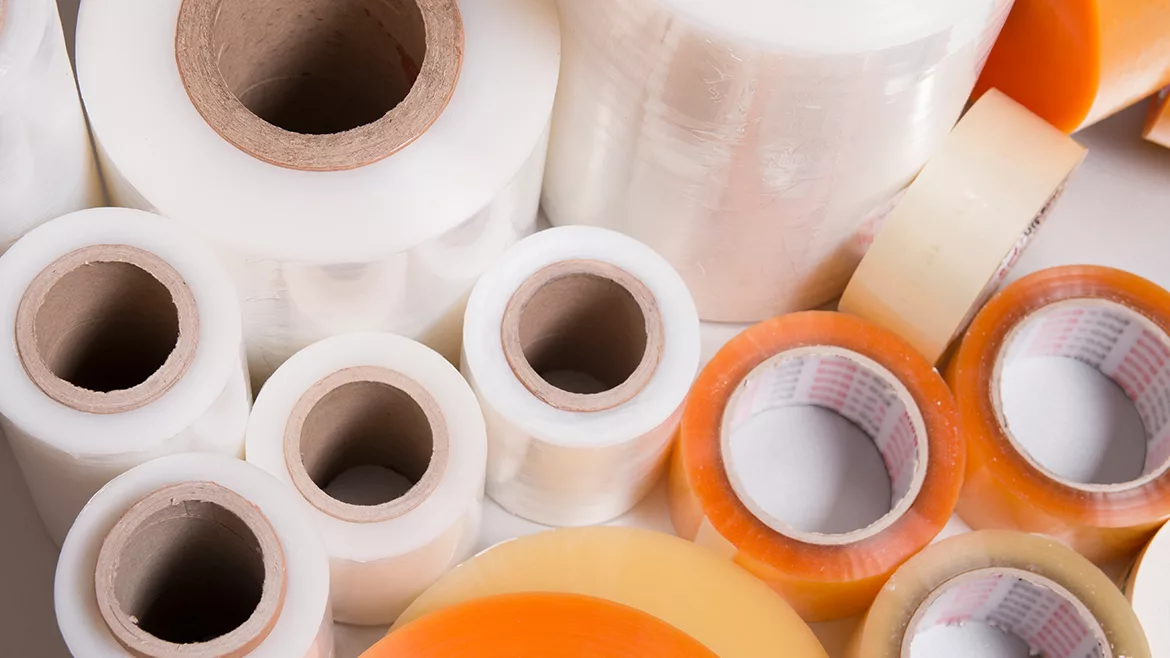
Plastic film backings have long been the industry standard, but their environmental impact is hard to ignore. Incorporating post-consumer recycled (PCR) content is a practical way forward.
Hot-melt packaging tapes made from recycled PET (rPET) film can stick just as well and work on automated lines if the system is well-designed. Since rPET film can be stronger than standard Biaxially Oriented Polypropylene (BOPP) film, manufacturers can make thinner backings with up to 90% recycled content while keeping the needed strength and flexibility. For companies not yet ready to switch to curbside recyclable paper packaging tapes, rPET hot-melt tapes are a practical way to reduce reliance on virgin plastic while maintaining seal integrity and operational consistency.[5] For companies seeking to reduce plastic film use, curbside recyclable paper packaging tapes are an option.[6]
Even as more companies are using sustainable packaging, some misconceptions slow wider adoption.
The first misconception is about cost. Often, switching to recycled-content film tape can be comparable in cost and does not require significant changes to operations. EPR programs also add new packaging costs, making it even more important to use sustainable materials and become more efficient over time.[7]
The second misconception concerns compatibility with existing equipment. Many sustainable packaging tapes are made to run on existing machines, so companies can switch materials without spending much on new equipment or changing their processes.[8]
The third misconception is about performance. Some people think sustainable materials do not work as well as traditional ones. But in many tapes, the adhesive remains the same, while only the backing changes. This means qualities like stickiness and strength are designed to be similar, depending on the product and its use.[9]
For packagers, recycled-content film tape is now seen as a practical, ready-to-use option instead of a niche product. It helps reduce virgin plastic use while maintaining reliable operations.
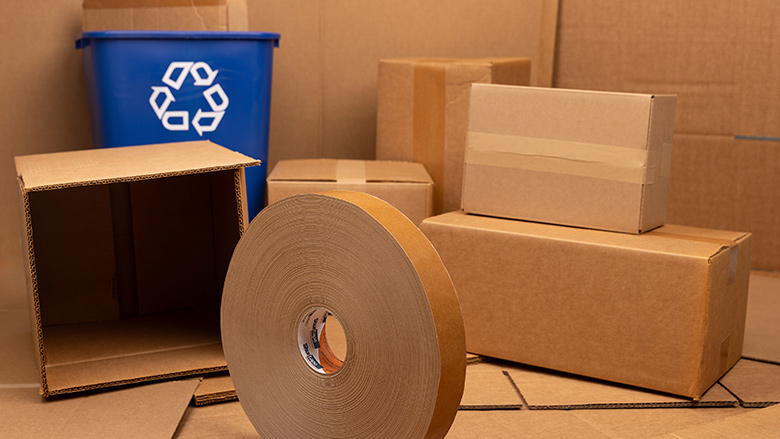
Image courtesy of Shurtape
Recyclability as the End Goal
What happens to packaging at the end of its life is still a key part of sustainability. Many packaging tapes are not easy to recycle, and plastic film backings can cause problems in paper recycling. During pulping, these materials often do not break down and must be removed, which can slow down processing and lower the quality of the recycled fiber.[10]
Paper-backed tapes are a better fit for fiber-based recycling systems. They can stay on the cardboard during recycling and do not need to be removed first. However, performance can vary by facility, and not every paper tape has been tested. That variability makes independent verification the most reliable way to confirm a tape’s recyclability claims.
This is where third-party certification helps separate real claims from hype. For example, one performance-grade paper tape earned independent curbside-recyclable verification from Western Michigan University. This means it can be recycled with the box, with no removal needed, and adds fiber to the recycling stream instead of disrupting it. Products like this are also usually made with FSC-certified paper and meet FDA indirect-food-contact requirements, covering both sourcing and end-of-life in one solution.[11]
For companies wanting to improve recyclability without major changes to their packaging systems, paper-based tape can be a practical solution to meet performance needs.[12]
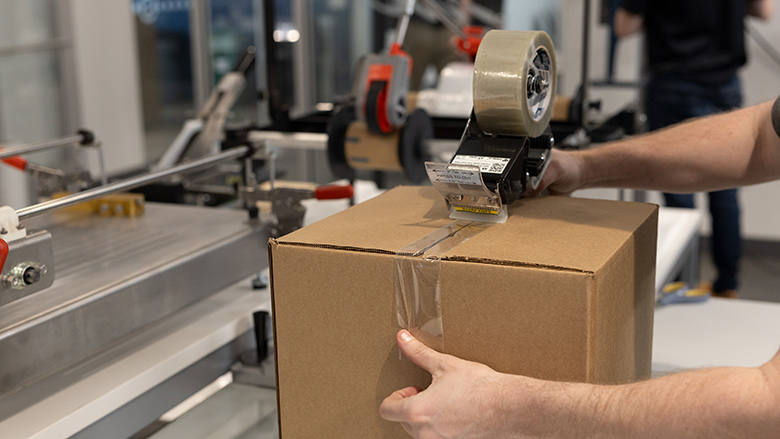
Image courtesy of Shurtape
Waste Reduction Through Smarter Sealing
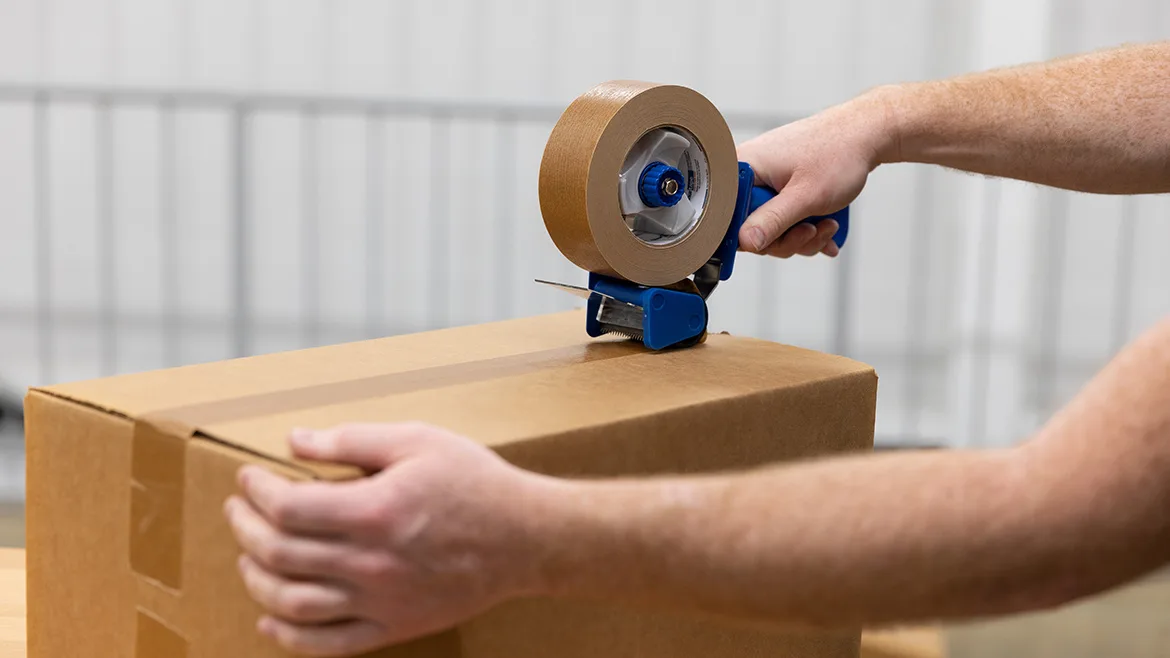
Choosing the right materials is only one part of being sustainable. How packaging tape is applied also affects efficiency. Manual taping often uses extra material and creates uneven seals. Automated case sealing systems apply tape more evenly, reducing material use and creating more consistent seals.
Modern sealing systems can include alerts for low tape, missing tape, broken tape, uncut tape, and case jams. These features reduce product waste, retaping and downtime.[13]
By making processes more consistent and reducing differences, automated systems can improve efficiency and use materials more effectively. The business case is clear: automation can cut tape waste by about 1.5 million pounds per year, lower operational costs, and deliver equal or better seal integrity for reliable performance.[14]
Looking Ahead
Companies focused on EPR compliance, supply chain sustainability, and other environmental goals now have more choices. Recycled-content film tapes, curbside-recyclable paper tapes and automated sealing systems are affordable, easy to use, and usually work just as well as current options.
The main reason to choose these solutions is straightforward: they work. Packaging that meets environmental standards and performs as well as or better than traditional options is not a trade-off. That’s the goal.
Leading manufacturers no longer see sustainability as a limitation. They are putting resources into new materials and better processes that cut waste and expand their product lines. This ongoing effort helps them keep up with changing regulations and consumer needs, while also offering more choices to their customers.
To learn more about Shurtape and its product, visit https://shurtapetech.com/.
References:
- https://www.mckinsey.com/industries/packaging-and-paper/our-insights/sustainability-in-packaging-us-survey-insights
- https://calrecycle.ca.gov/packaging/packaging-epr/
- https://cdphe.colorado.gov/hm/epr-program
- https://www.oregon.gov/deq/recycling/pages/producers-of-covered-products.aspx
- https://www.plasticstoday.com/packaging/sealed-with-a-kiss-of-sustainability-rpet-tape-for-boxes
- https://www.shurtape.com/packaging/products/sustainable/recycled-series/
- https://www.newmoa.org/wp-content/uploads/2022/07/EPR_for_PPP_White_Paper.pdf
- https://www.shurtape.com/packaging/products/sustainable/recycled-series/
- Ibid.
- https://recyclingpartnership.org/state-of-curbside-report-2020/
- https://www.shurtape.com/packaging/products/sustainable/curbside/
- https://www.packagingstrategies.com/articles/95846-improved-packaging-efficiency-tape-solutions-for-recycled-substrates-and-cold-environments
- https://www.shurtape.com/packaging/products/applicators/
- https://shurtapetech.com/sustainability/how-we-are-reducing-tape-waste-with-shurseal
Looking for a reprint of this article?
From high-res PDFs to custom plaques, order your copy today!