The State of the Global Specialty Chemicals Industry 2025-2027f: Supply Chains Subject to Geopolitical Bedlam
Geopolitical uncertainty, rising transportation costs, and fragile supply chains are challenging adhesives and sealants producers to rethink sourcing, inventory, and long-term strategy.
Need to Know
- Geopolitical disruptions, transportation costs, and dependence on crude oil and natural gas continue to create risks for specialty chemical producers.
- The author recommends strategies including reshoring or nearshoring, multiple raw-material suppliers, and inventory adjustments to improve flexibility during disruptions.
- ChemQuest estimates the global adhesives and sealants market will reach $72.4 billion in 2026, representing 3.0% value growth but only 1.0% volume growth.
- Companies that strengthen supply chains, plan for geopolitical uncertainty, and draw on internal and external expertise may be better positioned to respond to future disruptions.
Adhesives, sealants, paints, coatings, personal care items, lubricants, HI&I (household, industrial, and institutional cleaners), and many other global marketplaces are based upon chemical technology, and that technology is based upon the specialty chemicals that are derived from fossil fuels, primarily crude oil and natural gas. It is a great and convenient thing that so many products that serve so many billions of people throughout the global community are made from an array of chemicals that are essentially all derived from the same two sources — but when the worm turns, things can take a dramatic and sharply downward turn, and all of those billions of people are either now, or will be in the foreseeable future, feeling the effects of the geopolitical turmoil happening on a global scale.
Though many disruptions are happening in different places — tariff issues in the U.S., war in Iran, the Russian invasion of Ukraine, the U.S. invasion of Venezuela, military conflict in the Gaza Strip, Houthi activity in the Gulf of Aden — in a de facto global economy, all disruptions of these sorts have geopolitical implications and economic impacts not only on countries but on businesses and their supply chains. While it is true that the oil-producing countries of the Middle East are allocating billions of dollars to create alternate pathways for their crude to bypass the Strait of Hormuz on its way to market, these measures, while significant, can only deal with currently known threats. “We don’t know what we don’t know” will always be lurking around the corner to create the next supply chain disruption, so it doesn’t make sense to build the new pipelines and ports and then breathe a sigh of relief. . .this would not be a realistic view of the world in which we currently live and isn’t going to improve in any substantive fashion tomorrow or the next day.
The Great Supply Chain Crisis of 2021-2023 functioned as a very loud and exceptionally clear wake-up call for all participants within the specialty chemicals value chain. Its message was equally loud and clear in all market sectors: “If you don’t wish to have a future repeat of this crisis, then you have only one way forward: everything must change.” It was a pretty harsh message, calling for drastic rethinking of how things are done, but it constituted an absolutely apposite set of marching orders for the entire specialty chemicals market space. Those that got the message and made appropriate changes came out of the 2021-2023 in one piece. Those that did not emerged weaker or not at all.
The Great Supply Chain Crisis exposed the fact that global supply chains lacked fundamental resilience, forcing individual governments and businesses within the manufacturing sector to bring greater resilience to the overall process. If we have learned nothing else from the past 4-6 years, it should be the incalculable value of having a robust, proactive, agile business strategy. A lot was learned from the Great Supply Chain Crisis, and a lot of the learning that was applied to the various areas of business, government, and global cooperative organizations was of a very positive and proactive nature and certainly helped to stabilize the global supply chain going forward. Actions of all manner and means were taken to prevent another Great Supply Chain Crisis in the future by businesses, both small and large; local and state governments; governments of countries around the globe; cooperative organizations such as the World Bank; and global non-profit organizations such as the Red Cross. For those with strategic vision, it was imperative to do whatever was necessary to avoid wreaking havoc with the complicated arteries of commerce that carry the lifeblood of the global economy in them.
When all is said and done, however, global supply chains are more fragile than ever, and everyone in the adhesives and other specialty chemicals industries must heed, and be diligent about applying, the lessons that have been learned from the Great Supply Chain Crisis to everything that they are doing today, while also pre-paring to react as quickly as possible to news from around the world that might affect both the supply chains and their individual businesses. All specialty chemical producers are going to need to consider some version of reshoring (and/or nearshoring, friendshoring, ally-shoring, most-favored-nation-shoring, et al.) in order to secure critical raw materials and control the increasing cost of shipping. It is more important than ever to have multiple suppliers for our raw materials whenever possible — and it is vital that every specialty chemicals producer adjust both raw material and finished goods inventories to levels that enable the greatest flexibility possible when global supply chains are disrupted. All of the biobased, waterborne, sustainable, and energy-curing products aside, the adhesives world today is based on raw materials that are primarily derived from crude oil and natural gas, and this is not the most comfortable position for any manufacturing industry in the year 2026.
Crude Oil vis-à-vis the Specialty Chemicals Industry, 2025–2026e
A necessary component of the creation of meaningful strategy for adhesives and sealant makers worldwide is understanding what is happening now and what is likely to happen in the near- and longer-term future of crude oil production. We must always bear in mind that every $10 increase in crude typically results in a 3-5% increase in overall costs to adhesives and sealant producers (depending upon technology type), representing an important factor in the overall dynamics and profitability of the adhesive and sealants industry.
In 2018, the United States became the largest global crude oil producer, a position that it retained in 2025, with production of 13.6 million barrels per day, significantly ahead of Russia (9.9 million barrels per day) and Saudi Arabia (9.6 million barrels per day)1 (see Figure 1). This year, U.S. refinery capacity utilization is running at 90-96% of capacity, which is higher than the long-term average of 89-90%, with a slight seasonal dip at the beginning of each year.2 Over the last four years, refining capacity has remained in the range of 17.9-18.4 million barrels per day3 (see Figure 2).
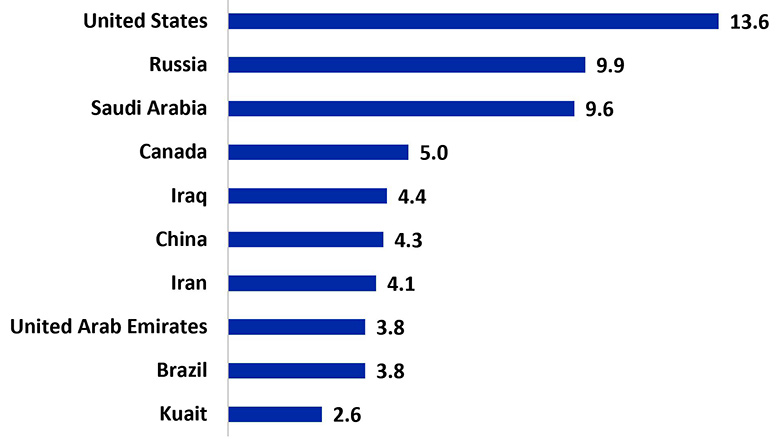
Figure 1. Top 10 global crude oil producers, 2025 — millions of barrels/day. Source: The ChemQuest Group, Inc.; U.S. Energy Administration, International Energy Statistics
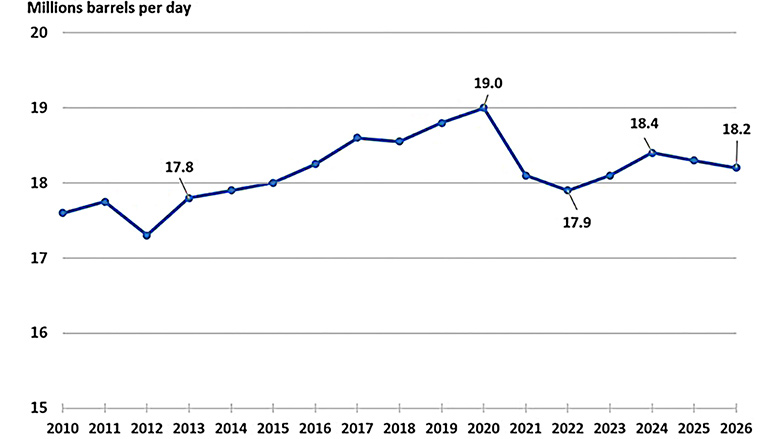
Figure 2. U.S. crude oil refining capacity. Source: The ChemQuest Group, Inc.; U.S. Energy Information Administration
In the longer term, the percentage of energy from fossil fuel products (coal, natural gas, oil) will be in significant decline, driven primarily by a reduction in the dependence of coal. Solar and wind will continue to show strong growth. Nuclear power will grow slowly, although, as a percentage of all energy produced, it shows a slow decline (see Figure 3).
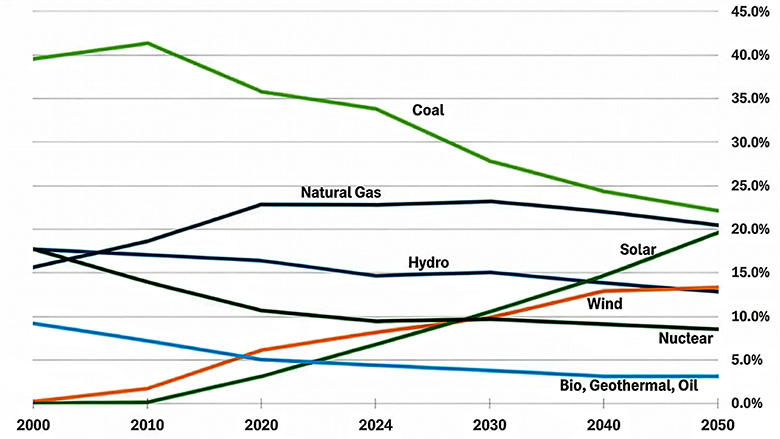
Figure 3. Global energy usage, 2000-2050. Source: The ChemQuest Group, Inc.; International Renewable Energy Agency4
The Oil- and Gas-Dependent Cost of Transportation
While availability of raw materials is of critical importance for producers of adhesives and other specialty chemicals, an increasingly important aspect of both availability and pricing is the dependability and cost of transportation, whether transoceanic, transcontinental, or in-country. All it takes to create a significant problem is for oil tankers to be held up by the Houthis in Bab el-Mandeb Strait at the southern end of the Red Sea, and specialty chemicals and fuel that would otherwise be made from that crude are both delayed in getting to market and more expensive. As the cost of crude increases, so does everything made from it, and this has a profound impact upon the cost of transportation as the cost of diesel fuel rises. Between early 2020 and late 2021, the cost of transoceanic shipping containers rose dramatically, from approximately $1,500–$2,500 for non-hazardous loads in late 2019 to an average of $12,400 (even as high as $20K–$30K in specific incidences), before beginning to decline in the late summer of 2021.
Fast forward to 2026. In January, the cost to ship a container was $2,200 and has risen steadily since then, with further increases likely to come (see Figure 4). In any of the specialty chemicals market spaces, such as adhesives and sealants where low volume growth is currently being accompanied by significant inflation-driven value growth, undependable raw material supply and increasingly expensive transportation are seri-ous issues that can only lead to difficulties in the future. Let’s face it, the only measure of growth that always has meaning is volume growth; value growth is great in the short-term but not in the long-term unless it is supported by volume growth.
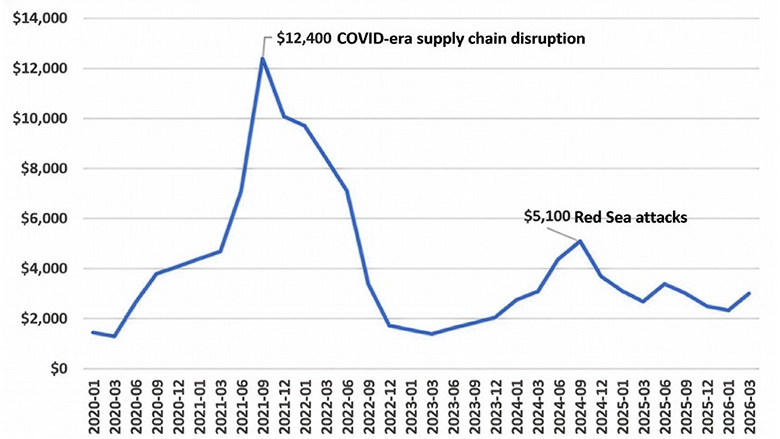
Figure 4. Ocean freight rates, China to United States, January 2020-March 2026e (40-foot equivalent unit). Source: Doge Consulting; Freightos Baltic Index; Drewry WCI; The ChemQuest Group, Inc.
Although U.S. long-distance trucking rates declined between March 2022 and March 2023, the decline was not down to nearly the level that prevailed in January 2019 and has risen steadily since the spring of 2023, reaching a historic high point in August 2026 (see Figure 5). Likewise, the cost of U.S. rail transportation of freight has steadily risen between early 2023 and August 2026 — and the cost of both truck and rail shipping are very likely to keep increasing as global chaos continues (see Figure 6).
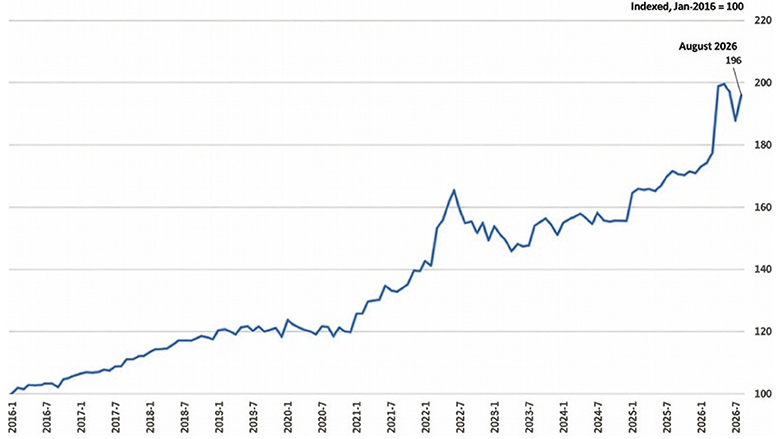
Figure 5. U.S. long-distance trucking rates, January 2016-August 2026e (indexed to January 2016=100). Source: Federal Reserve Bank of St. Louis (PCU4841224841221); The ChemQuest Group, Inc.
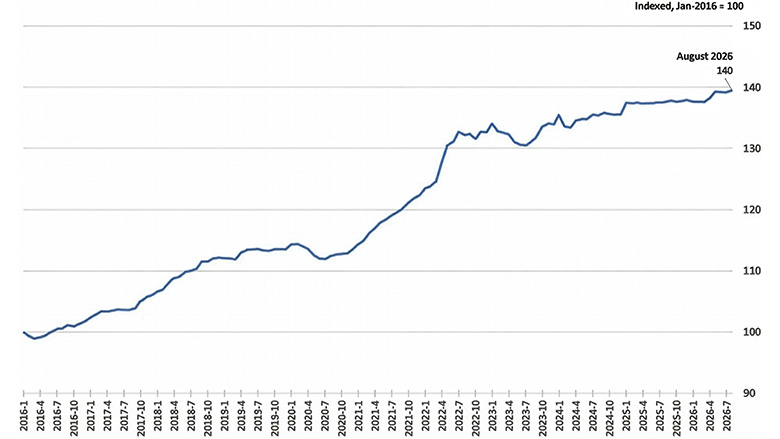
Figure 6. Rail transportation index, January 2016-August 2026e (indexed to January 2016=100). Source: Federal Reserve Bank of St. Louis (PCU4821148211); The ChemQuest Group, Inc.
Global Adhesives Market
As a result of aggressive consolidation over the past two decades, the top 10 global adhesives producers collectively accounted for 57.7% of global sales in 2025. Furthermore, the top four global players accounted for 62% of the top 10 global adhesives firms’ sales in 2025 (see Figure 7).
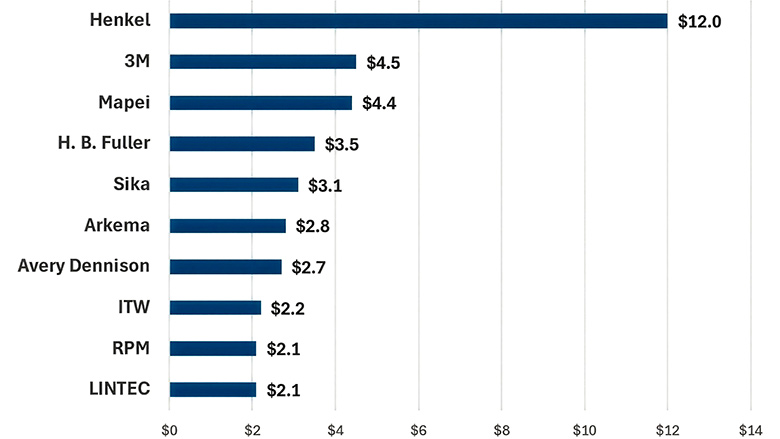
Figure 7. Top 10 global adhesives and sealants producers, 2025 ($, billions). Source: The ChemQuest Group, Inc.
We estimate that 2026 will see an increase in value of the global adhesives and sealants market by 3.0%, and volume will increase by 1.0%, to a total value of $72.4 billion — and the outlook for 2027 suggests that growth will continue at a somewhat faster pace than in 2026. We currently foresee a 5.7% growth in value in 2027f, for total global value of $76.5 billion, but only a 2.6% growth in volume, unless inflation declines and mortgage rates drop (see Figure 8). This estimate takes into consideration a heightened appreciation for the damage that geopolitics can do to supply chains, but it is neither a best-case scenario, nor a worst-case scenario. Rather, it represents what we consider to be a realistic estimate of a range of scenarios that may or may not take place in the period 2026e-2027f. The principal factors that we have considered include:
- Construction: Outside of data center construction, the market remains challenged; multi-family completions should pick up over the next 12 months
- Transportation: Auto and light truck in a challenging operating environment; sales expected to drop in 2026e
- Boeing production output is still restricted as they work on safety and quality improvements; on target to increase monthly output in 2026e and for 777X certification in 2027f
- Formulator profitability outlook (see Figures 9 and 10)
- Top-line growth continues to be challenging, with some price increases expected throughout to cover additional input costs in 2026
- Gross margins to increase with easier comps for SG&A
- SG&A and direct labor costs up by low-single-digits
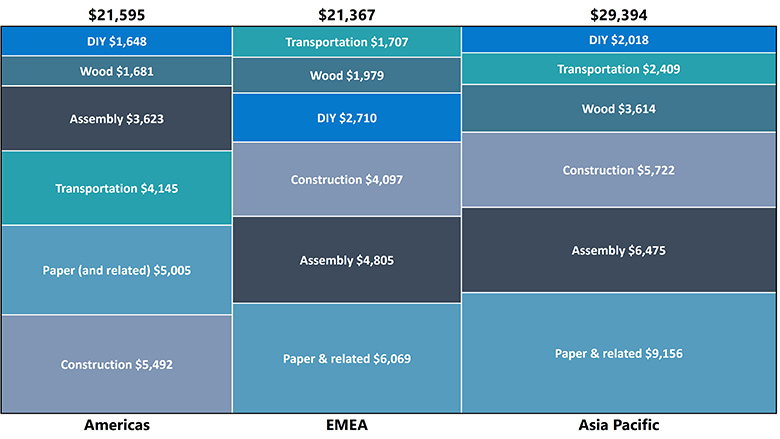
Figure 8. Global adhesives value by market, 2026e ($, millions). NOTE: Not shown are the Footwear Segment, which is less than 2% of the Adhesive market, and the Sealant segment, which is ~10% of the Adhesive market. Source: The ChemQuest Group, Inc.
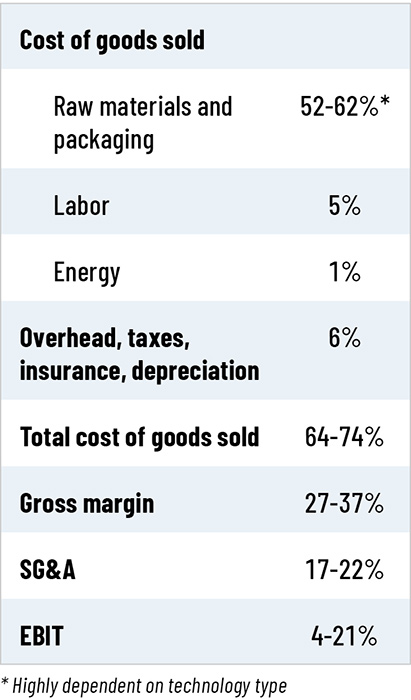
Figure 9. Average U.S. adhesive company cost structure, 2025. Source: The ChemQuest Group, Inc.
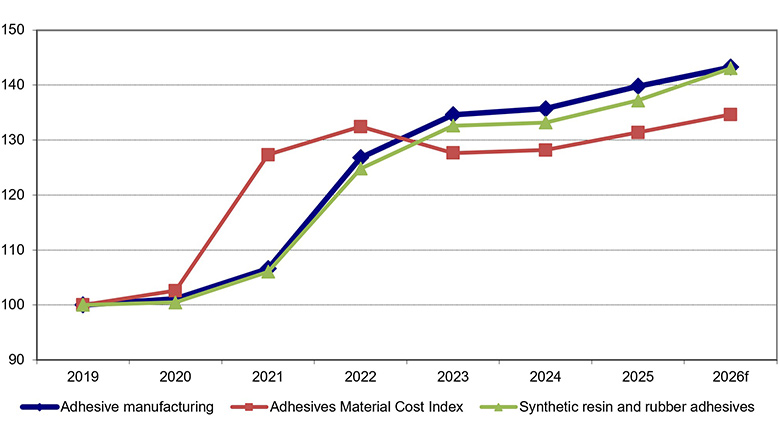
Figure 10. Input and output pricing (indexed to 2019=100). Source: The ChemQuest Group, Inc.
What should we expect from the adhesives and sealants market during 2026-2027? Of primary import is the recognition that this global market sector remains a mature and stable component of the world economy, and demand still tends to follow overall economic activity, driven especially by paper, assembly, and construction. Correlation exists, therefore, between gross domestic product (GDP) per capita and adhesives and sealants consumption per capita, so as the economic conditions in second- and third-world nations improve, their demand for adhesives and sealants will increase. Adhesives demand, like coatings, also continues to exhibit significant, albeit not exclusive, dependence upon industrial production and construction spending, and the mid-to-long-term outlook is positive for both, barring a major intervening economic event such as another global recession.
Summing Up
Following a five-year period of having to claw its way back from the setbacks induced by COVID and The Great Supply Chain Crisis of 2021-2023, 2026 finds the bulk of the global economy in a position that is barely better than 2019, before the onslaught even began. In most areas of the specialty chemical value chain, including adhesives and sealants, value is up significantly, but that is due to supply chain issues and the subsequent periods of unacceptably high inflation. Volume has only increased slightly, but volume is really the only factor that counts in the long run. Increases in value, coupled with targeted acquisitions, can only help producers avoid the hard facts for finite periods of time. Eventually, everything comes down to the “volume growth” issue, and for good reason. The ultimate measure of whether or not a business is successful or not — of whether or not it has staying power that will carry it into the future — is volume growth. Following decades of creating complex supply chains, the global specialty chemicals producers have suddenly — and dramatically — been confronted over the past six years with the downside of complexity.
At the end of the day, creating an effective strategy — and implementing that strategy — is of the utmost importance, because it will separate the winners from the losers. It is that simple. Whether adhesive and sealants producers create their strategies and new products in-house or work with outside partners — strategic business advisers, technology consultants, independent laboratories, universities, subject matter experts, or some combination — should be seriously considered, because we live and work in a changing world where in-house assets are increasingly challenged and easily overwhelmed, and external experts are able to bring extensive knowledge of multiple fields in specialty chemicals to drive advancement and cross-fertilization of technology at both raw material suppliers and adhesive and sealant producers. It is well worth doing “whatever it takes” to access third-party expertise to help manufacturing companies embrace a wider world of technology experience and expertise and deal as smoothly as possible with global supply chain disruptions and evolving trade routes and alliances.
We must, of course, create tactical solutions for the daily difficulties — the “alligators and gremlins” — that confront us on a regular basis, because we each need to address current events and deliver the financial performance demanded by our investors, so that we remain viable in the short term. We absolutely must, however, also be using our recent history to guide the creation of a strategy that will move us back from the edge so that future surprise events will not have such a debilitating effect on our individual companies, as well as on the global economy. This is the only path forward that will enable our businesses to remain viable in the long term.
Going Forward
It is effective strategy, the offspring of careful planning coupled with an open-eyed and honest appraisal of the overall global situation, which will separate the most successful adhesive and sealant producers from the less successful. Those raw material suppliers and adhesive producers that create their strategies and new products by working with outside partners — strategic business advisers, technology consultants, independent laboratories, universities, individual subject matter experts, or all of the foregoing — are going to have an advantage in a world that is characterized by knowledge creation moving at the speed of light but hampered by geopolitical stumbling blocks, compared to those that decide to do everything on their own. Regardless of how they proceed into the future, however, there is one certainty with which everyone in the specialty chemicals industry will need to deal: The only approach to the future that will most definitely not work is business as usual.
To learn more, contact the author at gpilcher@chemquest.com or visit https://chemquest.com.
References
1. “Top Ten Producers of Crude Oil and Lease Condensate (2025),” U.S. Energy Information Administration, July 9, 2026, https://www.eia.gov/todayinenergy/detail.php?id=67844.
2. “U.S. Utilization of Refinery Capacity,” YCharts, ycharts.com/indicators/us_operable_crude_oil_distillation_capacity#:~:text=Level%20Chart,long%20term%20average%20of%2089.64%25.
3. “U.S. refinery capacity largely unchanged as of January 2025,” U.S. Energy Information Administration, June 30, 2025, https://www.eia.gov/todayinenergy/detail.php?id=65624.
4. “Renewable capacity highlights,” International Renewable Energy Agency, March 31, 2026, https://www.irena.org/-/media/Files/IRENA/Agency/Publication/2026/Mar/IRENA_DAT_RE_capacity_highlights_2026.pdf.
Looking for a reprint of this article?
From high-res PDFs to custom plaques, order your copy today!