Precision in Packaging: Meeting the Demands of 2K Adhesive Systems
Precision packaging is a mission-critical factor — especially in two-component systems where even minor missteps can compromise strength, stability, and scalability.
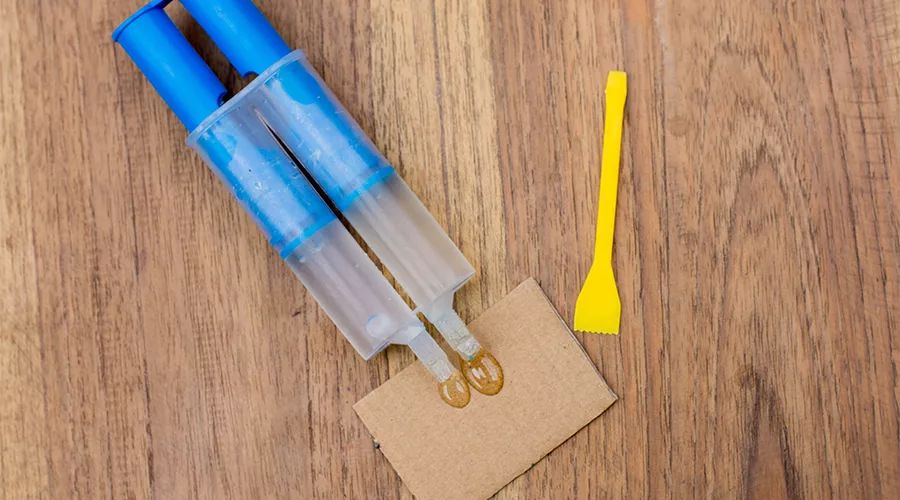
As industries evolve toward tighter tolerances and higher-performance bonding systems, the spotlight is turning to an often overlooked aspect of adhesive technology: packaging. Nowhere is this more evident than in the rise of two-component (2K) adhesives, where packaging precision directly impacts the effectiveness of the product. While dual-component systems offer superior performance characteristics — such as enhanced strength, thermal resistance, and flexibility — their reactive nature introduces a host of packaging complexities that must be addressed early in the product lifecycle.
This article explores the technical challenges of 2K packaging, outlines common failure points, and identifies best practices for formulators and manufacturers seeking to scale these materials successfully.
The Market Imperative for Precision
Across sectors such as aerospace, automotive, electronics, and medical devices, engineers are increasingly turning to 2K formulations to solve demanding application challenges. These systems rely on two reactive components — typically a resin and a hardener — that must remain separate until the moment of use, when precise mixing and ratio control become critical to ensuring proper performance.
While formulators often focus heavily on chemistry, the downstream packaging and dispensing process plays a pivotal role in the end-use reliability of the material. Poor packaging decisions can result in off-ratio dispensing, premature curing, void formation, or even chemical degradation of the product before it reaches the application site.
In fact, packaging and dispensing errors are among the leading causes of performance issues in 2K adhesives, especially when transitioning from lab-scale development to production environments.
Common Failure Points in 2K Packaging
Though each application has unique requirements, several failure modes consistently emerge in poorly executed 2K packaging programs.
Mixing Errors
Achieving an accurate ratio between resin and hardener is non-negotiable. Deviations — even within a few percentage points — can result in incomplete curing, reduced bond strength, or long-term instability. Ratios like 1:1, 2:1, and 4:1 must be preserved through the entire filling, storage, and dispensing process.
Air Entrapment
Air bubbles introduced during filling or mixing can impair adhesive integrity, disrupt thermal conductivity, or cause voids in critical bonding areas. To combat this, packaging operations must incorporate vacuum degassing and controlled fill rates tailored to each formulation's rheology.
Material Incompatibility
Certain reactive components can degrade standard packaging materials, particularly cartridge plastics, plungers, or static mixers. Compatibility testing is essential to prevent leaching, softening, or cross-contamination that might not be visible until late-stage failure.
Premature Curing
Improper sealing, backflow between chambers, or environmental exposure (e.g., moisture, heat) can trigger unwanted reactions between components before use. This not only creates material waste, but also interrupts production cycles and increases cost.
Managing Complexity: Best Practices for 2K Packaging
Successfully packaging 2K adhesives requires more than mechanical precision — it demands process discipline, material expertise, and a controlled environment that reduces variability at every stage. Recommended practices include:
- Ratio-validated metering and synchronized dual filling for side-by-side cartridge formats
- Cleanroom-like packaging environment for moisture-sensitive or medical-grade systems
- Batch-level QC testing, including weight checks and viscosity monitoring
- Full lot traceability across components and packaging elements
- Custom degassing protocols adapted to the viscosity and volatility of the formulation
These controls ensure that the adhesive performs in the field as it did in the lab — and that the packaging adds value rather than risk.
Applications Where Packaging Precision is Critical
While nearly all high-performance adhesives benefit from well-executed packaging, certain applications require it:
- Aerospace: Structural adhesives used in bonding composites and metal assemblies
- Electronics: Solder, Thermal Pastes and Potting compounds and encapsulants for PCB and component protection
- Medical: Biocompatible formulations with strict traceability and sterility requirements
- Construction and Automotive: Dual-cartridge sealants and bonding agents for panel adhesion, crash resistance, and NVH control
In each case, field success depends as much on the packaging process as on the adhesive formulation itself.
Packaging as a Strategic Function
For formulators scaling a 2K adhesive product, the choice of packaging partner can be as important as the resin chemistry. Facilities equipped for 2K systems must offer more than basic cartridge filling — they must act as process integrators, capable of adjusting rheology, ensuring separation, and maintaining dispensing fidelity at scale.
At JWV Solutions, the company has built its infrastructure around these needs. From pilot runs to full production, it supports customers with services such as:
- Viscosity adjustment and custom compounding
- Precision degassing and filling of dual-barrel systems
- Rapid prototyping for new ratios or static mixer designs
- Controlled environment handling and packaging validation
The company’s goal is to help material innovators focus on what they do best — formulate — while it handles the challenges of delivering those materials to market in a ready-to-use, production-safe format.
Conclusion
2K adhesive systems enable next-generation solutions in industries where performance is non-negotiable. But with greater performance comes greater complexity — and packaging is one of the most critical, yet underestimated, links in the chain.
Whether it’s preventing air inclusion, maintaining mix ratios, or selecting the right cartridge and mixer for chemical compatibility, packaging precision is a defining factor in product success. Manufacturers and formulators who treat packaging as a strategic function — not a logistical afterthought — will be best positioned to deliver on the full promise of 2K technology.
Additional information about JWV Solutions is available at jwv-solutions.com.
Looking for a reprint of this article?
From high-res PDFs to custom plaques, order your copy today!