The Structural Shift: How Adhesives Are Redefining Modern Assembly
As advanced manufacturing evolves, industrial adhesives are emerging as the critical link between lightweight design, automation, and high-performance assembly.
In the evolving landscape of global manufacturing, a significant shift is underway. Adhesives are no longer mere alternatives to traditional fasteners; they have become foundational elements of modern assembly. As products across the automotive, electronics, and medical device sectors become more complex, the industry is moving toward a holistic, systems-based approach where materials, automation, and quality control are inextricably linked.
The Rise of Adhesives in High-Performance Sectors
The transition from mechanical fasteners (like rivets and screws) to structural adhesives is driven by the need for lighter, more integrated designs. This is particularly evident in the use of mixed materials — such as bonding plastics to composites or metal s— where traditional drilling can compromise structural integrity.
In the automotive sector, OEMs are increasingly utilizing structural adhesives to meet aggressive fuel efficiency and electrification targets.
Within the aerospace industry, high-strength bonding is essential for composite-heavy aircraft, where reducing part counts and weight is critical for performance.
Electronics manufacturers use precision bonding to allow for smaller, more durable devices that can withstand environmental stressors.
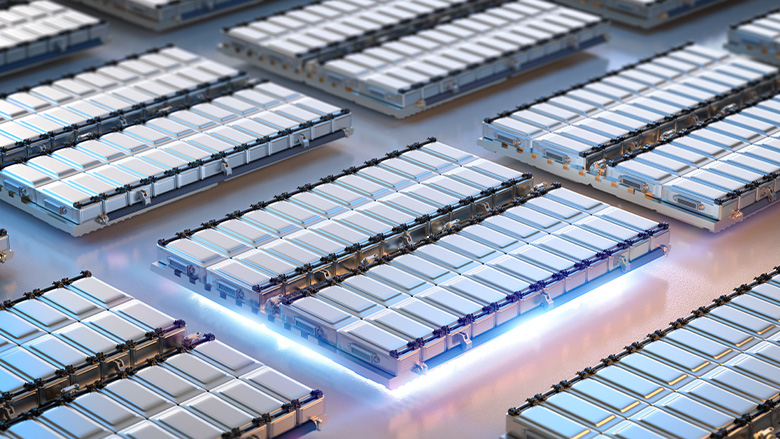
In a success story posted on its website, Henkel outlines a project in 2023 where a car manufacturer approached the company to help redesign its batteries to a cell-to-pack concept that maintains strong structural bonding while allowing disassembly for repair, reuse, and recycling. According to Henkel, the ability to disassemble is important because even a 1% failure rate could mean 1,500 defective cells per week at high production volumes. To meet this challenge, the company developed a high-strength adhesive with a controllable debonding trigger, collaborated with equipment and debonding specialists, and used digital twin simulations to test solutions. After identifying electricity, heat, and chemical triggers as viable options, the company validated them on full battery packs and ultimately selected the most suitable approach.
Market Growth and Statistical Impact
The demand for industrial adhesives is reflected in robust market projections and real-world application data. As manufacturing processes become increasingly advanced worldwide, with the move to smart manufacturing, the use of industrial adhesives is expected to rise; adhesives in assembly help to streamline assembly lines and reduce production costs. Additionally, as manufacturers design vehicles with more advanced composite parts, adhesives help design engineers bond these parts to provide structural integrity and design elements.
One example is when Volvo was designing its new electric vehicle brand, Polestar. The Polestar 1 has an upper body of carbon fiber-reinforced plastic (CFRP) and steel composite fiber (Kevlar). While these composite materials were key to weight reduction and the right responsive handling Volvo required, they are difficult to bond. The company turned to DuPont to find an adhesive that enabled weight and noise reduction but also protected against corrosion. The decision was made to use DuPont's BETAFORCE™ 9050L composite bonding adhesive to bond the CFRP panels to the steel composites. According to DuPont, the adhesive helped reduce the vehicle weight by 300 kg and also provided corrosion control and noise reduction. The company’s application development experts also partnered with Atlas Copco to establish bond-width parameters and determine the best position for the adhesive bead on the car body, making sure that all parts fit together during curing, handling, and assembly time.

Integration with Automation and Quality
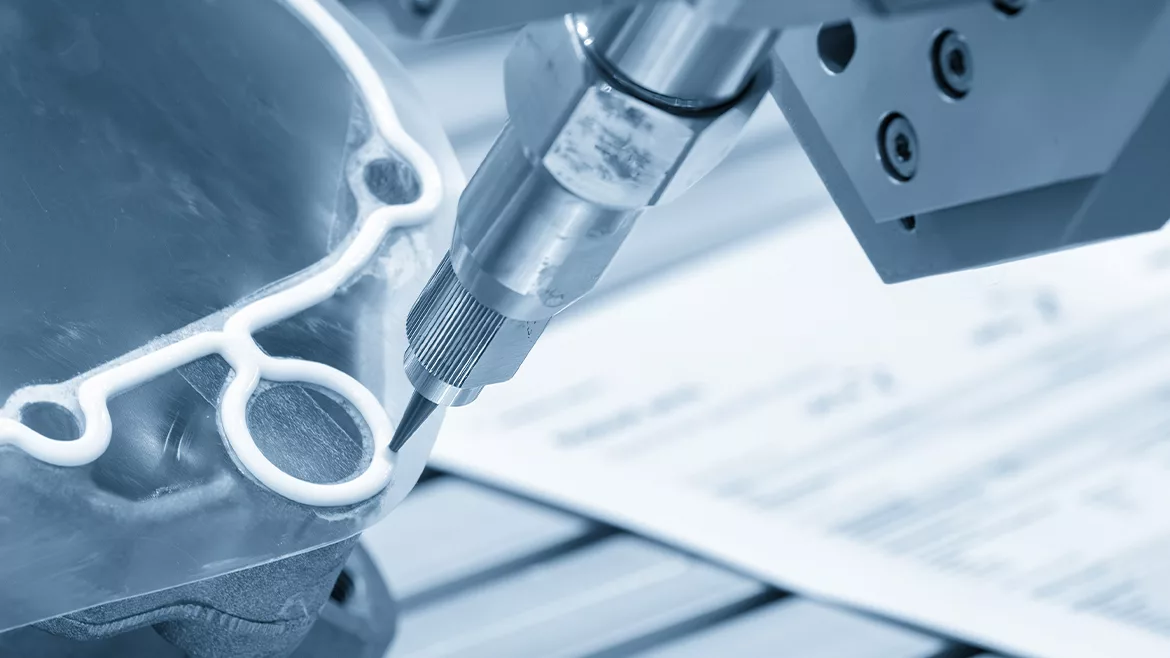
Modern assembly lines are highly instrumented environments where "islands of automation" are a thing of the past. Adhesives must now be formulated to perform predictably within robotic dispensing systems. Factors such as viscosity, cure time, and "clean" dispensing are vital. A minor deviation can disrupt an entire data-driven production line.
Suppliers and formulators are no longer working in silos. Instead, they collaborate with automation experts to ensure that materials fit seamlessly into workflows that include vision inspection, curing controls, and real-time feedback loops.
Bridging the Gap: The Manufacturing & Automation eXchange (MAX)
To address this growing interdependence between materials and machinery, the industry is turning toward cross-functional platforms. The Manufacturing & Automation eXchange (MAX), taking place March 25-26, 2026, at the Music City Center in Nashville, represents this new era.
By bringing together six major BNP Media brands — including ASSEMBLY Magazine, Quality, and Adhesives & Sealants Industry (ASI) — MAX offers a comprehensive look at the manufacturing ecosystem. Unlike traditional expos, MAX focuses on live, operational displays where attendees can see how adhesives, conveyors, and inspection systems function as a singular, integrated unit.
For adhesives professionals, understanding this holistic workflow is no longer optional. Speaking the language of manufacturing decision-makers — who prioritize system-wide reliability and line speed — is the key to developing the next generation of bonding solutions.
To learn more about MAX, visit https://manufacturingandautomationexchange.com.
Looking for a reprint of this article?
From high-res PDFs to custom plaques, order your copy today!