Dispersible Adhesives Facilitate Clean Label Separation in PET Recycling
Dispersible hot-melt adhesives offer a solution for cleaner PET recycling and improved material recovery.
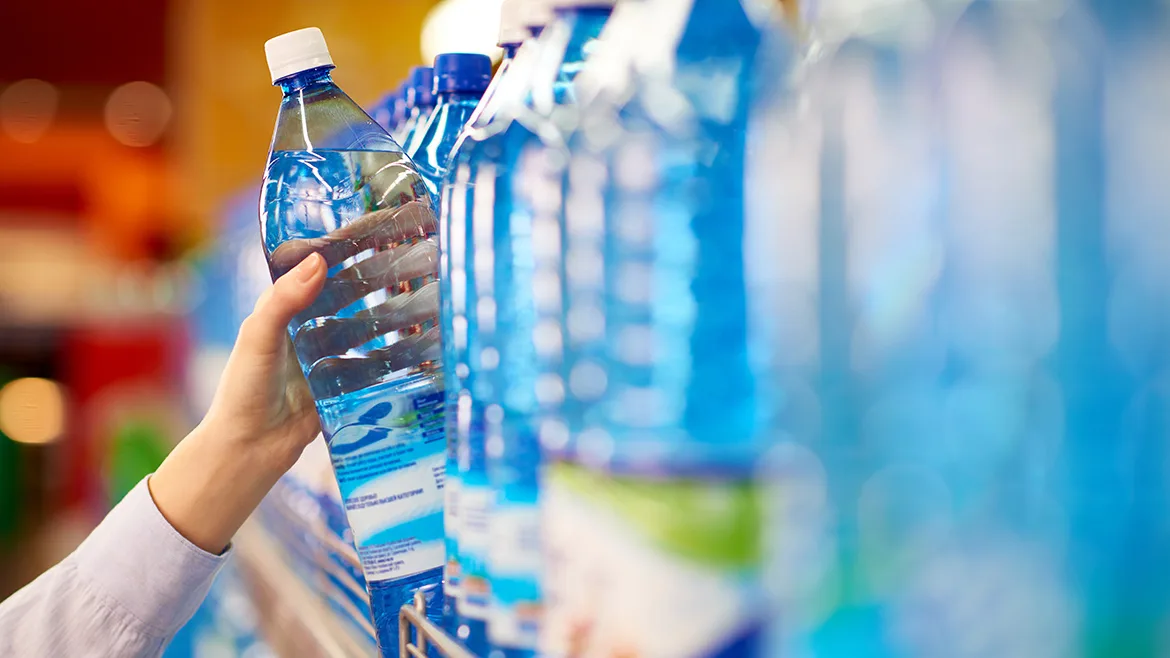
PET is ubiquitous in everyday life, as a raw material for clothing, household items, technical components, and bottles, which account for around 70% of global PET consumption. Nearly infinitely recyclable, the material plays a key role in the circular economy. This potential is set to be leveraged even more in the future. According to the new EU Packaging & Packaging Waste Regulation (PPWR), PET bottles must not only be designed for recycling but also gradually contain higher recycled content. In practice, these goals are on shaky ground. If, for example, the adhesive under the label remains on the material, the recycled PET becomes unsuitable for food applications. The solution lies in adhesives that can be separated, completely and residue-free, from PET during the recycling process.
The PPWR mandates a recycled content of at least 25% in single-use bottles starting in 2025 and at least 30% in all plastic bottles by 2030. One benefit of using regranulate is that it conserves fossil resources such as crude oil, which would otherwise be needed to produce new plastic granules. Additionally, the energy demand is significantly lower, as recycling PET requires about 88% less energy than producing plastic from primary raw materials.
Although more than 60% of PET bottles are already collected in Europe, industry estimates suggest that over 11 billion additional bottles could be returned to the recycling loop annually. The EU plastics strategy aims to address this by creating incentives to increase PET beverage bottle collection rates and expand recycling infrastructure. But collection is only half the battle: Efficient reuse requires that all components of the bottle are designed for recycling. In particular, the label must detach from the plastic without leaving residue — a requirement often unmet in practice due to non-removable adhesives.
Cloudy Outlook: When Adhesive Sticks Around
At first glance, the task seems simple: collect, clean, recycle bottles. But reality is far more complex. In specialized recycling plants, collected PET bottles are first shredded, and the resulting flakes are washed in hot water baths. While lightweight label remnants float and can be skimmed off, many conventional adhesives remain stuck to the flakes. Even in the standard process using hot caustic soda, which removes label material, adhesive residues, and other contaminants from PET, conventional hot melts often only partially detach. Typical removal rates range between 12% and 30%.
The consequences of these residues are severe: They cause cloudiness and yellowing, reducing the optical quality of the reprocessed PET material. Even more problematic is when barrier properties are compromised by contaminated flakes. This is especially critical for food packaging, as PET bottles — usually thin-walled for resource efficiency — are particularly vulnerable to weakened barrier performance. Such impairment can allow oxygen or other contaminants to penetrate, jeopardizing food safety. For PET bottles, contaminated flakes are therefore no longer suitable — at best, they can hope for a new life as a sweater, flowerpot, or strapping tape.
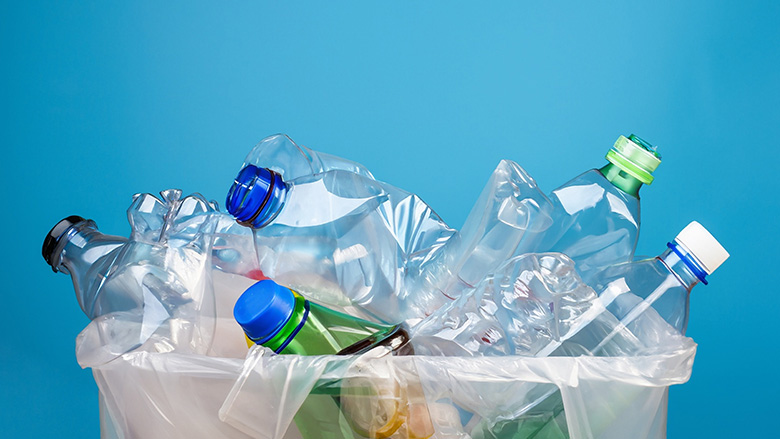
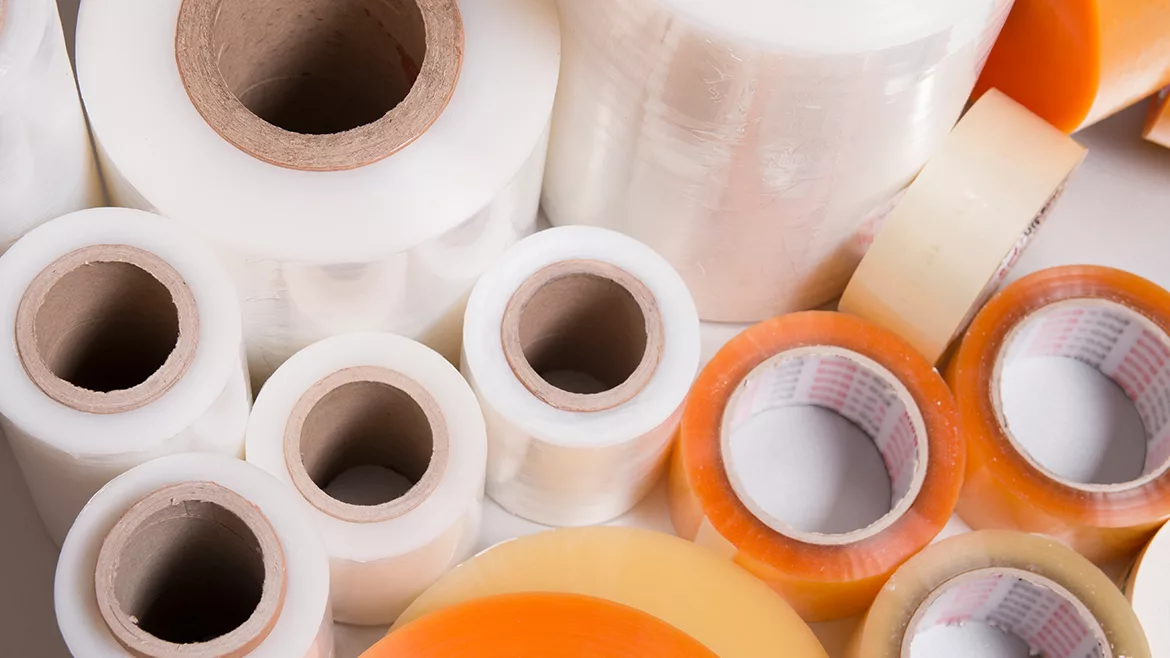
Image: Makhbubakhon Ismatova/iStock / Getty Images Plus
Recyclability Starts with Adhesive
Modern adhesives face high demands. They must not only ensure PET truly stays in the loop but also be compatible with common labeling techniques. One solution is dispersible hot melts — adhesives that almost completely dissolve or transform into an easily removable form in hot caustic soda. For example, Henkel Adhesive Technologies’ TECHNOMELT EM 335 RE can be removed up to 98% residue-free. Specifically developed for PET labeling, its dispersibility in hot caustic soda ensures adhesive residues are separated from the material stream along with the label material. This supports the production of ultra-pure PET flakes suitable for new food packaging.
Beyond recyclability, the solution offers additional benefits: The hot melt works for both paper and plastic labels and can be processed on lines running up to 40,000 bottles per hour. Its low application temperature of 110–140 °C protects equipment and reduces energy consumption. Thanks to its mineral-oil-free formulation and food compliance, it is also suitable for sensitive applications. Handling is further simplified by practical packaging in so-called X-tra Chubbs, which enable precise and clean adhesive dosing and contribute to packaging reduction through complete film dissolution.
Value Chain in Transition
The recyclability of PET bottles is determined not only at the recycler but throughout the entire value chain: From preform manufacturers to beverage fillers to retailers, the right decisions must be made early on. The development of specialized raw materials, suitable labels, and adapted adhesives determines whether a bottle can be reused for high-quality applications like food packaging at the end of its life cycle.
Dispersible adhesives make a decisive contribution here. They make PET bottles truly recycling friendly and ready to meet the requirements of the new EU regulation. After all, anyone aiming to achieve the ambitious PPWR targets needs solutions that not only stick reliably — but also let go at the right moment.
Learn more about Henkel and its products at www.henkel.com.
By Adhesive Experts at Henkel.
Looking for a reprint of this article?
From high-res PDFs to custom plaques, order your copy today!