3M Glass Bubbles in Caulks and Sealant Applications
Glass bubbles can enhance whiteness, reduce density, improve crack and shrink resistance, and increase the thermal insulation of caulk and sealant formulations.

Introduction
Glass bubbles, or hollow glass microspheres — HGMs, have been used for decades in many construction, paints, and coatings applications to provide benefits such as lightweighting, viscosity control, improved shrink and crack resistance in thick films, and thermal insulation. This study evaluates one 3M glass bubble, S28HS, and compares it to a standard mineral filler in a white water-based acrylic caulk and silicone sealant formulation.
When formulating materials with 3M™ Glass Bubbles, care should be taken to select bubble(s) with the appropriate strength/density ratio to ensure survival during processing and application while obtaining the desired performance properties. For these studies, the 3M™ S28HS grade was chosen for its combination of excellent strength-to-density ratio and particle size. Other grades of glass bubbles, such as S32HSN, K20HS and K15HSN, may be chosen depending on desired final properties such as density, surface smoothness, and thermal conductivity. The general properties of the fillers evaluated are shown in Table 2.
Experimental Methods and Materials Study #1
A basic acrylic caulk formulation is shown in Table 1.
| Material | Amount (lbs.) | Amount (GAL) |
|---|---|---|
| Water | 66.76 | 8.00 |
| Propylene glycol | 12.28 | 1.42 |
| Ammonia (28%) | 1.60 | 0.21 |
| HMHEC thickener | 2.14 | 0.19 |
| Surfactant | 10.36 | 1.13 |
| Dispersant | 4.54 | 0.45 |
| Anti-microbial additive | 1.39 | 0.16 |
| Defoamer | 1.87 | 0.22 |
| Ti-Pure® R-706 (TiO2) | 7.91 | 0.24 |
| Encor 167S® Acrylic Latex | 455.93 | 50.66 |
| Calcium carbonate/S28HS glass bubbles* | 730.69/74.8 | 32.19 |
| Silane adhesion promoter | 2.78 | 0.34 |
| Ammonia (28%) | 0.80 | 0.10 |
| Mineral spirits | 15.70 | 2.49 |
| Fungicide | 3.74 | 0.38 |
| Defoamer | 1.87 | 0.22 |
| ASE Thickener | 4.65 | 0.53 |
| HASE rheology modifier | 4.49 | 0.51 |
| Fumed silica | 10.14 | 0.55 |
| TOTALS | 1339.63/683.74 | 100.00 |
Table 1.
Basic acrylic caulk formulation.
*For the S28HS glass bubble version, the same volume loading (GAL) was used.
Credit: 3M
For the acrylic formulations, the filler was added at 32 volume percent, which required varying the weight loading due to filler density. The pigment volume concentration (PVC) was 50, and the % non-volatiles by volume was 65%. The acrylic latex binder used in this study had an MFT of 0 °C and a Tg of -38 °C. Note that the hollow glass bubbles were added under low-speed impeller agitation towards the latter part of the formulation to minimize over shear, which could result in bubble breakage. The calcium carbonate example was mixed via Cowles agitation in the grind paste before the latex addition to obtain proper dispersion. All samples were additionally mixed with a FlackTek™ centrifugal mixer under vacuum before being filled in 10 oz. tubes for application trials. Both acrylic caulks were formulated with a target of <50g/l VOC-H2O.
Results and Discussion
Various wet physical and dried caulk performance tests were conducted per methods described in Table 3. Viscosity measurements show higher values for the calcium carbonate filled caulk at equivalent loadings of fumed silica (Figure 1). Both systems exhibited acceptable gun-ability, and cracking and shrink resistance upon visual examination. After extended storage time in the tube, the gun-ability was more difficult for the calcium carbonate sample, while the glass bubble sample exhibited consistent and uniform application.
Thermal conductivity measurements were taken on 2.2 mm dried discs. The effective thermal conductivities were 0.156 W/m-K for the glass bubble filler vs 0.691 W/m-K for the calcium carbonate filler [3].
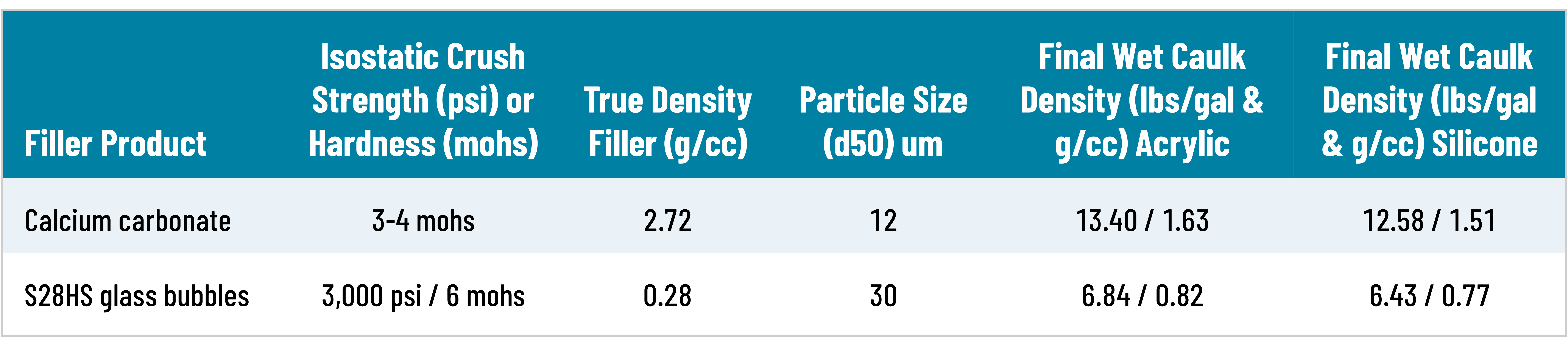
Table 2. General properties of evaluated fillers and formulated caulks/sealants. Credit: 3M
Tensile Properties
The mean tensile stress (modulus) and strain (% elongation) were determined on 1-2 mm films and results are shown in Table 4. It should be noted that surface defects can influence strain measurements.
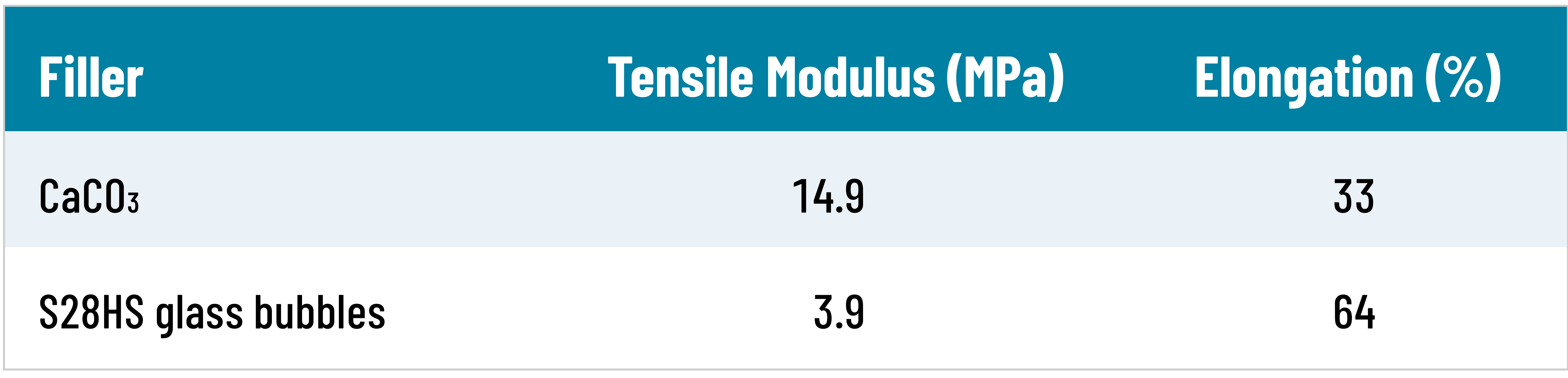
Table 4[1]. Acrylic Caulk. Credit: 3M
Additional tests were conducted on the acrylic caulks by a third-party lab in accordance with ASTM C834 specifications. Both the calcium carbonate and S28HS glass bubbles performed similarly and passed testing except for the slump test. The initial viscosity of both caulks was considered low [4], and formula optimization would be needed to improve this characteristic. This could take a combination of filler and rheology modifier adjustments. The S28HS formulation also had slightly worse tack-free time. This was unexpected since the particle size of the glass bubbles is larger, and we have seen improvements in dry time (faster surface dry) in many other chemistries and formulations. The extrudability was much higher on the S28HS system, which could offer some explanation for the slump and tack-free tests results.
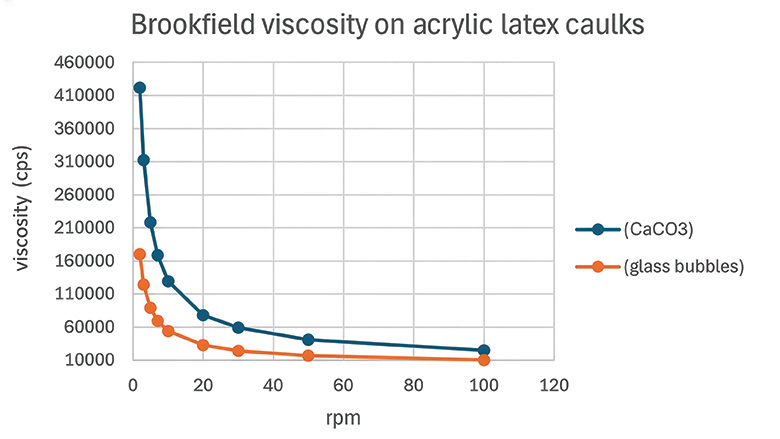
Figure 1. Brookfield viscosity results on acrylic latex caulks. Credit: 3M
| Test Type | Test Method-Instrumentation |
|---|---|
| Viscosity | Brookfield #7RV spindle |
| Thermal conductivity (Tc) W/m-K | ASTM E-1530 using DTC-300-guarded heat flow meter |
| Tensile tests-modulus (MPa) and strain at break (% elongation)1 | ASTM D412 (3 mm dog bone MTS Criterion Model C45 load frame; ± 500N load cell / 2″ per min) method used for acrylic caulk samples |
| Extrudability after aging* | ASTM C1183 Procedure B |
| Artificial weathering* | ASTM C732 (washout, slump, cracking, discoloration, adhesion loss) |
| Volume shrinkage-%* | ASTM C1241 |
| Low-temperature flexibility* | ASTM C734 at 0 °C and -18 °C (cracking and adhesion loss) |
| Extension-recovery and adhesion* | ASTM C736 |
| Slump* | ASTM D2202-modified per ASTM C834 |
| Stain index* | ASTM D2203 |
| Tack free time* | ASTM D2377 modified for Type OP sealant |
| Hardness | ASTM D2240-Shore 00 (tested on 2 mm thick free films) |
Table 3: Test Methods
*Indicates part of ASTM C834 one-component latex sealants specification performed by third party [2]. Credit: 3M
Experimental Methods and Materials Study #2
For the second study, a moisture-reactive silicone polymer was used. Although subsequent painting operations can be more challenging with silicone-based materials, these chemistries typically withstand movement, moisture and outdoor exposure much better than acrylic systems, and are used by themselves or as hybrid chemistries in many formulations.
The formulations are shown in Table 5. The PVC was kept similar to the acrylic system, but the volume solids were >95% due to the absence of solvents in the formulation. As with the acrylic caulk, the final wet density in the S28HS glass bubble formulation was reduced by almost 50% versus the conventional filler.
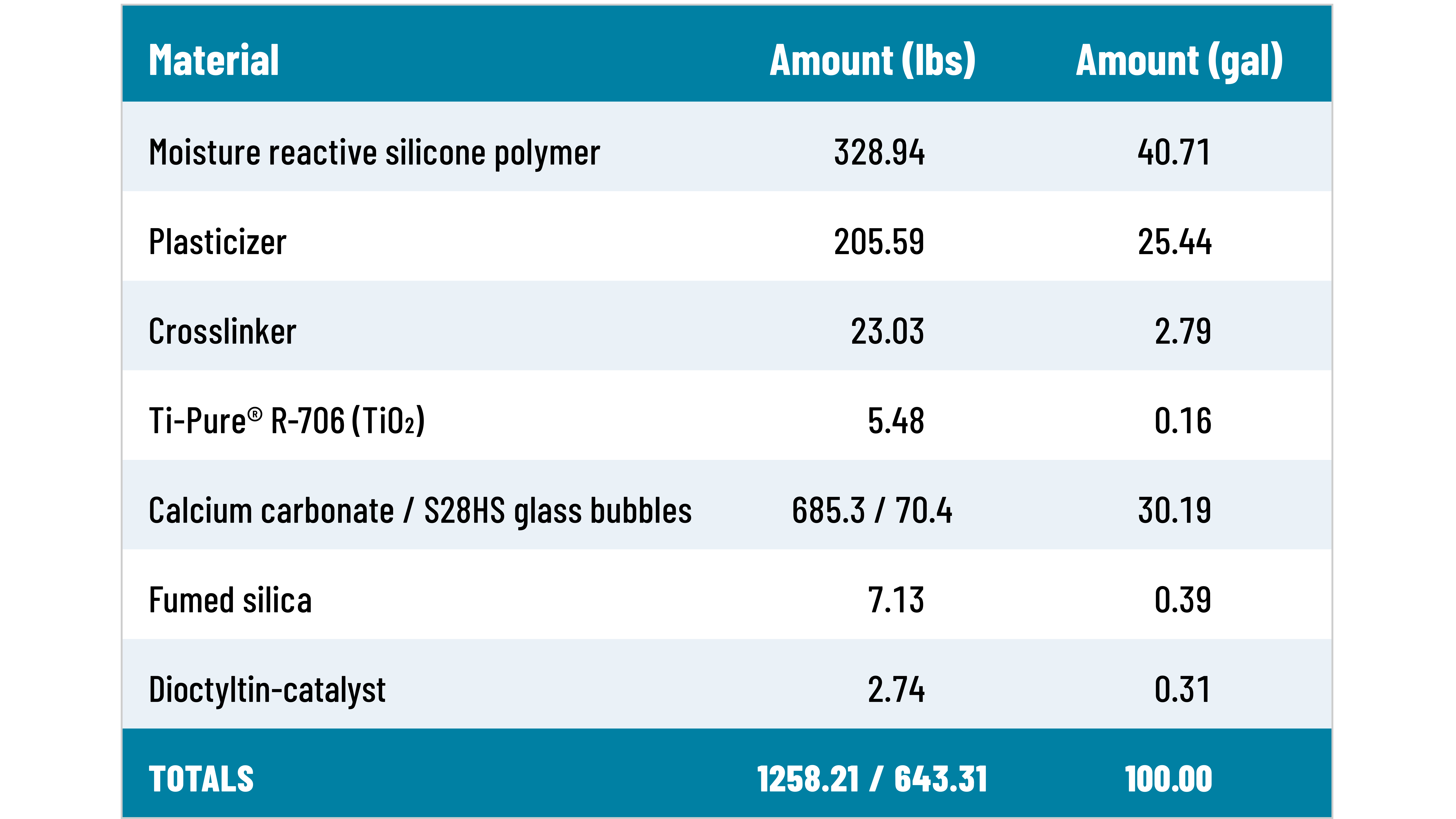
Table 5: Formulations. Credit: 3M
Results and Discussion
Fumed silica was used as the thixotropic agent to yield a combination of good application gun-ability and storage stability. Initial viscosity curves yielded lower viscosities for the silicone-based materials using the same volume loading (0.39%) of fumed silica, but the trend was the same, with the CaCO3 showing much higher viscosities at the same loading as seen in Figure 2. The baseline silicone material with no filler or fumed silica had a viscosity of 23K cps. Additional optimization with the hydrophilic untreated fumed silica improved extrudability and slump resistance and should offer improved tensile and rheology properties.
Various thermal and mechanical tests were performed on the silicone systems, and results are shown in Table 6. Testing was performed on 2-2.5 mm free films. The addition of fillers does increase the modulus and hardness and decrease the elongation. Similar results were seen for both fillers, with the CaCO3 filler exhibiting slightly higher modulus and lower elongation. The largest difference was seen in thermal conductivity. The glass-bubble-containing caulk exhibited much lower thermal conductivity (3-4x’s) versus the CaCO3 filled caulk. This was true for both the acrylic and silicone systems.
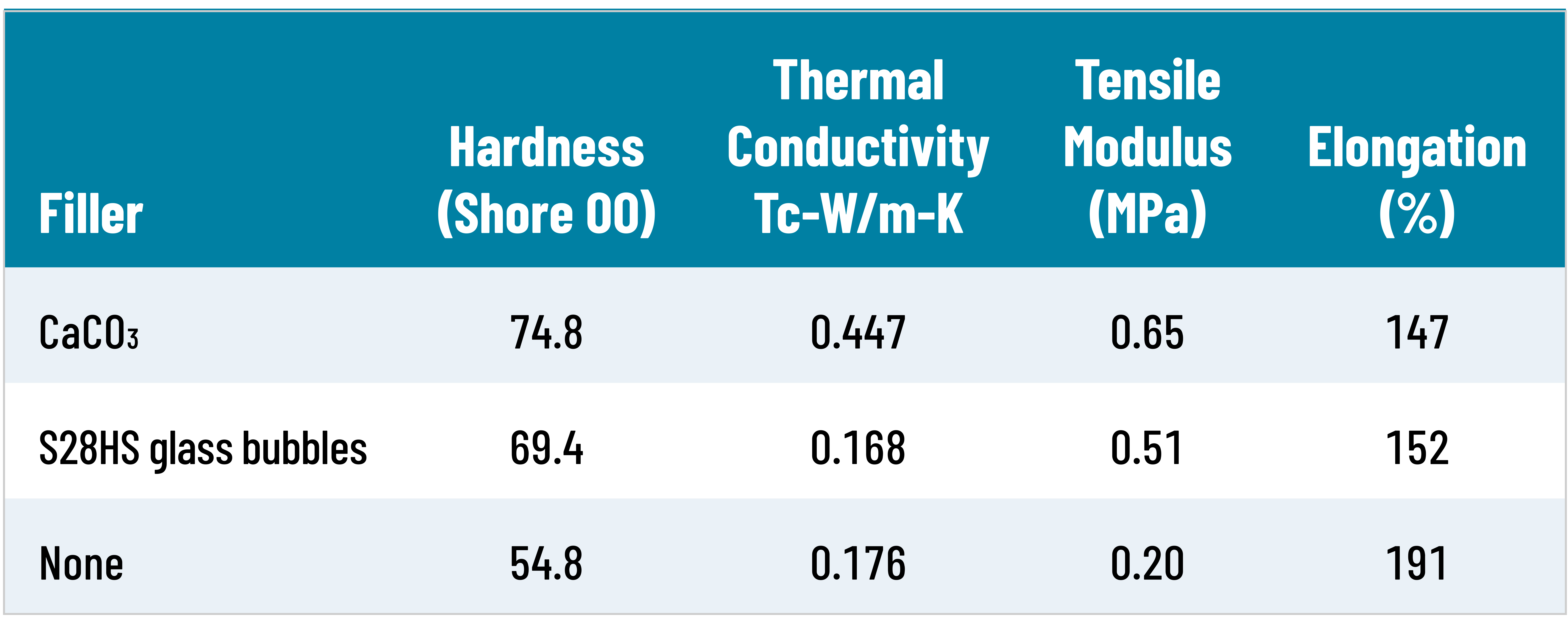
Table 6[1]: Silicone Caulk. Credit: 3M
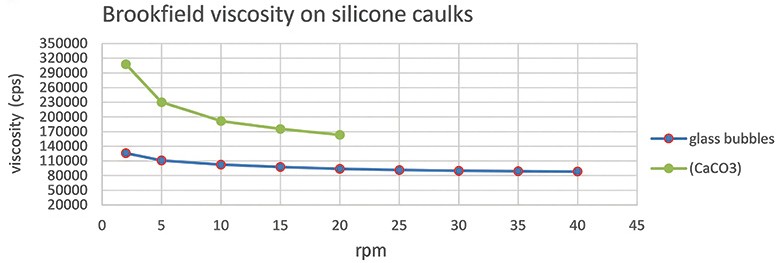
Figure 2. Brookfield viscosity results on silicone caulks. Credit: 3M
Summary
3M Glass Bubbles can function effectively as a performance filler in caulks and sealants, contributing to enhanced whiteness, reduced formulation density, improved resistance to cracking and shrinkage, and decreased thermal conductivity, thereby improving overall thermal insulation performance. This can be done while maintaining the application characteristics desired by contractors and DIYers.
References
Note 1: 3M Test report id’s: GID 332313, 334461, 332308 - Values for thermal conductivity, tensile modulus, and elongation are listed as mean values. Alternatively, ASTM D638 (Type IV dog bone/MTS Criterion Model 45 load frame +/-500N load cell/2”/min, strain measured with 3D DIC (Flir Blackfly S 5 MP cameras with 25 mm lenses, modulus calculated using strains between 0.1% and 1%)) modified and utilized for silicone samples.
Note 2: Third-party test report id: 58358-1/2.
Note 3: General tables, formulations, and test information stored under 3M ELN # A422mzz.01-128.
Note 4: Testing of multiple commercial acrylic and hybrid caulks showed low shear (2 rpm/7 yielding viscosities in the 500K-1.1M cps range). This was achieved on experimental systems in this study by increasing the fumed silica loading level to 4%. Optimum levels would require additional experimentation.
Technical information, recommendations and other statements contained in this document or provided by 3M personnel are based on tests or experience that 3M believes are reliable, but the accuracy or completeness of such information is not guaranteed. Registered and trademarked materials are property of their respective owners. For more information, contact Kevin Rink at kjrink@mmm.com.
Looking for a reprint of this article?
From high-res PDFs to custom plaques, order your copy today!