2026 Raw Materials and Chemicals Overview
Geopolitical uncertainty, slowing economic growth, and volatile raw material markets continue to challenge the adhesives and sealants industry.
Global economic momentum has been cooling recently, causing concern since the pace of economic expansion in major countries and regions influences demand for raw materials. The Organization for Economic Co-operation and Development (OECD) revised its baseline global GDP growth forecast down to 2.8% (from 3.1%) earlier this year.
Regionally, the slowdown is highly pronounced. The OECD projects U.S. growth to moderate to 2.0%, while the Euro area faces sluggish growth of just 0.8%. China’s economic growth is also easing toward 4.4%.
For adhesive and sealant formulators, raw material input costs remain the single most-expensive component in the cost of goods sold, representing around 50% of revenue as an industry average.
In addition, global raw material prices are navigating a renewed wave of volatility. The period of relative stability enjoyed after the post-pandemic inflation shock has given way to sharp geopolitical disruptions, upending earlier expectations of long-term price moderation.
For adhesive and sealant formulators, raw material input costs remain the single most-expensive component in the cost of goods sold, representing around 50% of revenue as an industry average. While the extreme supply chain spikes of the early 2020s have subsided, the cost basis for adhesive and sealant formulators remains structurally elevated, with the primary driver being the recent instability in energy supplies and pricing. Severe geopolitical conflicts have directly impacted key logistics chokepoints and upstream chemical feedstocks, driving a stark divide between baseline projections and reality.
Geopolitics, Trade, and Monetary Policy
Numerous global dynamics, including ongoing regional conflicts, trade disputes, and aggressive resource nationalism, have reinjected severe volatility into raw material pricing. Supply chain networks face significant friction, driven by persistent disruptions in maritime shipping and energy production corridors — particularly the shutdown of Strait of Hormuz due to the U.S. war with Iran.
Furthermore, trade protectionism is fundamentally reshaping sourcing dynamics. In the United States, despite the Supreme Court February ruling that the International Emergency Economic Powers Act (IEEPA) does not authorize the president to unilaterally impose tariffs, the administration has used other laws to reimpose tariffs; these efforts have greater restrictions on their terms than IEEPA, however.
Central bank divergence is heavily influencing global commodity demand and regional purchasing power. The European Central Bank has pursued aggressive rate cuts to stimulate economic activity, while the U.S. Federal Reserve has held interest rates higher for longer to anchor core inflation.
In foreign exchange markets, the U.S. dollar has exhibited counterintuitive weakness against major global currencies. Despite expectations that aggressive tariff policies would support the greenback, a slowdown in domestic asset demand and cooling GDP growth have softened the currency, directly raising the cost of imported inputs for U.S.-based plants.
Key End-Use Industries Drive Demand
The performance of core end-use markets continues to fragment, altering the specific chemistry volumes demanded by formulators.
Construction
The real estate sector remains sluggish as high mortgage rates continue to suppress affordability. In the United States, for example, May existing home sales were 4.17 million units on an annualized basis, while housing starts are projected to experience a slight decline of roughly 1%. This is the fourth subpar year for existing home sales and well below the pre-COVID average of over 5 million units.
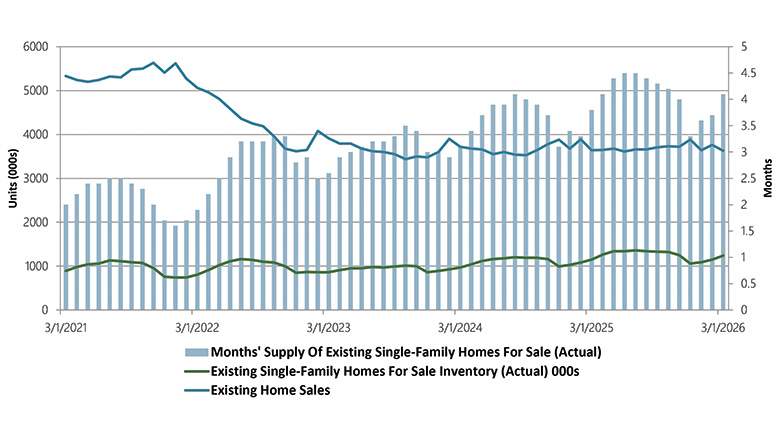
Figure 1. North America existing home sales. Source: ChemQuest
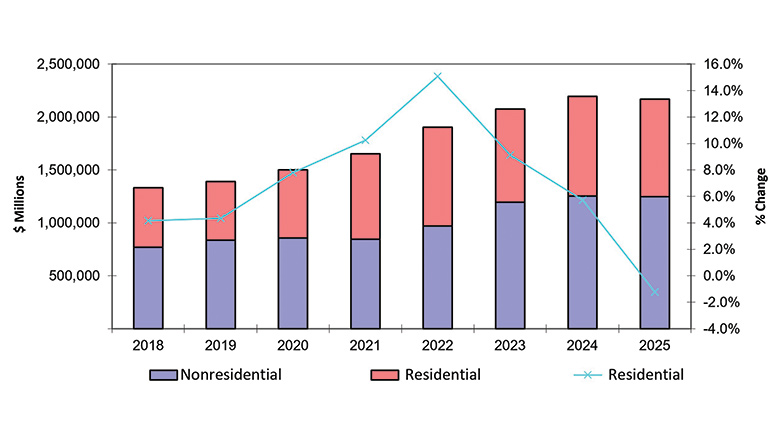
Figure 2. North America construction spending value put in place. Source: ChemQuest
The construction slump is not unique to the United States and Canada. In Europe, forecasts heading into this year may have been too optimistic, as the region combats challenging conditions such as higher building material costs and continuing shortages, skyrocketing energy prices, and high inflation rates.
Automotive
The automotive sector is caught in a difficult transition. While the structural shift toward electric vehicles (EVs) and lightweighting sustains long-term demand for high-performance adhesives, near-term EV growth has decelerated.
Global auto production forecasts have been trimmed, primarily due to continued semiconductor chip, auto component, and supply chain challenges (see Figure 3). In addition, light vehicle manufacturing is pressured by severe overcapacity in China, alongside scaling tariffs on vehicles and auto parts.
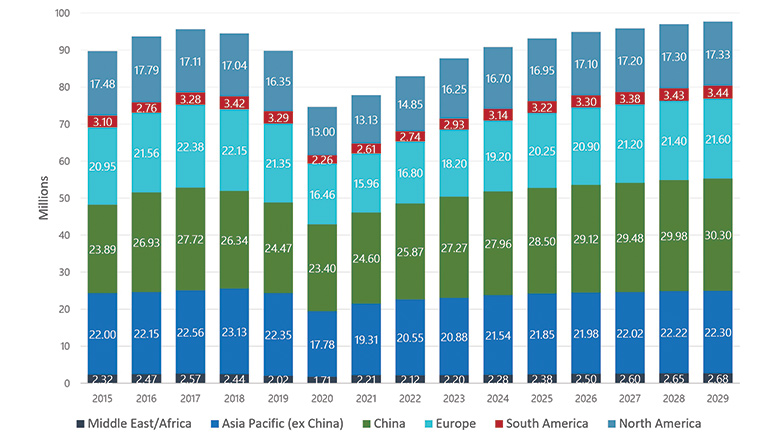
Figure 3. Global auto production. Source: AutoForecast Solutions
Packaging
The e-commerce and flexible packaging sectors remain resilient bright spots, expanding at steady mid-single-digit growth rates. Regulatory and consumer pressures for sustainable, bio-based, and recyclable adhesives are accelerating rapidly. While Europe continues to lead this green transition, the U.S. market is seeing measurable adoption increases as corporate ESG mandates take effect.
Electronics and Advanced Manufacturing
Reshoring initiatives in electronics and general manufacturing continue to generate incremental demand for specialized assembly adhesives. However, the true velocity of these reshoring efforts remains constrained by long lead times and the extreme complexity of shifting deeply embedded Asian supply chains.
Feedstock Overview
Adhesive and sealant producers remain acutely sensitive to crude oil fluctuations due to the industry's heavy reliance on oil-derived intermediates (see Figure 4). Projections from the U.S. Energy Information Administration (EIA) have become highly volatile due to geopolitical constraints.
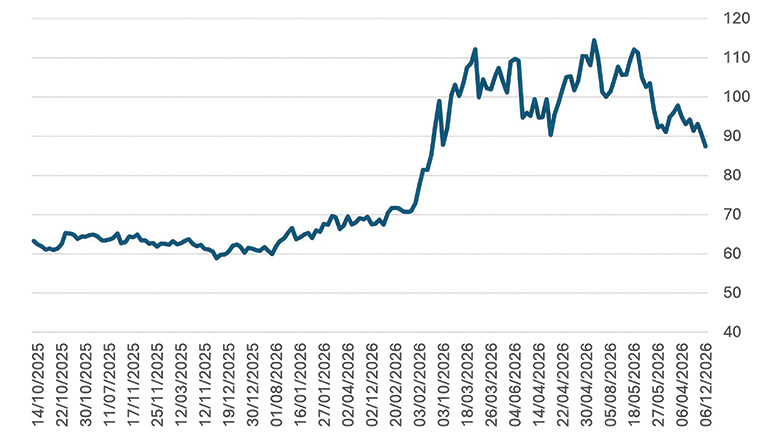
Figure 4. Price of Brent crude oil ($/bbl). Source: Trading Economics
In its most recent forecast, the EIA expects Brent crude oil to average $105 per barrel this summer, under the assumption that the Strait of Hormuz will remain closed before a wave of demand destruction and rising non-OPEC inventories move the average price down toward $79 per barrel in 2027. This sustained volatility directly translates into rapid pricing shifts for downstream base chemicals, though regional impacts differ in severity.
Asia Pacific is significantly affected by the strait's closure; approximately 80% of its traffic is destined for the region. Europe is also strongly dependent on Middle East imports and is already severely challenged due to its struggling chemicals industry. While less dependent on these imports than other regions, North America is becoming affected through global price transmission, as well as higher costs due to increasing shipping risk premiums.
The global adhesives and sealants industry is operating in a deeply bifurcated environment. Major chemical producers — including Dow, BASF, and Wacker Chemie — have successfully pushed through sequential price increases on silicone chains and polyurethane intermediates to defend margins against elevated logistics and energy inputs. The blended price indexes tracked by The ChemQuest Group reflect this reality: While prices had until recently trended downward from their absolute historical peaks, they have formed a structurally higher floor going forward.
Ethylene and propylene are the building blocks of the adhesives and sealants sector:
- Ethylene drives the production of vinyl acetate monomer (VAM) and styrene.
- Propylene serves as the backbone for polyurethanes, acrylics, and phenolic resins.
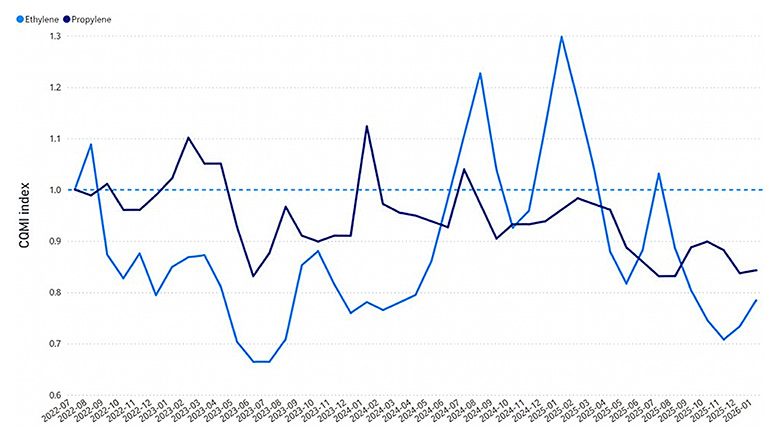
Figure 5. CQMI index for ethylene and propylene, with base of July 2022 ($/metric ton). Source: ChemQuest TraQr®
Additional key feedstocks for the industry include:
- Butadiene: Remains a high-volume bulk commodity critical for polybutadiene elastomers, styrene-butadiene rubber (SBR), and specialized latex formulations; supply chains are highly linked to global synthetic rubber demand
- Benzene: Serves as a vital precursor to bisphenol A (BPA) and phenolics, directly dictating the cost structure of downstream epoxy resins
- Styrene: A key component for formulating styrene block copolymer (SBC) hot melts, including SBS, SIS, SEBS, and SEPS
- VAM: Baseline component for waterborne resin systems like ethylene-vinyl acetate (EVA), heavily utilized in packaging, footwear, and woodworking
- MDI/TDI: Isocyanates are required to react with polyols to produce polyurethane systems; producers have instituted price increases due to rising upstream manufacturing costs
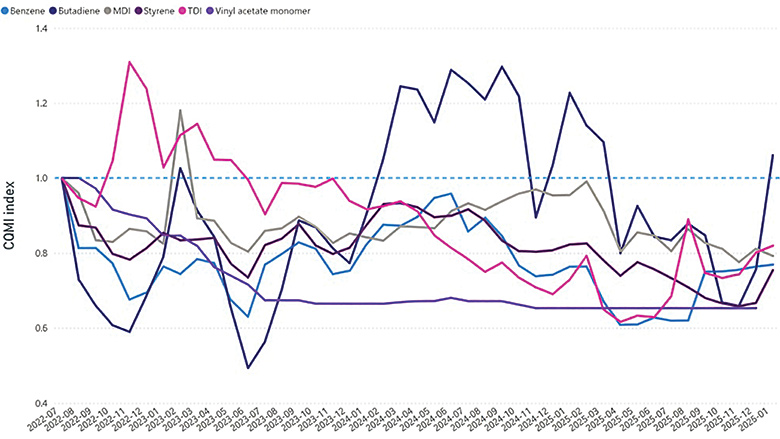
Figure 6. CQMI index for key feedstocks, with base of July 2022 ($/metric ton). Source: ChemQuest TraQr®
Building Resiliency
As the industry struggles to mitigate geopolitical dynamics and build resilient supply chains, formulators are pursuing strategies such as:
- Near-shoring and favored trade nation-shoring to reduce volatility in a particularly unpredictable global trade environment
- Domestic production contracts to secure baseline raw materials
- Dual-sourcing strategies for critical polymers and resins
While these strategies can successfully lessen or even eliminate catastrophic supply disruptions, they involve structurally higher localized operational costs. This structural shift, along with higher general inflation expectations, means prices will not soon (if ever) return to low pre-pandemic baselines.
To learn more, reach out to the author at atmuhleman@chemquest.com or visit https://chemquest.com.
Looking for a reprint of this article?
From high-res PDFs to custom plaques, order your copy today!