Chemical Distribution in an Era of Uncertainty
From tariffs to transportation disruptions, distributors are helping manufacturers navigate a more complex supply chain landscape.
Need to Know
- Supply chain management has become the dominant strategic priority for 68% of trade professionals surveyed, nearly double the prior year's 35%.
- Tariff volatility is reshaping sourcing, procurement, technology investment, and long-term strategic planning across the chemical industry.
- Geopolitical disruptions and the proposed Union Pacific–Norfolk Southern merger are adding new uncertainty for chemical distributors and manufacturers.
Since the disruptions caused by the COVID-19 pandemic and the chemical supply shortages triggered by severe weather along the Texas Gulf Coast in 2021, the chemical industry and its distribution partners have continued to face supply chain challenges. According to the 2026 Thomson Reuters Global Trade Report, senior trade professionals from across the globe found that supply chain management has become a dominant strategic priority. The study reported that of the 225 respondents from across North America, the EU and UK, Latin America, and Asia-Pacific, supply chain management has become the dominant strategic priority for 68% of those surveyed. This is nearly double the 35% of respondents who identified supply chain management as their top concern a year earlier.
The report also found that 72% of trade professionals now identify U.S. tariff volatility as the most impactful regulatory change they face. This is up from 41% in the prior year survey. Most notably, 76% of those surveyed believe the current wave of U.S. tariffs represents a permanent shift in trade policy, rather than a temporary negotiation tactic. This shift has the potential to reshape how chemical distributors and their customers plan for years ahead.
Credit: gk-6mt / iStock via Getty Images Plus
Supply Chain Tops Concerns
In recent years, supply chain reliability has evolved beyond a logistics concern to an enterprise-level strategic priority. The Thomson Reuters report found that companies are treating issues such as supplier reliability and customer delays as actual enterprise risks, as concerns shift from inventory optimization to “prioritizing systemic resilience.”
This shift stems from a series of overlapping disruptions affecting the chemical industry. These include geopolitical conflicts, such as Russia's war in Ukraine and the conflict involving Iran, along with port strikes and slowdowns, accidents in major shipping lanes, disruptions in the Strait of Hormuz, and growing consolidation pressures in the rail sector. For chemical distributors, these disruptions are magnified by the industry’s dependence on tight delivery models and hazardous materials handling requirements, leaving little room to absorb delays that other sectors may be better equipped to manage.
The Tariff Twist
One challenge facing the industry is tariffs. With effects extending beyond the direct cost of goods, companies are reporting cost increases concentrated in imported raw materials and components, which are impacting manufacturing margins and eroding competitiveness. The Reuters survey reported that 39% of respondents said their organizations are considering absorbing or are currently absorbing the costs of the tariffs instead of passing them on to customers. This is up from 13% in the previous year's survey. Additionally, the survey found that 76% of trade professionals believe the new tariffs put in place by the U.S. president will persist for at least the next four years. This indicates that respondents now view tariffs as a permanent trade policy rather than a short-term negotiating tool. This shift has the potential to change how companies approach strategic planning. In response, companies are mitigating the effects of increasing tariffs by changing their sourcing patterns, renegotiating supplier contracts, and either nearshoring or moving manufacturing directly back to the United States.
Another interesting outcome of the tariffs imposed by the Trump administration is that according to the Reuters survey, trade professionals are being given more strategic positions within organizations, leading to greater influence over executive decision-making and procurement. Companies are also investing more in technology, hiring, and training because of changes brought about by tariffs. The increased investment in technology is particularly notable. In 2024, just 6% of respondents to the survey said they were exploring emerging technologies such as AI or blockchain for use in their businesses. That number jumped to 40% in the most recent survey. They are using these new technologies for supply chain data analytics, automation for enterprise resource planning, supply chain management, and supply chain visibility.
Trade professionals are gaining greater influence over procurement and executive decision-making as companies respond to tariff volatility.
Geopolitical Instability
Geopolitical conflict has compounded the pressures within the supply chain industry. Following joint U.S. and Israeli military operations against Iran that began in late February 2026, Iranian forces effectively closed the Strait of Hormuz, a chokepoint through which approximately a quarter of the world’s seaborne oil trade and a significant share of the global liquefied natural gas normally passes. The disruption extends beyond these resources, as the strait is a critical corridor for chemicals, petrochemicals, and industrial inputs such as fertilizers. Gulf-sourced feedstocks or intermediates have had to contend with stranded cargoes, much higher war-risk insurance premiums, and rerouted supply lines. Brief openings under a ceasefire agreement were short-lived, as renewed attacks on commercial vessels have left shipping within the strait tenuous at best. The situation underscores how quickly geopolitical events can disrupt supply chains.
Rail Merger
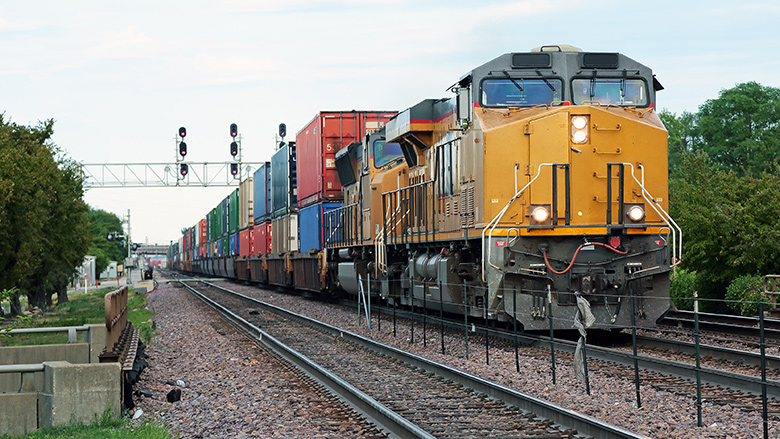
Another source of uncertainty for a sector already navigating tariff volatility and geopolitical supply disruptions is a proposed merger between Union Pacific and Norfolk Southern railroads. Drawing opposition from chemical distributors and chemical industry associations, the $85 billion merger, if approved, would create what proponents are calling the first true transcontinental railroad in U.S. history – a single-line network of more than 50,000 miles of track that spans 43 states and links ports on both coasts. According to Union Pacific and Norfolk Southern, the combined company would eliminate interchange delays that happen when freight changes hands between carriers, open new routing options, expand intermodal service, and allow shippers to receive single-line rate quotes instead of coordinating across multiple railroads. The companies also claim that the merger is a competitive response to Canadian rail networks, helping to recover freight volume that has shifted to trucking in recent years.
The response from various shipper groups has been mostly critical. Among those opposed to the merger are the American Chemistry Council and the Alliance for Chemical Distribution (ACD). When the proposed merger was announced in 2025, Eric Byer, president and CEO of the Alliance for Chemical Distribution, released a statement opposing the merger and encouraging the Surface Transportation Board (STB) to block the deal. Byer argued that the consolidation would worsen service issues and raise costs for chemical distributors, who rely heavily on rail transportation.
The merger has advanced through several regulatory stages since the initial announcement. Shareholders of both Union Pacific and Norfolk Southern approved the deal last November, and the companies submitted a formal application to the STB in December 2025. The application was rejected by the STB as incomplete. A revised application was submitted in April 2026, which has been accepted by the STB and is currently under review. In July, Union Pacific and Norfolk Southern offered an expanded package of customer protections and service commitments that were intended to address concerns raised by the STB. It is expected that the final decision on the merger will come in early 2027.
For chemical distributors already navigating tariff volatility and geopolitical disruptions, the proposed rail merger introduces another layer of uncertainty. As supply chains continue to evolve, distributors serving the adhesives and sealants industry will play an important role in helping manufacturers manage risk and maintain supply continuity.
Looking for a reprint of this article?
From high-res PDFs to custom plaques, order your copy today!