Understanding Solvent Acrylic Pressure-Sensitive Adhesive Systems
Solvent acrylic pressure-sensitive adhesives provide multiple performance benefits when compared to other adhesives categories.

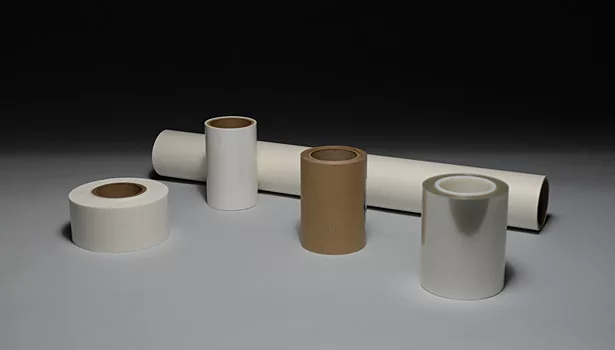
In recent decades, pressure-sensitive adhesive (PSA) technology has evolved exponentially to offer converters more choices than ever to meet their application needs. Selecting the appropriate adhesive system can be a challenge. The application requirements and end-use environmental conditions dictate whether you use a water-based acrylic, rubber-based solvent acrylic, or silicone adhesive system.
For durable, long-term applications, solvent acrylic pressure-sensitive adhesives provide the widest range of performance, including better heat, chemical, and water resistance over almost all other adhesives categories. (Silicone pressure-sensitive adhesives provide the widest range of temperature resistance.) When evaluating transfer tapes for gasketing, sealing and mounting applications where the highest performance standards need to be met in order to fulfill end-use requirements, solvent acrylic adhesives are going to provide the most options.
Beneficial Properties
Desirable performance properties can be attributed to the molecular structure of an adhesive; solvent acrylic adhesive systems offer an abundance of variations. Solvent-based acrylic adhesives provide a selection of crosslinking mechanisms that offer advantages over water-based adhesives, which typically do not feature crosslinkers. One effect of this crosslinking is enhanced resistance to chemicals and other solvents. Most water-based systems lack this connective aspect, making them more susceptible to undesirable performance in end-use applications when exposed to solvents.
After decades of use, testing, experimentation, and modifications, adhesive technologists can use solvent acrylic adhesives to easily deliver the precise polymer performance to meet virtually any adhesive need. This means that solvent acrylic adhesives offer a wider latitude when it comes to customization, with chemists able to mix and match positive characteristics with minimal sacrificing of performance aspects.
Solvent acrylic adhesives can be formulated to offer extraordinary chemical resistance, making them well-suited for use in environments where such exposure is a possibility. In addition, many solvent adhesives can withstand a range of temperature extremes. As with chemical resistance, the ability of solvent acrylics to function at high and low temperatures enables their use across a wider range of locations and conditions than some competing technologies. Finally, when longevity and durability define success or failure, solvent acrylic adhesives are often the best option.
End-Use Considerations
The characteristics of solvent acrylic adhesives can prove invaluable across a wide range of end uses. For example, if you are using a transfer tape to bond a metal nameplate to a piece of outdoor power equipment, you would need to consider factors such as the expected lifetime of the equipment. Such consideration is critical when it comes to building long-term branding success; the last thing a manufacturer wants is a product that endures but no longer features any identifying nameplates.
These product requirements must be coupled with an understanding of the potential environmental stressors the adhesive might face. The equipment may need to perform in a hot, arid environment or perhaps damp, cold air. Maybe the operation of the equipment itself will generate extreme temperatures. The adhesive will also likely need to withstand contact with gas, oil, and other harsh solvents, while also facing regular exposure to ultraviolet (UV) light. Carefully formulated solvent acrylic adhesive systems can meet these challenges, helping to ensure that the nameplate remains affixed for the lifetime of the piece of equipment.
Solvent acrylic adhesives offer the best overall performance in many other applications. Membrane switch technology, which may be used for either indoor or outdoor applications, requires extreme durability when it comes to its adhesive system. The number of actuations is determined by the type of equipment. Likewise, the switch may have to respond under unique conditions; the heat faced by a stovetop panel switch and the touchpad of a self-serve gas pump may have little else in common other than their reliance on the solvent adhesive system that allows their switching mechanism to function.
Similarly, the automotive industry depends on solvent acrylic adhesives for everything from door seals and gaskets to baffles and filters. Consider the brutal under-the-hood environment, where adhesives may be subjected to tremendous temperature fluctuations and exposure to caustic fluids such as oil, gasoline, antifreeze, and brake fluid. Specially-formulated solvent adhesive systems are often the answer to such challenges. In fact, automobile manufacturers employ solvent adhesives for many interior applications as well, using them to mount everything from moldings and trim to interior lining.
The transportation industry turns to solvent acrylic adhesives to meet an ever-expanding range of needs. Passenger and cargo trains use solvent-based adhesives for numerous sealing and gasketing applications. Solvent acrylic adhesives may also be used for characteristics beyond their bonding attributes; manufacturers of everything from industrial appliances to computer disk drives use the adhesives for their noise- and vibration-damping properties. Here, too, the adhesive must withstand a range of extreme conditions while also offering long-term performance.
When we examine the durability and longevity needs of outdoor durable applications, rubber- and water-based acrylics fall short. Rubber-based adhesives are typically very tacky and, while they may work well for initial bonding, they yellow and break down over time, typically by crystallizing (hardening) and therefore losing their viscous nature. Temperature extremes and exposure to UV light can have a debilitating impact on rubber adhesives, leading to the migration of the oils inherent in such systems. When these oils dissipate, a rubber adhesive may develop the same characteristics of a rubber band that has been subjected to similar conditions; that is, it can become hard, brittle, and subject to failure.
Water-based formulations have improved dramatically in recent years, but here too, there are limitations. One of the central issues with water-based adhesive systems is the fact that so many other components need to be added to the systems to enable their processing. Additives such as surfactants, thickeners, and defoamers are often present to allow for coatability of the adhesive during the converting process; biocides and mildewcides are required to provide longer shelf life of the liquid coating, but do not provide any enhanced benefit for the end-use product. Unfortunately, these additives can have a negative impact on other desirable characteristics and can even lead to a premature deterioration of adhesive performance, particularly water resistance. Although a number of water-based acrylics are being used in outdoor applications, solvent-based adhesives maintain a better balance of performance, including resistance to harsh chemicals, water, temperature extremes, plasticizer, and outdoor exposure.
Environmentally Responsible Manufacturing
Another point to consider when it comes to solvent-based acrylic adhesives is the fact that “solvent” is not synonymous with “not green.” Experienced suppliers that process solvent acrylic adhesives can be environmentally responsible. By using an environmental management system (EMS), they can minimize the impact of their operations to the natural environment.
With a robust EMS, mitigation strategies can be put in place that include using technologies for emissions reduction and heat recovery. For example, carbon footprint can be reduced through the use of a proper heat recovery system, which captures heat and reuses it in the production process. With water-based adhesives, this may not be as practical and it could end up using more energy to process (dry) the adhesive, by possibly using more natural gas to produce the adhesive than would be necessary with a solvent-based acrylic adhesive.
As with anything else, the concept of “green” is tricky. Manufacturing a non-disposable, durable product that will last for years is quite green. Solvent acrylic adhesives can allow a product to last, look good, and perform for a long time.
A Robust Option
Solvent acrylic adhesives deliver robust performance even when subjected to the most challenging conditions. In one sense, the fact that they have been around as long as they have has allowed scientists to push the limits of these adhesives, constantly discovering new ways to enhance their attributes, even as end users find new and varied applications for them. When it comes to versatility and durability, solvent acrylic adhesives offer an appealing range of options.
For additional information, contact the author at (508) 826-4646 or smonte@flexcon.com.
Looking for a reprint of this article?
From high-res PDFs to custom plaques, order your copy today!