As registered products the three products now appear in the NSF White Book.
Fluoramics, Inc. recently announced that three of its leading products, LOX-8 Paste, LOX-8 Grease, and Formula-8, have received registration from the NSF International Guidelines for Nonfood Compounds.
OEMs turn to custom formulators to solve complex adhesion problems with laminated coil and sheet metals.
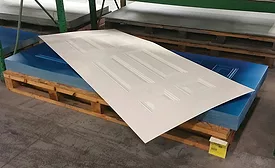
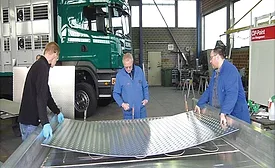
For manufacturers that use flat-rolled steel, aluminum and other metals to fabricate parts or products, the ability to bond decorative foils and laminate films to the substrate provides an opportunity to deliver attractive finishes for a competitive edge. Decorative finishes include the look of stainless steel, brushed copper, and wood grains, as well as a variety of colors, imprints, and gloss grades. Laminate films can also serve a functional purpose by providing scratch or chemical resistance.
If you look around your workplace, I’m certain that most things you see have been assembled in one way or another—from the telephone and computer to the very chair you spend most of the day sitting in. This month, people from all sectors of the assembly industry will gather at The Assembly Show, scheduled for October 24-26 at the Donald E. Stephens Convention Center in Rosemont, Ill. Now in its fifth year, the event will offer three days of educational sessions, hundreds of exhibiting companies, thousands of industry professionals, a dynamic keynote speaker, and two networking receptions.
Adhesive selectors, whether published guides or human, typically begin with determining which adhesive product or products will adhere to the substrate. That approach is necessary for repair applications, and may even be necessary for fixing a production issue on-the-fly. Engineers working in assembly need to consider the functionality of the device first. Adjusting substrate materials, processes, or joint designs may also be considered, but not automatically required. Next, testing to verify performance is necessary—and strongly recommended.
Acrylic adhesives offer the advantages of increased cost efficiencies, better aesthetics and improved impact resistance compared to other methods for the assembly of complex structures. Recently, new acrylic technology has been developed that offers superior lap-shear strength, high elongation and high bake resistance, as well as excellent failure mode across difficult-to-bond metal substrates. These “next-generation” acrylic adhesives are ideal for meeting the rigorous demands in various manufacturing and fabricating segments, including commercial vehicles, wind and energy equipment, and industrial equipment.
The market is reportedly driven by the rising demand for aerospace adhesives and sealants from OEMs and MROs in the commercial, military, and general aviation sectors.
The aerospace adhesives and sealants market is projected to grow from $732 million in 2017 to $954.7 million by 2022.