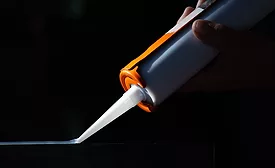
Silane-modified polymers (SMPs) are particularly suitable for formulating elastic adhesives, sealants, and coatings. How can additives help optimize performance?
Adhesives and sealants are part of our daily lives, although they are often invisible. They ensure that our food is packaged and promoted safely, that our houses are wind- and waterproof, and that our communication and mobility needs are served in safe and efficient ways. Thousands of everyday items, such as mobile phones, washing machines, personal hygiene products, shoes, clothing, building products, batteries, automobiles, rail cars, ships, and even airplanes, are nowadays only possible thanks to high-performance adhesives and sealants.
To help shape more sustainable paints and coatings industries, Covestro is launching Paint with Nature, a new plant-powered approach marked by transparency, dialogue, and collaboration.
Covestro recently introduced a new market-driven, user-oriented approach to drive the adoption of bio-based solutions in the coatings industry.
The company is undertaking a multi-phase expansion of its proprietary ice-cold sulfonation technology at its site in Middletown, Ohio.
Pilot Chemical Co. recently announced that it is taking steps to increase production capacity of its differentiated product lines to allow for future demand increases.
Sales were $637 million, up 11% compared to the prior-year period.
Ashland Global Holdings Inc. recently announced preliminary financial results for the third quarter of its 2021 fiscal year, which ended June 30, 2021.
Subject to customary closing conditions, the transaction is expected to close in the fourth quarter of 2021.
Thiele Kaolin Co. and Imerys Performance Minerals have entered into an agreement of sale, through which Thiele will acquire certain Imerys kaolin assets.
Not surprisingly, the global economic recovery is continuing more quickly in regions where COVID-19 is under control and vaccinations have been widely rolled out. After an estimated contraction of 3.3% in 2020, the global economy is projected to grow at 6% in 2021, moderating to 4.4% in 2022, according to the International Monetary Fund (IMF).
 RSS
RSS