Adhesives Mag logo
search
cart
facebook twitter linkedin youtube
  • Sign In
  • Create Account
  • Sign Out
  • My Account
Adhesives Mag logo
  • NEWS
    • Latest Headlines
    • ASI News Now
    • Mergers/Acquisitions
    • Market Trends
    • TOP 20
  • NEW PRODUCTS
  • TOPICS
    • Finished Adhesives and Sealants
    • Pressure-Sensitive Adhesives (PSAs)
    • Coatings
    • Raw Materials and Chemicals
    • Materials Handling/Processing
    • Meter/Mix/Dispense
    • Curing
    • Testing/Quality Control
    • Packaging of Adhesives & Sealants
    • Converting/Packaging
    • Composites
    • Sustainability
  • COLUMNS
    • From the Editor
    • Strategic Solutions
    • Supply Chain Strategies
    • Tape Talk
  • EVENTS
    • ASI Academy
    • Events Calendar
  • MULTIMEDIA
    • Videos
    • Podcasts
    • Webinars
    • eBooks
  • DIRECTORIES
    • Buyers' Guide
    • Global Adhesives & Sealants Directory
    • Raw Materials, Chemicals, Polymers and Additives Handbook
    • Equipment Handbook
    • Distributor Directory
  • EXPLORE
    • Adhesives in Action
    • Blog
    • ASI Store
    • Industry Links
    • Market Research
    • Classifieds
  • EMAGAZINE
    • EMAGAZINE
    • ARCHIVE ISSUES
    • ADVERTISE
    • CONTACT
  • SIGN UP!
Home » Topics » Adhesives and Sealants Topics » Raw Materials and Chemicals

Raw Materials and Chemicals
Raw Materials and Chemicals RSS Feed RSS

SpecialChem fire retardant adhesives

Fire-Retardant Adhesives

This article examines the external events that have led to greater awareness of adhesives’ performance in the event of a fire, the standards and regulations that are being imposed, and the development of new fire-resistant materials.
Edward M. Petrie
November 1, 2007
Historically, fire resistance has not generally been a significant requirement when specifying adhesive systems. Recent incidents, however, indicate that this may soon change. These include events outside of the formulators’ arena, such as increased sensitivity to the performance of components in a fire, and events within the formulators’ arena, such as the development of flame-resistant additives.
Read More
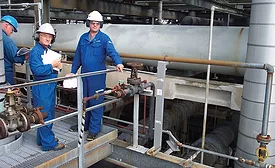
Lanxess workers on platform
Product Profile

Butyl Rubber: A Primer

What is butyl rubber and how is it used?
October 1, 2007

Butyl rubber is a copolymer of isobutylene and isoprene. Simple copolymers are known as “regular” or “clear” butyl rubber, or simply “butyl.” When butyl rubbers are modified after polymerization with the halogens bromine or chlorine, a second family, known as halobutyl rubber (or halobutyls), results.


Read More
handwashing

Safety First: Safe Handling of Adhesives and Sealants

While cured adhesives and sealants are generally considered safe, care must be taken with airborne particles, decomposition products, and uncured components.
Edward M. Petrie
March 1, 2007

Completely cured adhesives and sealants are generally considered safe and non-toxic, although caution must be exercised when machining or grinding joints due to airborne particles. Also, decomposition products may exhibit substantial vapor pressures that present health and safety issues. However, it is exposure to uncured components that can be the most harmful, and that is the subject of this article.


Read More
SpecialChem bathtub sealants

How Sealants Function

How do the application and performance characteristics of sealants correlate to the composition of the sealant formulation?
Edward M. Petrie
February 27, 2006
Sealants are generally chosen for their ability to fill gaps, resist relative movement of the substrates, and exclude or contain another material. Sealants are generally lower in strength than adhesives, but have better flexibility. Usually, a sealant must effectively bond to a substrate in order to perform these functions.
Read More

Adhering to Difficult Substrates with Silicone Adhesives

Substrates with reactive groups available for bonding make chemical bonding easier to achieve, while substrates with nothing to react to make adhesion difficult.
October 1, 2005
Adhesive technology is equal parts chemistry and "black magic." The sheer number of available substrates makes it nearly impossible to test each adhesive on every type. However, by conducting tests on a selection of novel, or difficult-to-adhere-to, substrates, we can make inferences that may help narrow the choice of adhesives.
Read More

INTERPOLYMER CORP.: Specialty Polymers Brochure

Available free of charge, the four-page brochure highlights the three general markets where Interpolymer excels: Surface Care, Consumer Specialties and Industrial Specialties.
September 12, 2005
A new full-color brochure from Interpolymer Corp. highlights the many uses of the company's specialty polymers.
Read More
grocery shopping

Packaging EndUser: Starch- and Dextrin-Based Adhesives

Starch- and dextrin-based adhesives play a large part in industrial production, especially the packaging industry.
August 1, 2005
This article provides an overview of the raw materials that go into starch and dextrin adhesives, the methods of adhesive manufacture, and the additives that are commonly used in formulations for improvement of specific properties.
Read More
3M epoxy dp420

Epoxy, Acrylic, and Urethane Structural Adhesives

Increasing alternatives to mechanical fastening are available.
September 1, 2004

With ongoing advances in structural adhesive formulation, designers in every industry have increasing alternatives to mechanical fasteners for assembly of metal, composites, plastics, rubber, glass and more.


Read More
silicone adhesives in space

The Use of Silicone Adhesives in Space Applications

Every single design consideration—including the adhesives selected—is important in the costly endeavor to send an object into space.
October 28, 2003

The harsh conditions of space place a set of constraints on the technologies that take us there. Of primary concern when it comes to space system design is the adhesive chosen to hold everything together. What does it take to perform in the vacuum of space, and why do silicone adhesives continue to be the adhesive of choice in many aerospace applications?


Read More
woodworking

Polychloroprene Contact Adhesives

Water-based adhesive systems make inroads into traditional solventborne technology.
March 4, 2003
Contact adhesives based on polychloroprene exhibit performance advantages over alternative adhesive systems in a variety of related applications where quick, high-strength, permanent bonds are needed.
Read More
Previous 1 2 … 388 389 390 391 392 393 394 395 396 Next
Manage My Account
  • eMagazine Issues
  • Newsletters
  • Online Registration
  • Manage My Preferences
  • Subscription Customer Service

More Videos

Sponsored Content

Sponsored Content is a special paid section where industry companies provide high quality, objective, non-commercial content around topics of interest to the Adhesives and Sealants Industry audience. All Sponsored Content is supplied by the advertising company and any opinions expressed in this article are those of the author and not necessarily reflect the views of Adhesives and Sealants Industry or its parent company, BNP Media. Interested in participating in our Sponsored Content section? Contact your local rep!

close
  • Assembly automation for medical device manufacturing
    Sponsored byNordson EFD

    Three Proven Principles Powering Quality Assembly

Popular Stories

news on internet screen

Sika Closes Acquisition of Akkim

Image of green tree within clear lightbulb

Researchers Develop a Reusable Adhesive from Waste Polymers

Photo of a person holding a tablet, reading a new story

H.B. Fuller Announces Winners of Customer Innovation Award

ASI 2026 Top 20 Adhesives & Sealants List

Events

October 5, 2026

Polyurethanes Technical Conference

The Polyurethanes Technical Conference, hosted by the American Chemistry Council’s Center for the Polyurethanes Industry (CPI), will feature educational sessions and the latest innovations in polyurethane chemistry.

October 12, 2026

The Battery Show Detroit 2026

Join 16,000+ engineers, executives, and innovators for four days of hands-on learning, strategic networking, and direct access to the technologies shaping the future of batteries and EVs.

View All Submit An Event

Products

Structural Adhesives: Properties, Characterization and Applications

Structural Adhesives: Properties, Characterization and Applications

See More Products

Keep the info flowing with our newsletters!

Get the latest industry updates tailored your way.

JOIN TODAY!
  • RESOURCES
    • Advertise
    • Contact Us
    • Directories
    • Manufacturing Division
    • Store
    • Want More
  • SIGN UP TODAY
    • Create Account
    • eMagazine
    • Newsletters
    • Customer Service
    • Manage Preferences
  • SERVICES
    • Marketing Services
    • Reprints
    • Market Research
    • List Rental
    • Survey & Sample
  • STAY CONNECTED
    • LinkedIn
    • Facebook
    • Youtube
    • X (Twitter)
  • PRIVACY
    • PRIVACY POLICY
    • TERMS & CONDITIONS
    • DO NOT SELL MY PERSONAL INFORMATION
    • PRIVACY REQUEST
    • ACCESSIBILITY

Copyright ©2026. All Rights Reserved BNP Media, Inc. and BNP Media II, LLC.

Design, CMS, Hosting & Web Development :: ePublishing