This weekly roundup highlights the adhesives, sealants and coatings news stories that garnered the most attention during the previous week on our website, as well as our eNewsletter and social media platforms.
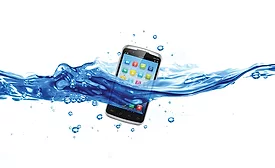
A new surface treatment can make a variety of electronic surfaces waterproof.
International Data Corp. (IDC) discovered more than 900,00 smartphones are damaged by liquids every day globally.1 IDC’s research has found that liquid damage is the second-largest cause of damaged smartphones after broken screens, representing 35% of all devices repaired. This damage results in significant costs to the end users, device manufacturers, carriers and retailers, with the impact of liquid damage estimated to be worth nearly $100 billion each year.
The development and testing of a new surface coating that could help control the flow around wind turbine blades is being examined to not only increase efficiency, but also in hopes to reduce the maintenance cost in the turbines.
A company through the Texas Tech University Innovation Hub at Research Park is working on the development of a new product, which originated from using gecko toe pads as their models, that could increase wind turbine efficiency.
This weekly roundup highlights the adhesives, sealants and coatings news stories that garnered the most attention during the previous week on our website, as well as our eNewsletter and social media platforms.
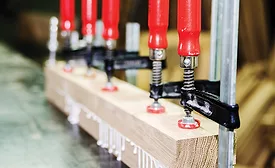
Adhesive selectors, whether published guides or human, typically begin with determining which adhesive product or products will adhere to the substrate. That approach is necessary for repair applications, and may even be necessary for fixing a production issue on-the-fly. Engineers working in assembly need to consider the functionality of the device first. Adjusting substrate materials, processes, or joint designs may also be considered, but not automatically required. Next, testing to verify performance is necessary—and strongly recommended.
The Assembly Show will offer three days of educational sessions, exhibits, a dynamic keynote speaker and plenty of networking.
Assembly industry enthusiasts will connect at The Assembly Show, taking place October 24-26 at the Donald E. Stephens Convention Center in Rosemont, Ill. Returning for a fifth year, the event will offer three days of educational sessions, hundreds of exhibiting companies, thousands of industry professionals—including buyers and users of assembly equipment, products or services in manufacturing plants—a dynamic keynote speaker, and two networking receptions.
Adhesive and sealant manufacturers and end users are always looking for a competitive edge. Faced with a bewildering number of formulation choices and risk/reward tradeoffs, they can end up getting left behind as technologies advance, or make a technical or business mistake if they are too aggressive. There are literally hundreds of raw materials to choose from, a long process to validate and verify new ingredients, and precious little time for internally driven product development projects.
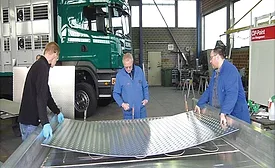
Acrylic adhesives offer the advantages of increased cost efficiencies, better aesthetics and improved impact resistance compared to other methods for the assembly of complex structures. Recently, new acrylic technology has been developed that offers superior lap-shear strength, high elongation and high bake resistance, as well as excellent failure mode across difficult-to-bond metal substrates. These “next-generation” acrylic adhesives are ideal for meeting the rigorous demands in various manufacturing and fabricating segments, including commercial vehicles, wind and energy equipment, and industrial equipment.
It sounds like you sell to several different markets. Although there is some overlap of silicone or polyurethane markets, they are often used in distinct applications.
The European Innovation Award was created by The Society of Plastics Engineers and Plastics Europe in hopes to raise awareness about the potential of plastic materials.
 RSS
RSS