Researchers have developed an approach that could help overcome two key barriers to producing no-added-formaldehyde (NAF) particleboard on continuous production lines, potentially improving manufacturing efficiency while reducing formaldehyde emissions.
A novel additive from Estron Chemical helps acrylic pressure-sensitive adhesives deliver enhanced adhesion to low-surface-energy substrates without sacrificing shear strength.
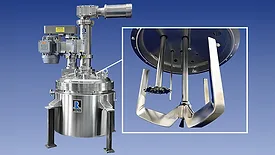
From mixing and pumping to equipment cleaning and maintenance, selecting the right technologies can improve production performance while reducing downtime.
Innovative adhesive technologies support lightweight and safer vehicle design.
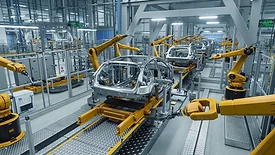
As EV designs become more complex, traditional joining methods are being pushed to their limits. This article explores how new adhesive technologies and digital engineering are reshaping automotive manufacturing.
Construction markets are regaining momentum, fueled by substantial U.S. manufacturing investments, rebuilding efforts, infrastructure spending, and growing exports.
As global data center capacity is projected to double by 2030, adhesives are playing an increasingly important role in thermal management, optical connectivity, and system reliability.
Glass bubbles can enhance whiteness, reduce density, improve crack and shrink resistance, and increase the thermal insulation of caulk and sealant formulations.
Read this evaluation of one 3M glass bubble, and learn how it compares it to a standard mineral filler in a white water based acrylic caulk and silicone sealant formulation.
Advanced adhesives are helping manufactured housing producers increase throughput, improve energy efficiency, and meet increasingly demanding building codes.
 RSS
RSS