Production Solution for NAF Grade Particleboard with PMDI as Binder
Polymeric diphenylmethane diisocyanate (pMDI) is used as the binder in the production of NAF-grade particleboard.
Introduction
Particleboard (PB) is a composite wood product made by binding wood particles with various adhesives, and it is widely used in furniture manufacturing and construction1,2. Urea formaldehyde-based resins have traditionally been the standard binders used to glue the wood unit together in many composite wood products, including particleboard, medium density fiberboard (MDF), and plywood3. However, concerns have been rising about the risks of cancer and bronchial health impacts from formaldehyde4–6. The emission of formaldehyde from PB products plays an important role in indoor air pollution6–8. In order to control the formaldehyde emission, the Formaldehyde Standards for Composite Wood Products Act was signed into law to become Toxic Substances Control Act (TSCA) Title VI in 2010 and became effective in 2017. Until March 22, 2019, composite wood products sold, supplied, offered for sale, manufactured, or imported in the United States were required to be labeled as CARB ATCM Phase II or TSCA Title VI compliant9.
Wood binders play a crucial role in formaldehyde emission. Pressure from the green building movement and emissions regulations from CARB ATCM and TSCA Title VI are moving manufacturers to look for ways to reduce formaldehyde emissions or eliminate formaldehyde entirely from formulas. Polymeric diphenylmethane diisocyanate (pMDI) is a highly reactive organic compound containing isocyanate functional groups10–12 and was defines as “no-added formaldehyde” (NAF) based resins by CARB ATCM9. pMDI is shown to be effective for PB manufacturing as early as the 1960s3. The benefits of using pMDI in particleboard manufacturing include higher bond strength, superior resistance to water and climatic conditions, and tolerating higher moisture content in the wood source13,14. However, despite its potential, pMDI-based particleboard has not been widely mass-produced on continuous hot-press lines in the United States. The challenge remains the difficulty of achieving mat tack and high production efficiency15–17. Unlike urea formaldehyde-based resin, pMDI has no tack, which means the wood particle mat cannot hold together after cold press. The mat would easily “fall apart” when passing through the gaps on the continuous production line, which leads to unsuccessful transportation of the mat into the hot press, making production impossible. In addition, the curing speed of pMDI is lower than urea formaldehyde-based resin, consequently, press time has to be increased when using pMDI as a binder. The higher press time decreases production efficiency and increases production cost.
The tack and low productivity problems hindered the mass production of NAF-grade particleboard on continuous hot press production lines. However, little success has been achieved to solve these two problems in industry. This report studied a polymer dispersion as tackifier and a polyether modified pMDI to solve the tack and low productivity issue, and a plant trail was also reported.
Experimental
Materials
Polymeric methylene diphenyl diisocyanate (pMDI) resin was supplied by Wanhua Chemical Group Co. Ltd. The NCO content is 30.5-32.0%, with viscosity 150-250 cps at 25 °C. The polymer dispersion was obtained from Wanhua Chemical Group. The solid content is 50-55%, viscosity at 25 °C is 500-1500 cps. Polyether was provided by Wanhua Chemical Group. The hydroxyl value of polyether is 28-32 mg KOH/g, viscosity at 25 °C is 900-1200 cps. Wood particles were provided by Wanhua Ecoboard Co. Ltd. These comprised a mixture of 75% eucalyptus and 25% pine.
Methods
Tack Evaluation: The wood chips were previously dried to a moisture content lower than 2%. The cold pressed mat was produced by first spraying pMDI or polyether modified pMDI and an additive onto the wood chips in a laboratory glue blender, and blending until the pMDI and additives were uniformly distributed on wood particles. The surface and core layers were separately mixed with pMDI and additive. For surface layer,3.5 wt.% pMDI and 0-3 wt.% of polymer dispersion were added, and the moisture content of wood particles was adjusted to 15 wt.% by adding extra water. For the core layer, 3 wt.% of pMDI or polyether modified pMDI was added, and the moisture content of wood particles was adjusted to 5 wt.%. Then, a three-layer wood particle mat was hand-formed into an aluminum container (400 × 220 × 100 mm3). The upper, core, and bottom layers accounted for 20, 60, and 20% of the total percentages of board mass, respectively. The mat was subsequently transferred into a press and cold pressed for 20 seconds at a pressure of 1 Mpa. The tack of the mat was measured on tack evaluation equipment, which was designed to mimic the gaps on a continuous production line. Figure 1 is a schematic illustration of the tack evaluation equipment. The gap on the equipment is 10 cm. The cold pressed mat was transferred onto the tack evaluation equipment, and the speed was adjusted to 300 mm/s. The tack of the mat was measured by observing if the mat bottom fell apart.
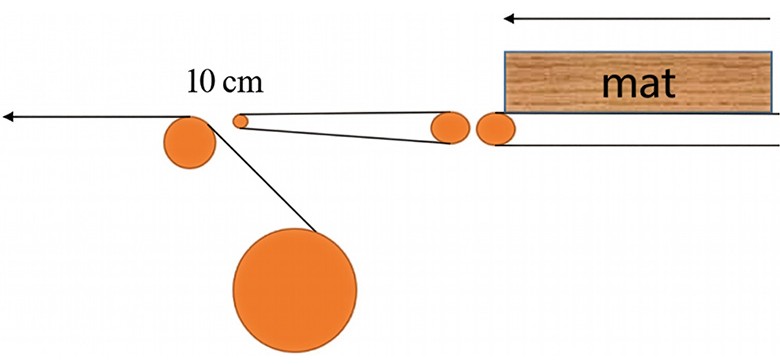
Figure 1. Schematic illustration of the tack evaluation equipment. Source: Courtesy of Wanhua Chemical
Synthesis of polyether modified pMDI: The modified pMDI was synthesized by adding 2-10% polyether into pMDI. pMDI was first added into a three-neck flask and heated to 60-70 °C in an oil bath. Polyether was then added while stirring. The mixture was stirred at 60-70 °C for 1 hour, and thenthe polyether modified pMDI was obtained.
Differential scanning calorimetry (DSC) measurements: The wood particles were screened, and particles size between 50 and 80 mesh were retained for the experiments. The particles were conditioned to the target moisture content (MC) of 10% in a climatic chamber. The resin/wood mixtures were prepared by mixing the pMDI or modified pMDI with the wood particles at a 50/50 mass ratio for all experiments. DSC measurements were carried out with a Q1000 DSC and the universal analysis software from TA instruments. High-pressure pans that can withstand vapor pressure up to 4.0 MPa were used. Dynamic scans were made at heating rates of 2, 5 and 10 °C /min, and the samples were scanned from 25 to 200 °C. Two replicates were done for each scan.
Particleboard Production: Cold-pressed mats were prepared as described previously. The mats were transferred into a hot press and the boards were pressed at 220 °C for different press time. The target density and thickness of the laboratory-produced particleboards were 650 kg/m3 and 18 mm, respectively. Five panels were produced for each set of operating conditions. The panel properties were tested according to Chinese standard GB/T17567 -2022.
Results and Discussion
Cold tack is an important parameter for a traditional urea formaldehyde-based adhesive as it shows the adhesive’s ability to stabilize the wood particle mat prior to hot pressing. A urea formaldehyde-based adhesive has tack due to its unique chemical structure, and its tack behavior was extensively studied by previous reports15,18,19. Unlike a urea formaldehyde-based adhesive, pMDI has no tack because it is constituted of small molecules. So, it is not possible to produce a particleboard with pMDI alone on a continuous hot-press production line, which dominates the particleboard production. Some plants use a multidaylight hot press with steel plate for loss mat transferring in order to produce NAF particleboard with pMDI, however, this method is only suitable for small-scale production as it adds complexities to the process and equipment.
"Using a polymer dispersion tackifier enabled NAF particleboard to be successfully produced on a continuous hot-press production line by improving mat integrity during processing."
The mat tack results obtained from the tack evaluation equipment with different polymer dispersion dosage were listed in Figure 2. The mat without polymer dispersion addition fell apart when passing through the gap on the tack evaluation equipment, indicating pMDI itself has no tack (Figure 2a). This experiment simulates the situation on a real production line with materials that only have a pMDI addition. When the polymer dispersion dosage increases to 1 wt.% in the face layer and 1 wt.% in the core layer, the mat tack increases and the mat can pass through the gap, but with some difficulty (Figure 2b). When continuing to increase the polymer dispersion dosage to 3 wt.% in the face layer and 1 wt.% in the core layer, the mat can pass through the gap smoothly without any crack on the bottom face of the mat (Figure 2c). It is hypothesized that the tack of the mat surface is crucial for maintaining the mat integrity when the mat is passing through the gap. To test the hypothesis, no polymer dispersion was added to the core of the mat, whereas a 1.5-3 wt.% polymer dispersion was added to the surface of the mat (Figure 2d-f). The result shows that the mat with different polymer dispersion dosages only in the surface did not “fall apart” when passing through the gap, which confirmed the hypothesis.
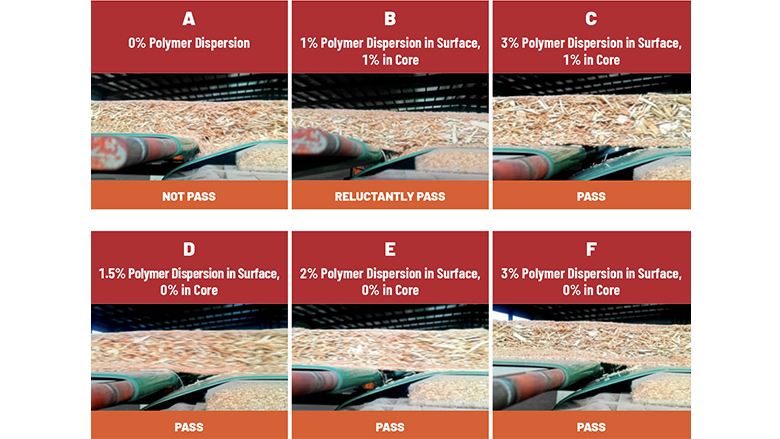
Figure 2. Mat tack results obtained from the tack evaluation equipment. Source: Courtesy of Wanhua Chemical
The effectiveness of polymer dispersion on the mat of tack was also confirmed on a Dieffenbacher CPS continuous hot press line with an eight-foot width. The polymer dispersion was added only in the face layer at a loading rate of 1.5 wt.%, and pMDI was added at 3 wt.% in the core layer and 3.5 wt.% in the face layer. The continuous mat could pass through the gap between the forming line and inlet of continuous hot press (Figure 3), and NAF grade particleboard was produced successfully. The formaldehyde emission level of the NAF particleboard is 0.008 mg/m³, which was tested according to GB/T17567 – 2022.
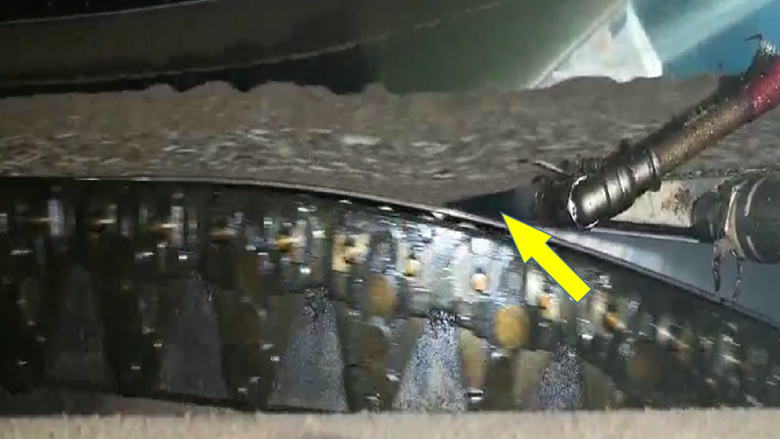
Figure 3. Mat tack evaluation on continuous hot press line. Source: Courtesy of Wanhua Chemical
Table 1 shows the impact of adding polymer dispersion on the property of particleboard. Standard pMDI was used as resin in both the surface and the core layer, and a 10 s/mm press factor was used. The data indicate that the polymer dispersion improved internal bond (IB) and surface soundness (SS) significantly, however it did not have significant impact on modulus of rapture (MOR), modulus of elasticity (MOE), or two-hour thickness swelling (2h-TS).
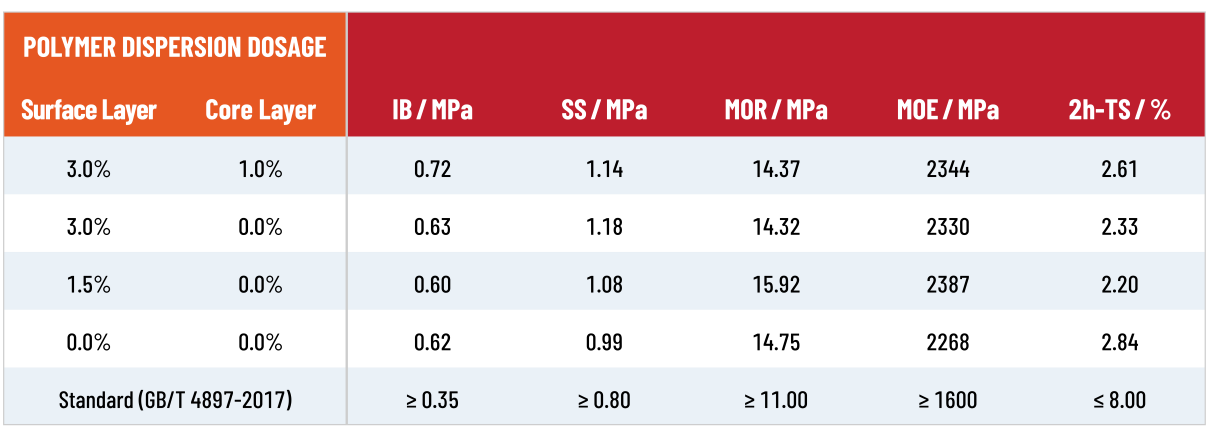
Table 1. The impact of polymer dispersion addition on the property of particleboard. Source: Courtesy of Wanhua Chemical
In particleboard manufacture, a highly reactive adhesive is required for rapid cure in the core layer of the board, where the temperature is limited to below 120 °C20,21. If the adhesive in the core layer has a lower cure speed, longer hot-pressing times are needed to reach the board property requirements, resulting in an overall reduced productivity and consequently higher production costs. However, the curing of pMDI is slower than that of a conventional urea formaldehyde-based resin. An indicator of the particleboard production efficiency is the press factor. It is defined as the time needed to cure 1 mm of panel thickness. On an industrial scale, standard urea formaldehyde resin bonded particleboard needs a press factor as low as 4-6 s/mm, whereas a press factor of 7-12 is needed for pMDI3. Therefore, it is necessary to develop a fast-curing pMDI to increase the productivity of NAF-grade particleboard, and thus reduce the cost of NAF-grade particleboard. The curing process of the pMDI/wood mixtures under an isothermal temperature of 80 °C, 100 °C, and 120 °C was predicted from the non-isothermal data as shown in Figure 4. A model free kinetics (MFK) method was employed to generate the data from a DSC experiment22. The data shows the curing speed of polyether-modified pMDI is higher than that of pMDI at different temperatures. This implies polyether modification effectively increased the reaction of pMDI with moisture in wood and/or reactive groups in wood.
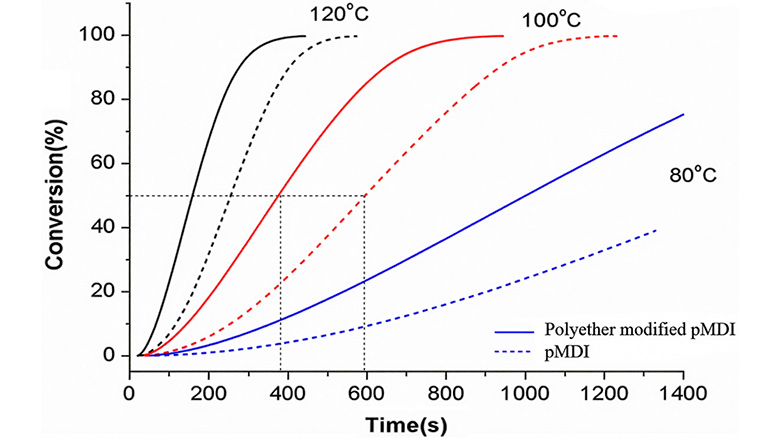
Figure 4. Curing kinetics of pMDI and polyether modified pMDI comparison. Source: Courtesy of Wanhua Chemical
Board press experiments were carried out for further verification of improving curing speed by the addition of polyether into pMDI. Table 2 shows the particleboard property pressed at reduced press factors with pMDI and polyether-modified pMDI used as resin, respectively. When using pMDI, the IB of particleboard decreases with press factor until the board delaminated at press factor 7 s/mm. However, when using polyether-modified pMDI as resin, the IB of board pressed at 7 s/mm is comparable to that of pMDI at 10 s/mm. In addition, the polyether-modified pMDI bonded particleboard delaminated at press factor of 4 s/mm while pMDI bonded particleboard delaminated at 7 s/mm. This implies the polyether-modified pMDI can reduce the press factor by around 3 s/mm.
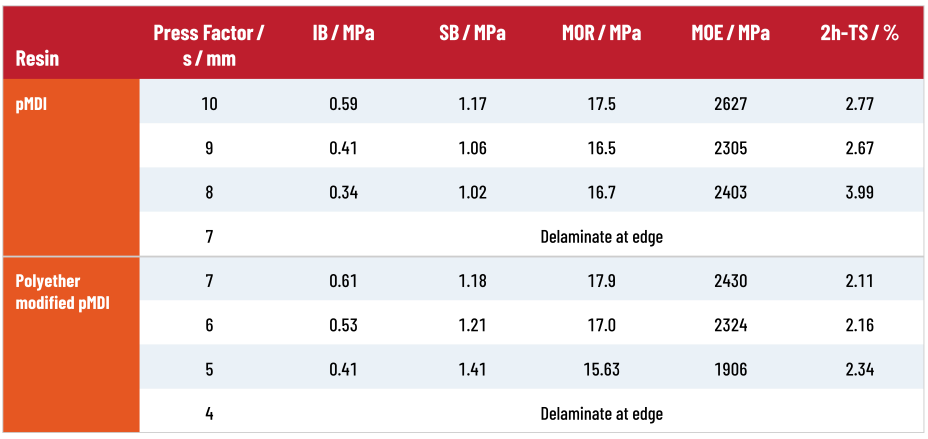
Table 2. Particleboard property obtained at reduced press factors with pMDI and polyether modified pMDI as resin. Source: Courtesy of Wanhua Chemical
"Polyether-modified pMDI reduced the press factor by approximately 3 s/mm, improving production efficiency for no-added-formaldehyde particleboard."
Conclusion:
The lack of tack and low curing speed are the two major reasons that the mass production of NAF grade particleboard with pMDI as the resin on a continuous hot press has not been practiced until now. By using a polymer dispersion as tackifier, the tack of the mat can be improved enough to allow the mat to the pass smoothly across a 10 cm gap on tack evaluation equipment. The polymer dispersion only needs to be added to the surface layer at a dosage of 1.5 wt.%. The tackifier can improve IB when added into the core layer, and does not show any negative impact on SS, MOR, MOE, or 2h-TS. The effectiveness of the tackifier was proved on an industrial production line and NAF-grade particleboard was successfully produced. Furthermore, when the pMDI was modified with a polyether, the DSC analysis showed the reaction rate to improve significantly. A board pressing experiment also confirmed the other results, further showing that the press factor can be reduced by 3 s/mm. This work provides industry a practical way of producing NAF particleboard economically on commonly used continuous hot-press production lines.
“Production Solution for NAF Grade Particleboard with PMDI as Binder” 2025 Polyurethanes Technical Conference 6-8 October 2025, St. Louis MO, USA, Published with permission of CPI, Center for the Polyurethanes Industry, Washington, DC.
References:
1 Zhang, B.; Hua, J.; Cai, L.; Gao, Y.; Li, Y. Optimization of Production Parameters of Particle Gluing on Internal Bonding Strength of Particleboards Using Machine Learning Technology. Journal of Wood Science 2022, 68 (1), 21.
2 Donini, G.; Crociati, L.; Molari, L.; Ferrante, M.; Conidi, G.; Zambelli, P. Mechanical Characterization of Mixed Particleboard Panels Made of Recycled Wood and Arundo Donax. Industrial Crops Products 2025, 224, 120244.
3 Mantanis, G. I.; Athanassiadou, E. Th.; Barbu, M. C.; Wijnendaele, K. Adhesive Systems Used in the European Particleboard, MDF and OSB Industries. Wood Material Science & Engineering 2018, 13 (2), 104–116.
4 Pierce, J. S.; Abelmann, A.; Spicer, L. J.; Adams, R. E.; Glynn, M. E.; Neier, K.; Finley, B. L.; Gaffney, S. H. Characterization of Formaldehyde Exposure Resulting from the Use of Four Professional Hair Straightening Products. Journal of Occupational and Environmental Hygiene 2011, 8 (11), 686–699.
5 Hauptmann, M.; Lubin, J. H.; Stewart, P. A.; Hayes, R. B.; Blair, A. Mortality from Solid Cancers among Workers in Formaldehyde Industries. American Journal of Epidemiology 2004, 159 (12), 1117–1130.
6 Jones, A. P. Indoor Air Quality and Health. Atmospheric Environment 1999, 33 (28), 4535–4564.
7 Huang, S.; Wei, W.; Weschler, L. B.; Salthammer, T.; Kan, H.; Bu, Z.; Zhang, Y. Indoor Formaldehyde Concentrations in Urban China: Preliminary Study of Some Important Influencing Factors. Science of The Total Environment 2017, 590–591, 394–405.
8 Qin, D.; Guo, B.; Zhou, J.; Cheng, H.; Chen, X. Indoor Air Formaldehyde (HCHO) Pollution of Urban Coach Cabins. Scientific Reports 2020, 10 (1), 332.
9 US EPA, O. Formaldehyde Emission Standards for Composite Wood Products. https://www.epa.gov/formaldehyde/formaldehyde-emission-standards-composite-wood-products (accessed 2025-06-11).
10 Yang, S.; Li, M.; Wang, Y.; Liu, X.; Qing, Y.; Li, X.; Wu, Y.; Liu, M.; Zhang, X. Industrial-Scale Manufacturing of Particleboards Using Agricultural Waste Camellia Oleifera Shells. Construction and Building Materials 2024, 424, 135922.
11 Solt, P.; Konnerth, J.; Gindl-Altmutter, W.; Kantner, W.; Moser, J.; Mitter, R.; van Herwijnen, H. W. G. Technological Performance of Formaldehyde-Free Adhesive Alternatives for Particleboard Industry. International Journal of Adhesion and Adhesives 2019, 94, 99–131.
12 Papadopoulos, A. N.; Hill, C. A. S.; Traboulay, E.; Hague, J. R. B. Isocyanate Resins for Particleboard: PMDI vs EMDI. Wood and Wood Products 2002, 60 (2), 81–83.
13 Fašalek, A.; Konnerth, J.; Van Herwijnen, H. W. G.; Stroobants, J.; Pramreiter, M. Method for Evaluating the Bond Strength Development of pMDI Adhesive Using ABES. Wood Science and Technology 2025, 59 (4), 70.
14 Pizzi, A.; Mittal, K. Handbook of Adhesive Technology, Revised and Expanded; CRC Press, 2003.
15 Asafu-Adjaye, O.; Via, B.; Banerjee, S. Increasing Cold Tack of Polymeric Methylene Diphenyl Diisocyanate Resin with Partial Soy Flour Substitution. Forest Products Journal 2020, 70 (1), 143–144.
16 Ye, R.; Wang, C.; Shi, X.; Zhang, D.; Lai, C.; Chen, X.; Wang, C.; Chu, F. A Facile Strategy to Fabricate Low Viscosity and High Cold Tack Soy Protein-Based Adhesive for Particleboard Production. Industrial Crops and Products 2024, 214, 118612.
17 Gonçalves, S.; Paiva, N. T.; Martins, J.; Carvalho, L. H.; Magalhães, F. D. Fast-Curing 3-Layer Particleboards with Lignosulfonate and pMDI Adhesives. Forests 2024, 15 (6), 948.
18 Hogger, E. M.; Van Herwijnen, H. W. G.; Moser, J.; Kantner, W.; Konnerth, J. Cold Tack of Urea Formaldehyde Resins as an Important Factor in Plywood Production. European Journal of Wood and Wood Products 2018, 76 (5), 1391–1398.
19 Himsel, A.; Moser, J.; Kantner, W.; Mitter, R.; Gießwein, J.; Van Herwijnen, H. W. G.; Müller, U. Describing the Sticking Phenomenon of Aminoplastic Resins: Introduction of a New Test Method. Wood Science and Technology 2015, 49 (4), 681–694.
20 Choupani Chaydarreh, K.; Li, Y.; Lin, X.; Zhang, W.; Hu, C. Heat Transfer Efficiency and pMDI Curing Behavior during Hot-Pressing Process of Tea Oil Camellia (Camellia Oleifera Abel.) Shell Particleboard. Polymers 2023, 15 (4), 959.
21 Rofii, M. N.; Yamamoto, N.; Ueda, S.; Kojima, Y.; Suzuki, S. The Temperature Behaviour inside the Mat of Wood-Based Panel during Hot Pressing under Various Manufacturing Conditions. Journal of Wood Science 2014, 60 (6), 414–420.
22 Wang, J.; Laborie, M.-P. G.; Wolcott, M. P. Comparison of Model-Free Kinetic Methods for Modeling the Cure Kinetics of Commercial Phenol–Formaldehyde Resins. Thermochim. Acta 2005, 439 (1), 68–73.
Looking for a reprint of this article?
From high-res PDFs to custom plaques, order your copy today!