INTERTRONICS: Electronics Adhesive
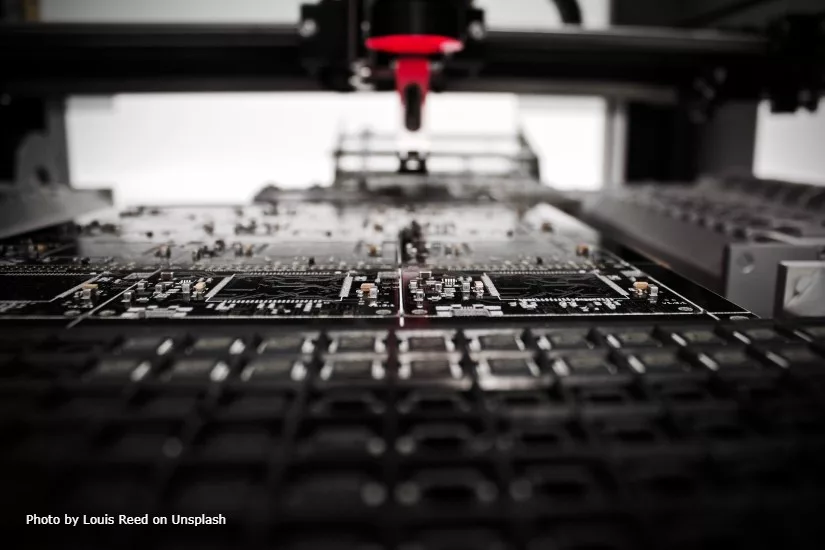
Dymax 9773 is a light-curing staking and ruggedization adhesive designed specifically for aerospace and defense electronics. What makes it distinctive is not a single headline property, but the way it brings together three requirements that are usually addressed separately or accepted with compromise.
In spacecraft and vacuum-exposed electronics, contamination is not a vague concern. It is engineered, modeled, and audited because materials can release volatile species under vacuum and heat that migrate and condense on nearby surfaces. These condensable residues can degrade optical performance, alter thermal control surfaces, and compromise sensitive electronics over time.
Dymax 9773 passes ASTM E595 with low total mass loss and very low collected volatile condensable material, and is NASA MAPTIS listed. This demonstrates that any volatiles released under vacuum are limited and poorly prone to re-condense, with behavior that has been measured, documented, and accepted for use in contamination-controlled programs. For engineers responsible for optics, sensors, thermal surfaces, or sensitive electronics, this removes a significant qualification barrier.
Low outgassing alone is not enough. Inside the electronics, long-term electrical behavior matters just as much. Dymax 9773 passes MIL-STD-883 Method 5011, demonstrating that after prolonged high-temperature exposure it remains electrically insulating, dielectrically stable, and physically intact. This is particularly important from an ionic perspective. Mobile ions can migrate under heat and electrical bias, creating leakage paths and long-term reliability risks. While Method 5011 does not measure ionics directly, it demonstrates their impact through stable electrical performance after thermal ageing.
Traditionally, meeting stringent contamination and reliability requirements has meant slow, multi-part heat-cured epoxies or silicones with long cure times and limited process flexibility. Dymax 9773 avoids that trade-off. It is a single-component, UV and visible light-curing material that cures on demand, enabling rapid handling and higher throughput. Its high viscosity and non-slumping behavior help it remain exactly where it is dispensed, making it suitable for staking and ruggedization on both rigid and flexible PCBs. Compatibility with automated dispensing and jetting supports modern, scalable production environments, where efficiency, throughput, and cost control increasingly matter.
It is not a general-purpose UV adhesive adapted for electronics. It is a material developed in response to aerospace and defense requirements, where contamination control requirements, electrical stability, long-term reliability, and production throughput are all actively engineered and audited.
Learn more here.
Looking for a reprint of this article?
From high-res PDFs to custom plaques, order your copy today!

.webp?height=200&t=1709670950&width=200 "markets-GettyImages-113925850")