Voices from the Top
The Growing Opportunity for Peel-and-Stick Applications in Interior Décor, Floor, and Wall Products
Survey shows younger generations embrace adhesive innovations for DIY projects.
Results of a recent survey indicate a shift is underway in how Americans approach home improvement. The survey, conducted by Wakefield Research in August 2025 [1], polled 1,000 Americans and found 90% experience challenges with some aspect of DIY projects. The most frustrating challenges listed were working in tight spaces (57%) and the need for specialized tools (51%). At the same time, 84% of respondents — and 92% of Gen Z and Millennials — said they would use peel-and-stick products for home improvement applications.
For manufacturers of interior décor, floor and wall products, these findings point to a clear opportunity: consumers are not only struggling with traditional installation methods — they are actively seeking alternatives that simplify the process.
DIY Frustrations Center on the Limitations of Traditional Bonding Methods
The graphic below shows the most frequent frustrations listed in DIY home improvement, according to the survey, with many relating to traditional bonding methods. These include mounting items properly (28%), adjusting or repositioning materials (24%), and the bonding or fastening materials themselves (23%).
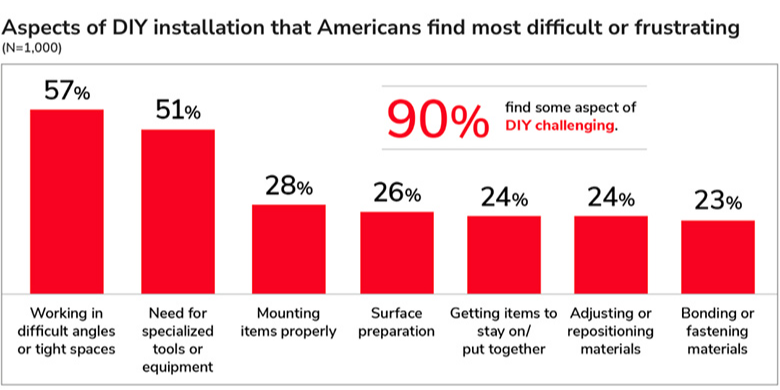
The most frequent frustrations associated with DIY home improvement projects. Image courtesy of Avery Dennison.
Nails, screws, and wet-applied adhesives have long served as the foundation of interior product installation. Mechanical fasteners typically require tools, precision, and experience, while wet adhesives can involve curing time, surface preparation, and cleanup. In confined or awkward spaces, even skilled installers may struggle to achieve consistent results.
The Evolution and Growing Acceptance of PSAs
Pressure-sensitive adhesive (PSA) technology offers a fundamentally different approach. This is the technology that allows for peel-and-stick functionality. A user simply removes the liner from an object (peel) and attaches the adhesive to the substrate with a bit of pressure (stick).
PSA chemical formulations can be customized in countless ways to meet end user needs. For example, a formulation's holding power (measured in terms of peel, tack, and shear) can be balanced and fine-tuned to provide varying levels and combinations of repositionability, long-term durability, and ease of removal.
Formulations can also be modified with flame retardant additives and made to minimize output of VOCs. They can be formulated for installation in extremely cold, hot and humid conditions, for long-term resistance to UV light and chemical exposure, plasticizer resistance, and more.
Given this versatility, PSA technologies have been used for decades in some of the most demanding industries, including aerospace, automotive, medical, and electronics, where reliability, durability, and performance are critical.
Today, these same core technologies are increasingly being applied to building and construction — particularly in interior décor, flooring, and wall systems. PSAs bring proven performance into this rapidly expanding marketplace segment.
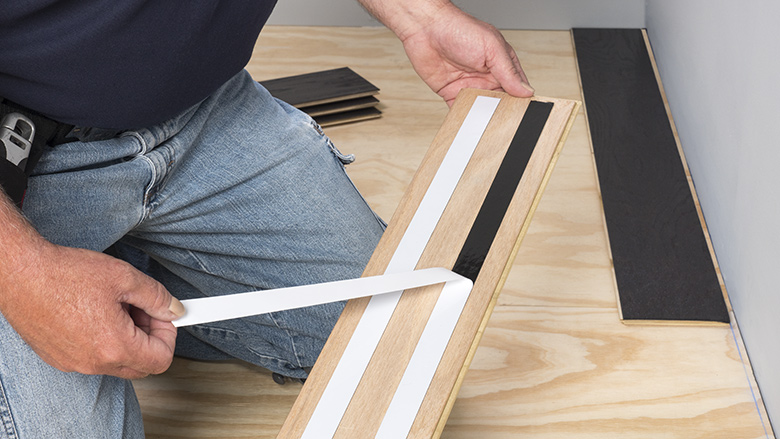
Peel-and-stick options for interior flooring applications have grown in recent years. Image courtesy of Avery Dennison.
Expanding Applications in Interior Surfaces
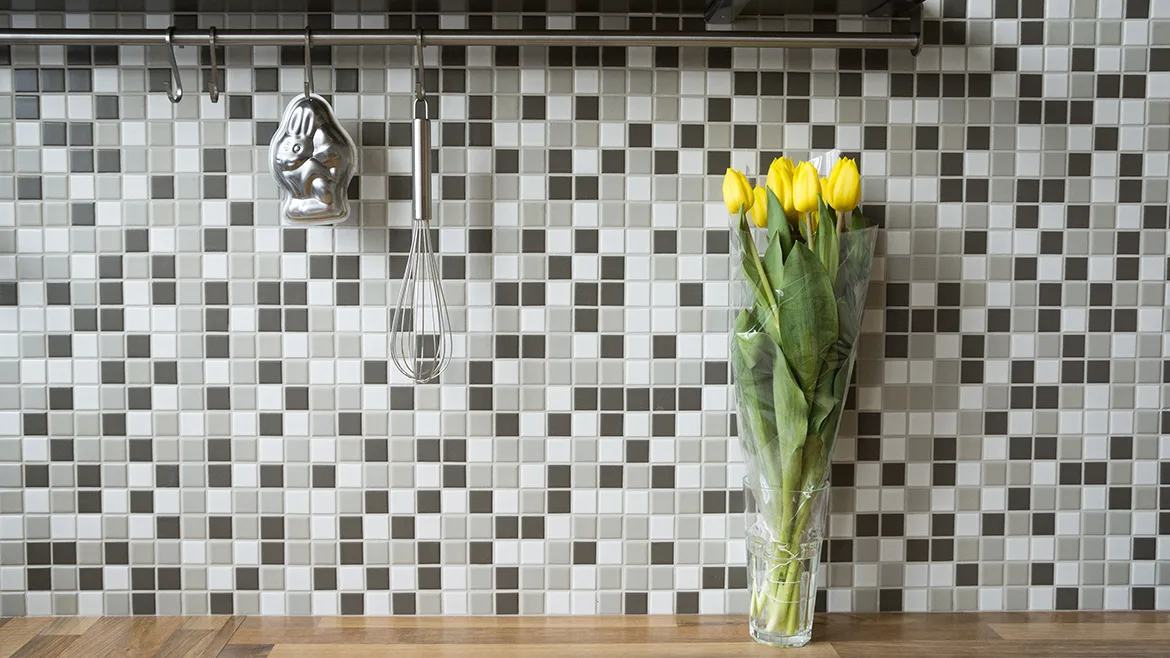
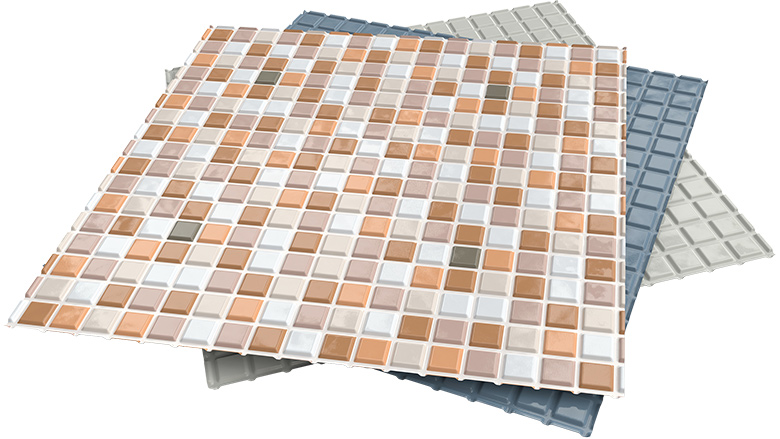
Peel-and-stick solutions in the interior décor, floor, and wall products have grown to include wall-mounted accessories such as shelving, mirrors and lighting; interior wall systems, including paneling and ceiling tiles; trim elements like baseboards and molding; flooring products such as vinyl and laminate tiles; and kitchen and bathroom surfaces, including backsplashes and tiles.
For DIY users and professional installers, the benefits of peel-and-stick solutions are straightforward.
Installation is simplified to a few basic steps: position the product, remove the liner, and apply pressure. No need for drilling, anchoring, or curing time.
This streamlined approach directly addresses the frustrations identified in the consumer survey mentioned above by reducing reliance on tools and specialized skills and making it easier to do DIY projects in tight or hard-to-reach spaces.
PSAs also address the frustrations and limitations of traditional mechanical fasteners and wet adhesives by making it much simpler to ensure items are mounted properly, providing an option to reposition objects, as well as overall ease of use. PSAs require minimal cleanup and give users greater confidence in achieving a successful outcome.
For DIYers, this translates into a more approachable and satisfying project experience. For professionals, it can mean faster installation times and improved consistency across jobs.
Credit: coddy / iStock via Getty Images Plus
Integrating PSAs into Product Designs
One of the key advantages of PSA technology is its ability to be highly engineered for specific applications. When used in industrial applications, tapes can take on any of several multilayer constructions depending on the needs of the application.
Companies adopting PSAs have multiple options for integrating tapes into their manufacturing processes. These include the purchase and use of inline or offline application equipment or working with third-party providers who can add the tape offsite.
Manufacturers interested in adopting PSA solutions should consider these items when selecting a PSA supplier:
- Does the company have experience in the building and construction industry?
- Does the company offer application expertise and support?
- What are the company’s R&D capabilities, and do they include producing custom PSAs if needed?
- Can the company provide PSAs at the scale needed?
- What service options do they offer and what does ongoing support look like?
Conclusion
The growing interest in peel-and-stick solutions reflects a broader transformation in the home improvement landscape — one driven by consumer demand for simplicity, speed and reliability.
With the majority of Americans expressing interest in peel-and-stick products and widespread frustration with traditional installation methods, the opportunity for manufacturers is significant.
By leveraging the proven performance and adaptability of pressure-sensitive adhesives, companies can deliver products that not only meet today’s expectations but also anticipate the needs of tomorrow’s market.
References
1. The survey by Wakefield Research on behalf of Avery Dennison Performance Tapes was conducted among 1,000 nationally representative Americans ages 18 or older, between August 6 – 14, 2025, using an email invitation and an online survey. The data has been weighted.
Looking for a reprint of this article?
From high-res PDFs to custom plaques, order your copy today!