How Henkel Is Helping Companies Solve Sustainability Challenges
Leader of company’s design of sustainability initiative explains that collaboration drives better outcomes.

Ask anyone working on sustainability in manufacturing and packaging what the biggest sustainability challenge is, and there is a good chance you will get several different answers. Among those would be the lack of recyclable content, the way adhesive gums up a recycling process, and the problem disassembling a product that was designed to stay together. These are issues that adhesive manufacturers are asked to address when companies come to them with design issues.
Regulatory pressure is adding to the need for more sustainability in packaging and manufacturing. The EU’s Packaging and Packaging Waste Regulation is pushing brands and their supply chains toward fully recyclable packaging by 2030. The EU Right to Repair Directive, which begins taking effect in 2026, will reshape how products across electronics and home appliances are designed. Companies face a wave of compliance obligations that must be addressed.
For people outside of the industry, it is easy to overlook the role adhesives play in sustainability. Despite the small amount of adhesive used in any single piece of packaging or an assembled product, the role that adhesive plays in a product’s ability to be recycled (or repaired) is quite important. An adhesive that is incompatible with a recycling stream can render an otherwise recyclable package unrecyclable. Conversely, a recycling-compatible formulation, applied correctly and at the right point in the design process, can be the difference between a product that remains within the circular economy and one that ends up in a landfill. As the largest adhesive manufacturer in the world, and a company committed to sustainable practices and products, Henkel is working to ensure that it contributes to a circular economy.
Designing for Sustainability
In an interview published on the company’s website, Fabian Becker, head of design for sustainability at Henkel Adhesive Technologies, explained, “As global leaders in adhesives, sealants, and functional coatings, we bring deep materials expertise to the table. Being material agnostic, our technologies work across metals, plastics, paper, and more. This flexibility makes us a natural fit for innovative designs, where our solutions can be seamlessly integrated into new concepts. We are constantly developing next-generation technologies such as debonding-on-demand, biodegradable adhesives, and recycling-compatible formulations. These innovations enable more sustainable design possibilities.”
Becker further explained that being at the end of the chemical industry’s value chain gives the company a distinctive view of how materials perform across a product’s life cycle, noting that while adhesives represent a small fraction of a package’s material content, their influence on recyclability, energy efficiency, and material reduction is outsized. Additionally, the company can be a partner with customers to find solutions that serve a product’s sustainability goals.

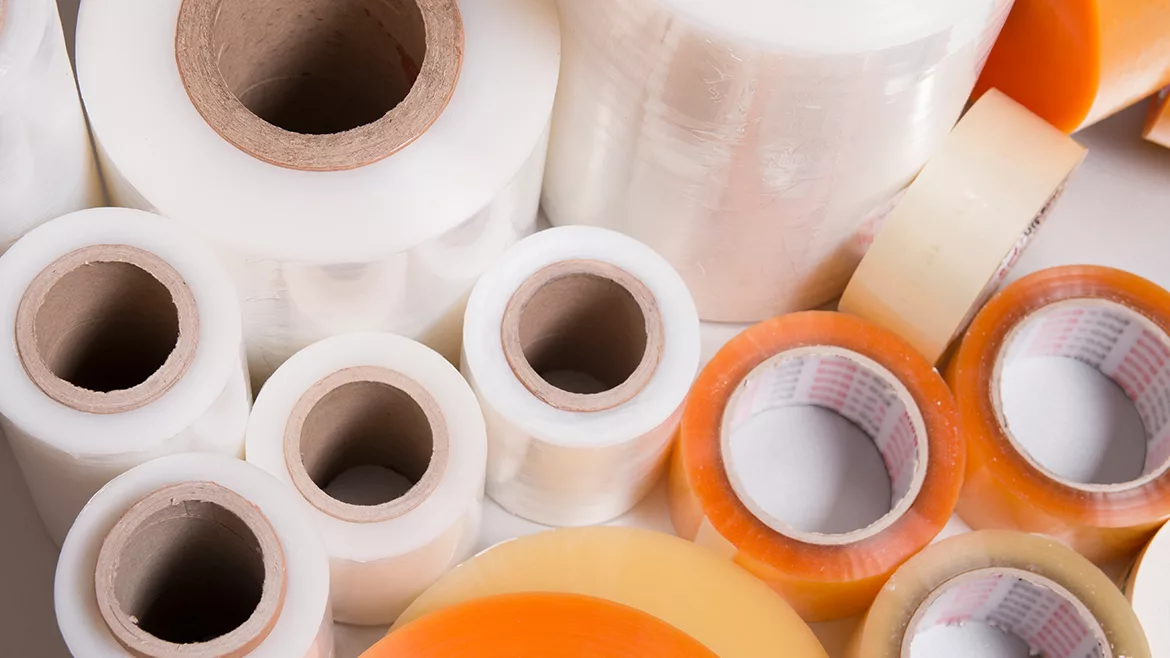
Credit: Olga Yastremska / iStock via Getty Images Plus
The RE-CREATE Program
In pursuit of these goals, Henkel has launched RE-CREATE, where it co-creates products with customers and partners to design for sustainability from the very beginning. “We bring together designers, chemists, engineers, sustainability experts, and innovation leads from across the value-chain to co-create products and refine them using tools and methods specialized for sustainability,” explained Becker.
In the LEAD UP phase, participants establish a foundation for addressing a sustainability challenge by identifying its root causes, such as emissions hotspots or barriers to recyclability. The phase then brings together the right experts to gather insights, technologies, and best practices needed to develop solutions.
The second phase, the WORKSHOP, brings all the assembled experts together for an intensive one-to-two-day workshop, where AI tools are used to accelerate both research and ideation. The group will work through materials with lower carbon footprints, debonding guidelines, CO2 simulations, and recycling certifications. When completed, the workshop will provide directions, not finished solutions. The work of turning those ideas into implementable concepts comes in the FOLLOW UP phase, where developed ideas get turned into concepts that are assessed for sustainability performance. The goal in this phase is to reach a winning concept that will, hopefully, be brought to market.
Looking to the Future
When asked about the future of designing for sustainability, Becker offered a hopeful view of the future. “I expect companies to put an increasing emphasis on integrating sustainability into their product design processes. Many have set bold targets and made public commitments, so they need innovations that live up to those statements. This requires transformative ideas, which will only arrive if they gather fresh perspectives and embrace new ways of thinking.”
He went on to emphasize the need for openness in the process, noting that no “individual person or company can achieve the necessary progress for sustainability by acting alone.” New partnerships and collaborations are the key to progress.
Learn more about Henkel and its sustainability initiatives at www.henkel.com.
Looking for a reprint of this article?
From high-res PDFs to custom plaques, order your copy today!