Maintaining an Iconic Brand with High-performance Building Materials
Why an iconic burger chain chose a two-component system from adhesive supplier ICP Group.
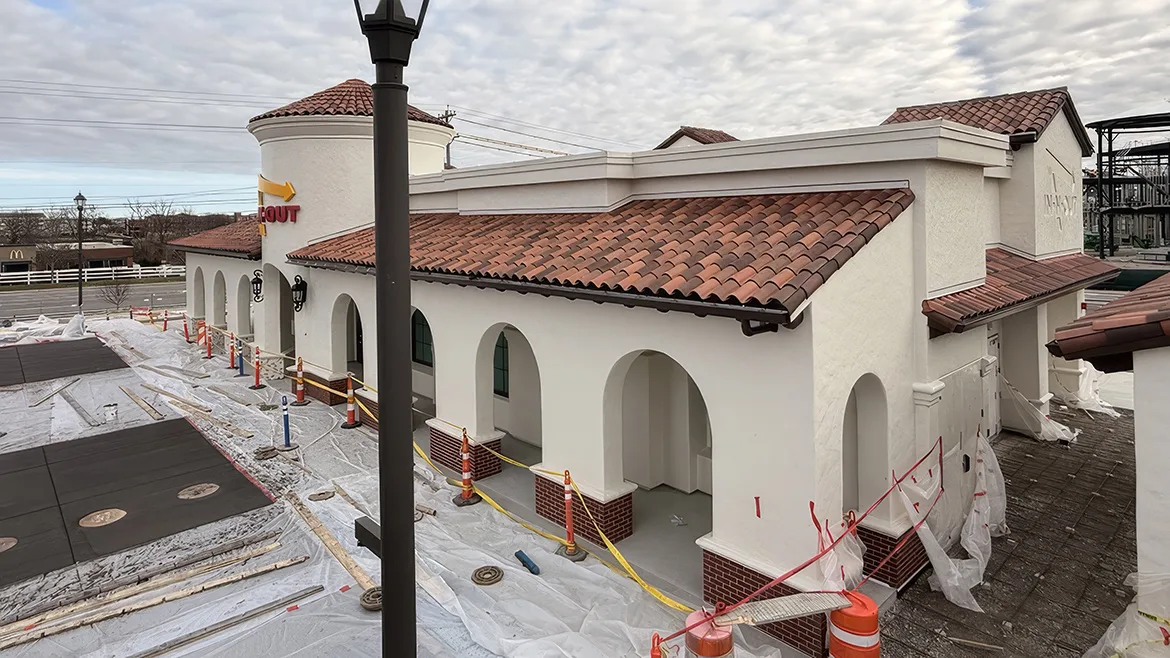
With many locations throughout California, In-N-Out Burger has long been one of the most recognized and beloved fast-food restaurants on the American West Coast. Today, the chain continues to expand throughout nearby states and is slowly but surely making its way all across the country.
A key feature of In-N-Out exteriors is its clay tile roof accents, a prominent feature often adorning the buildings’ main entrance. They are a nod to the brand’s heritage in Southern California, recalling the area’s sunny skies, palm trees and warm weather, no matter the location.
So when construction began for a new location and regional office in Franklin, Tennessee, the brand and its roofing contractor knew it couldn’t compromise on quality building solutions. And in order to best secure the iconic tiles to the structure for the long haul, it investigated the use of polyurethane foam roof tile adhesives rather than conventional fastening mechanisms.
The benefits were clear: ease of installation and higher wind uplift performance for a lifetime of performance. This case study explores these and the additional benefits of roof tile adhesives, why In-N-Out made the selection, and how extensive supplier support helped ensure a successful project.
Elevated Wind Performance
Modern adhesive technology has emerged as an ideal alternative to traditional mechanical fasteners like screws, nails, mortar sets, or wire-tie systems. Polyurethane foam adhesive products have been tested and proven to withstand severe weather events via strong bonds that help roofs achieve their superior longevity. Indeed, when properly installed by trained professionals, roofs using adhesives can achieve some of the highest possible wind uplift ratings, making them highly advantageous for extreme weather conditions in the United States.
Some available polyurethane foam adhesives provide wind uplift performance that is superior to any other roof tile attachment system. Dependent upon paddy size, tile profile, paddy placement, and gram weight, a properly installed two-component adhesive system can withstand a category 5 hurricane (more on one-component versus two-component systems in a later section). Additionally, third-party lab testing protocols and adhesive manufacturers’ code approvals show higher allowable overturning moment testing data for two-component systems.
For In-N-Out’s location in Tennessee, where high winds and tornados are part of the local weather environment, such performance is a necessity for reduced maintenance needs and to prevent premature tile failure throughout the building envelope.
Additional Benefits of Foam Adhesive Systems
Roof tile adhesives eliminate the need to penetrate the roof deck with mechanical penetrations, which can compromise the plywood and underlayment and cause leaks. Depending on the roof pitch, mean roof height, and municipality where the project is located, professionals can reduce and virtually eliminate the need to puncture the roof decks by using an adhesive instead. The foam adhesive creates a strong bond between the deck and the tile, functionally eliminating many of the concerns associated with mechanical fasteners.
Elsewhere, the application of nails and screws requires the right amount of pressure, which can vary among installers. A too-loose insertion can contribute to potential performance issues later on, especially in hurricane zones or other high-wind environments. Meanwhile, a mechanical fastener that has been applied too forcefully can cause a roof tile to crack or break.
Another benefit of roof tile adhesive is the supplemental tile support they provide within a given application. By creating a cushion effect underneath the tile after installation, polyurethane foams serve as a means to deliver extra protection and support, helping to protect against premature tile cracking.
For In-N-Out, this was a significant benefit. Maintaining a clean and attractive exterior is particularly important to create a welcoming environment for diners, and the additional support provided by adhesive technology can help prevent premature cracking and the subsequent required maintenance to fix damaged tiles.
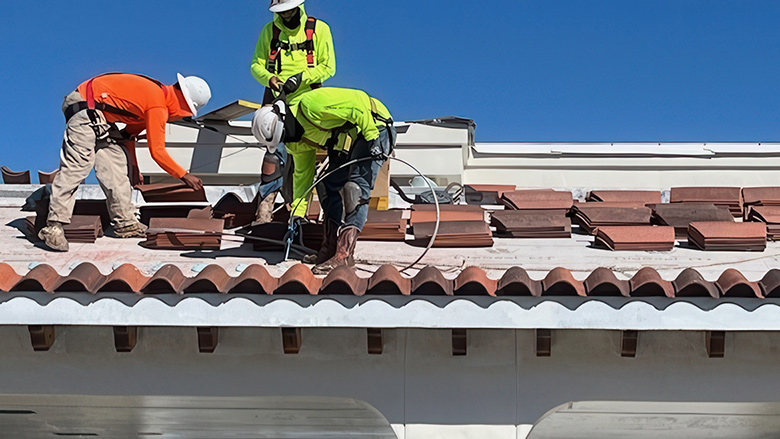
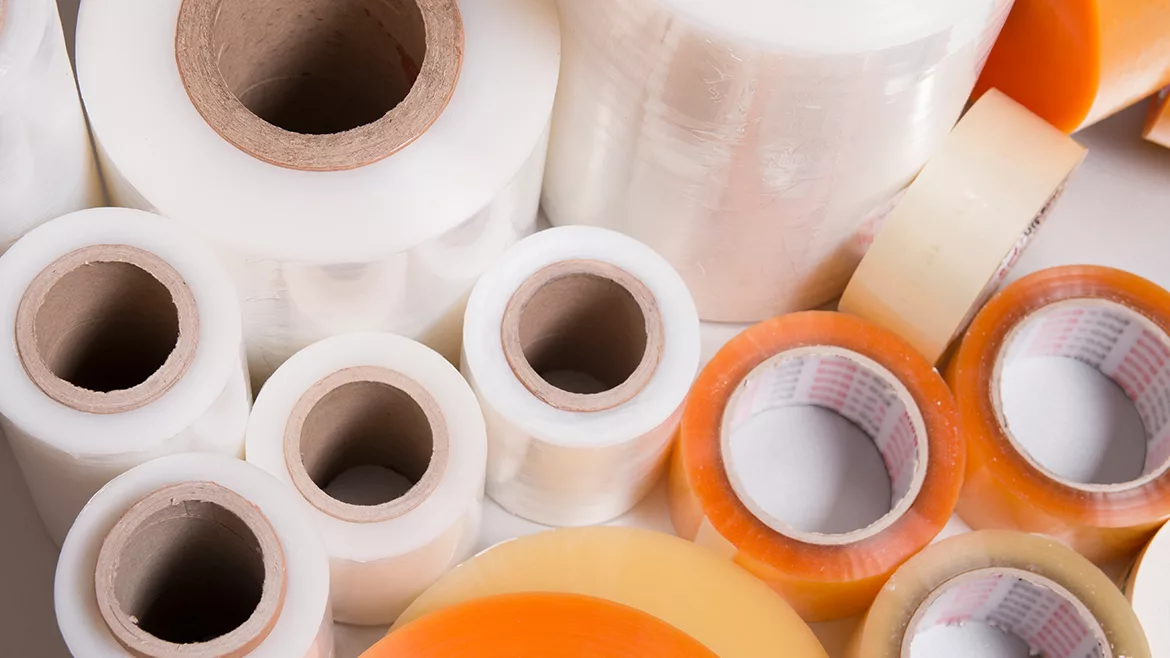
Foam adhesives for roof applications are available in single- and two-component options. Image courtesy of ICP Group.
Two-Component Performance for Commercial Reliability
For its new projects in Tennessee, In-N-Out chose two-component foam adhesives, one of two distinct product categories in which foams are generally available.
Single-component adhesives combine all chemical and raw material components in a single container — upon dispensation, they are combined and the adhesive moisture-cures soon after application. In two-component formulations, adhesion chemistry and other materials are kept separate (typically in an A-side/B-side). The chemical reaction begins once the two components are mixed together at the dispensation point within the application assembly nozzle. Both options can provide reliable, long-term performance. However, there are some differences between the two that may make one option more suitable for a given application than the other.
Single-component options can deliver good, long-term performance while simultaneously offering some ease-of-use advantages. Because these products are available in handheld cylinders, applicators are able to move around a roof area more freely than when handling two-component products. Single-component systems’ portability also lends itself to easier application around hips, ridges, cut pieces and trim tiles.
However, as mentioned earlier, two-component formulations can provide the highest levels of wind uplift performance available for roof tile applications, delivering an additional level of reliability that institutions like In-N-Out can trust for reliable, long-term performance.
The Value of Complete Support
Getting the most from roof tile adhesives depends not just on the products themselves, but on proper training and installation. Not all contractors are familiar with spray foam products, and it’s important that unfamiliar users are shown how to apply the product with the right equipment, how to deploy the right amount of foam, and other important installation techniques.
For this project, In-N-Out specifically used APOC® Polyset® AH-160, a two-component, low-pressure polyurethane foam that offers superior holding power. Citing previous experience working with APOC-Polyset trainers, the roofing contractor for the project noted that APOC’s available training service enabled the crew to complete the In-N-Out project more effectively, efficiently, and with greater ease.
Additionally, building officials in certain municipalities throughout the country often require roofing contractors to have received manufacturer training when working with spray tile adhesives. APOC helps to ensure that projects performed with AH-160 are compliant.
Learn more about ICP Group by visiting www.icpgroup.com.
Looking for a reprint of this article?
From high-res PDFs to custom plaques, order your copy today!