Is your company adapting production to meet a pandemic-related need? I’d love to hear about it! Please contact me at suttons@bnpmedia.com to share your story.
The medical devices packaging market is growing as the healthcare industry witnesses rapid changes due to the outbreak of new diseases, increasing regulatory norms, and growth in advanced healthcare systems.
The medical devices packaging market was valued at $29.3 billion in 2019 and is expected to reach a value of $41.9 billion by 2025, growing at a CAGR of 6.1% from 2020-2025.
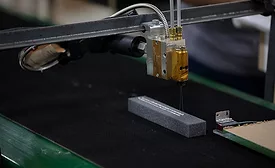
Chicago Glue recently helped Systematics more than double its output of face shields for healthcare workers on the front lines of the coronavirus pandemic.
When running a business, many scenarios cross your mind. You prepare and plan and adapt. Yet very few, if any, can say they were prepared for the global pandemic that has put stress on not only their company, but also its team members and its operations. As always in challenging times, good things still have the opportunity to happen.
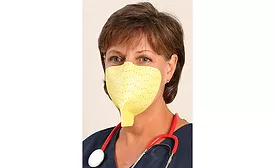
The new N95 masks reportedly adhere gently to the face with double-coated, skin-friendly adhesive.
Avery Dennison recently announced that it has entered into an agreement with Global Safety First, LLC (GSF) to produce and distribute a self-adhesive, NIOSH-certified N95 mask as part of the company’s efforts to provide innovative personal protective equipment (PPE) in response to the COVID-19 pandemic.
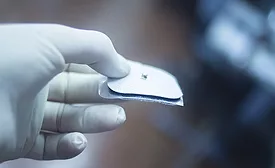
It is difficult to simultaneously achieve both moderate adhesion to the skin and strong adhesion to a wearable device, but a new polyurethane pressure-sensitive adhesive is providing a solution.
Wearable devices are used in medicine to continuously monitor signals such as electrocardiograms and electroencephalograms. They can also be used to monitor physical conditions during exercise. To improve the accuracy of the analysis, many studies have been conducted by directly attaching wearable devices to the skin using a pressure-sensitive adhesive (PSA) sheet.