FEICA, the Association of the European Adhesive and Sealant Industry, shares details regarding the continent’s sustainability goals and the role played by the adhesive and sealant industry.
The European Union (EU) has taken global leadership in tackling climate change and actively pursues policies to cut its greenhouse gas emissions and to decouple these from economic growth.
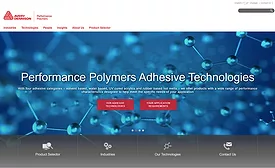
Avery Dennison reports that the site is designed for everyone from engineers to buyers in companies that manufacture pressure-sensitive products used in automotive, building and construction, electronics, general industrial, graphics and signage, labels and packaging, and medical applications.
Avery Dennison Performance Polymers has launched a more dynamic website with enhanced functionality and improved product selection and search features.
BioPreferred adhesives must use bio-based and renewable components instead of petroleum-based components.
Mactac recently announced its recognition as the first pressure-sensitive adhesive manufacturer to have products listed in the BioPreferred program established by the U.S. Department of Agriculture (USDA).
Epoxy silanes like GLYMO and GLYEO are adhesion promoters used in food packaging, but safety issues have prompted the development of new alternatives.
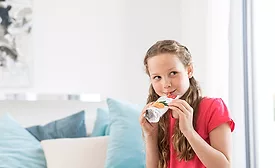
Consumers expect the food industry to provide safe products that comply with the latest regulations. FEICA, the Association of the European Adhesive and Sealant Industry, recommends avoiding the use of epoxy silanes in food contact applications, and the European Union is expected to set new limits during the course of this year. These limits will require complex testing methods that lead to challenges for converters and packaging manufacturers.
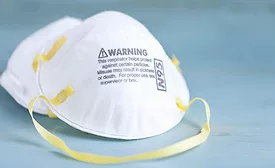
Products range in use from materials for face masks and protective healthcare apparel to packaging for food preservation and disinfecting products, many of which have seen a demand surge in the fight against COVID-19.
Berry Global Group, Inc. recently announced that it has advanced its investment in an additional specialty meltblown asset to produce high-efficiency filtration media serving the EMEIA markets.
Adhesive manufacturers are developing new technologies that converters can present to their packaged goods customers and enable them to capture more market share.
Pressure-sensitive adhesives (PSAs) continue to gain traction in the broad category of packaging. PSAs are rapidly changing the way goods are packaged and delivered to consumers in traditional retail and via ecommerce.
I profoundly hope that you are reading this issue of ASI in good health and from the safety of your own home. The last few weeks have seen an unprecedented global response to the threat of COVID-19—from school, restaurant, and facility closings to innumerable event postponements and cancellations.
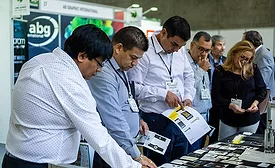
The two-day conference brought together 499 senior stakeholders from 21 countries who were eager to share ideas and shape the future direction of the region’s label and package printing industry.
The 17th edition of Label Summit Latin America was held March 10-11 in Santiago, Chile.
In terms of mechanical recycling solutions, BASF has reportedly developed adhesives for flexible packaging that facilitate the separation of multi-layer structures.
At interpack 2020, which will be held in Düsseldorf on May 7-13, personnel from BASF and BTC Europe, BASF’s European distribution organization, will present a range of plastics, dispersions for adhesives, and resins and additives for printing inks and barrier coatings.