Module joint design, adhesive selection, substrate choice, and combined mechanical and environmental stresses in the field all impact the longevity of the protective seal on a vehicle's electronic part.
Transportation electronics in both battery electric vehicles (BEVs) and autonomous vehicles regulate crucial on-board domains such as drive control units, safety systems, proximity sensors, and connectivity controllers. The electronics in these increasingly sophisticated computers are susceptible to corrosion failures from exposure to water and salt during vehicle operation that can result in performance problems, loss of function, and expensive repairs.
Susan Bailey, Ph.D., of Michelman has been elected president of the RadTech board, while Michael Gould of Rahn USA was nominated to be president-elect.
January 15, 2021
RadTech recently announced several changes to its board of directors.
The U.S. Plastics Pact looks to define problematic or unnecessary packaging, working toward the increased use of reusable, recyclable, or compostable materials.
December 28, 2020
The UV+EB Technology Association has joined the U.S. Plastics Pact, a collaborative, solutions-driven initiative intended to drive significant systems change to create a path forward toward a circular economy for plastics in the U.S. by 2025.
It’s time for ASI’s annual Buyers’ Guide, a purchasing and applications resource for raw materials, equipment, and services used to manufacture adhesives and sealants, pressure sensitives, and adhesives and sealants products such as tapes and labels. The Buyers’ Guide also includes supplier details for finished adhesives and sealants.
Since being established as an independent company spun out of Perkin Elmer in December 2010, Excelitas reports that it has enjoyed greater than three-fold growth in both revenue and headcount.
December 4, 2020
Excelitas Technologies Corp. recently announced that it is celebrating the 10-year anniversary of its founding.
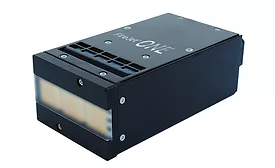
UV LED curing technology offers lower operating costs than traditional technologies, as well as long lifetime, enhanced system capabilities, and environmental benefits.
Ultraviolet (UV) light-emitting diode (LED) curing technology has been adopted for adhesive bonding, sealant, and coating processes in factory assembly lines throughout the world.
One of the most popular solutions for utilizing adhesives, coatings, polymers, and resins in green manufacturing without resorting to solutions that require time or heat to cure/dry involves using ultraviolet (UV) radiation and a material that is capable of utilizing its energy to provide for a fast, on-demand cure.
You need to look at so-called “shadow curing” options. Most UV-cured systems are based on acrylates and methacrylates and cure free-radically by the decomposition of a photoinitiator.
Marcy Gainey of TechCheck LLC, the RadTech regulatory consultant, is offering complimentary support to RadTech members for any project involved with helping to get supplies to the front lines of the fight against the coronavirus.
April 14, 2020
Many RadTech members are working to assist those on the “front lines” of combat against COVID-19.
In addition to Excelitas’ booth at RadTech, Marvin Ruffin, business development manager, will present a session entitled “Preventing Hospital-Acquired Infections with UVC LEDs” during the co-located 2020 IUVA Americas Conference UV for Healthcare Applications Track.
March 3, 2020
Excelitas Technologies Corp. recently announced that it will highlight its OmniCure LED UV curing systems at RadTech UV+EB 2020, which will be held March 8-11 in Orlando, Fla.