The specialty materials sector, including adhesives and sealants, is constantly evolving with new ideas, products, and markets. As a result, professionals face the ongoing challenge of determining where to allocate their time, resources, and efforts.
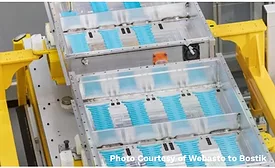
Plasma "pens" integrated into production lines provide targeted plasma treatments that reduce failure rates by improving adhesion and bonding of chemical adhesives, printing inks, and coatings.
Tape Week 2025 offers the technical sessions covering the latest in polymer and adhesion science, and up-to-date information about markets and applications within the industry.
Additives are the foundation of innovation, able to enhance the performance, functionality, and durability of coatings across a wide range of industries.
By choosing alternative thermally conductive gap fillers, EV manufacturers can streamline production processes and simplify battery module repair and recyclability.
This issue of ASI features our annual roundup of the latest innovations in raw materials offered to adhesive and sealant formulators and manufacturers. Additionally, I encourage you to visit our updated Raw Materials, Chemicals, Polymers, and Additives Handbook.
Proactive manufacturers are leaning on predictive demand planning processes to estimate and get ahead of changing capacity and down-the-line supply chain needs.
 RSS
RSS