Adhesives Mag logo
search
cart
facebook twitter linkedin youtube
  • Sign In
  • Create Account
  • Sign Out
  • My Account
Adhesives Mag logo
  • NEW PRODUCTS
  • NEWS
    • Adhesives & Sealants Headlines
    • Mergers/Acquisitions
    • Market Trends
    • TOP 20
  • TOPICS
    • Finished Adhesives and Sealants
    • Pressure-Sensitive Adhesives (PSAs)
    • Coatings
    • Raw Materials and Chemicals
    • Materials Handling/Processing
    • Meter/Mix/Dispense
    • Curing
    • Testing/Quality Control
    • Packaging of Adhesives & Sealants
    • Converting/Packaging
    • Composites
    • Sustainability
  • EVENTS
    • MAX
    • ASI Academy
    • Events Calendar
  • COLUMNS
    • European Perspectives
    • Strategic Solutions
    • Supply Chain Strategies
    • Tape Talk
  • MULTIMEDIA
    • Videos
    • Podcasts
    • Webinars
    • eBooks
  • EXPLORE
    • Adhesives in Action
    • Blog
    • ASI Store
    • Industry Links
    • Market Research
    • Classifieds
  • DIRECTORIES
    • Buyers' Guide
    • Global Adhesives & Sealants Directory
    • Raw Materials, Chemicals, Polymers and Additives Handbook
    • Equipment Handbook
    • Distributor Directory
  • EMAGAZINE
    • EMAGAZINE
    • ARCHIVE ISSUES
    • ADVERTISE
      • Custom Content & Marketing Services
    • CONTACT
  • SIGN UP!
Home » Authors » Edward M. Petrie

Edward M. Petrie

Edward M. Petrie is a representative of SpecialChem.
Articles

ARTICLES

Formulating UV-Curing Liquid Pressure-Sensitive Adhesives

Edward M. Petrie
November 1, 2008
This article focuses on the many formulation factors that influence the performance of UV-curing pressure-sensitive adhesives (PSAs).
Read More

Bookbinding Adhesives

Edward M. Petrie
May 1, 2008
Bookbinding demands sophisticated adhesive solutions for a very common product.
Read More
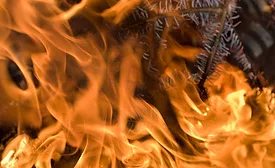
SpecialChem fire retardant adhesives

Fire-Retardant Adhesives

This article examines the external events that have led to greater awareness of adhesives’ performance in the event of a fire, the standards and regulations that are being imposed, and the development of new fire-resistant materials.
Edward M. Petrie
November 1, 2007
Historically, fire resistance has not generally been a significant requirement when specifying adhesive systems. Recent incidents, however, indicate that this may soon change. These include events outside of the formulators’ arena, such as increased sensitivity to the performance of components in a fire, and events within the formulators’ arena, such as the development of flame-resistant additives.
Read More
biodegradable polymers

Biodegradable Polymers in Adhesive Systems

Many biodegradable polymers are suited for adhesive applications, such as environmentally friendly packaging, recyclable envelope adhesives and biomedical devices.
Edward M. Petrie
June 1, 2007

Significant advances have been made over the past 20 years in the development of biodegradable polymers. These materials have been developed in a variety of forms, and thus have potential use in a range of industries, including adhesives.


Read More
handwashing

Safety First: Safe Handling of Adhesives and Sealants

While cured adhesives and sealants are generally considered safe, care must be taken with airborne particles, decomposition products, and uncured components.
Edward M. Petrie
March 1, 2007

Completely cured adhesives and sealants are generally considered safe and non-toxic, although caution must be exercised when machining or grinding joints due to airborne particles. Also, decomposition products may exhibit substantial vapor pressures that present health and safety issues. However, it is exposure to uncured components that can be the most harmful, and that is the subject of this article.


Read More
SpecialChem bathtub sealants

How Sealants Function

How do the application and performance characteristics of sealants correlate to the composition of the sealant formulation?
Edward M. Petrie
February 27, 2006
Sealants are generally chosen for their ability to fill gaps, resist relative movement of the substrates, and exclude or contain another material. Sealants are generally lower in strength than adhesives, but have better flexibility. Usually, a sealant must effectively bond to a substrate in order to perform these functions.
Read More
Manage My Account
  • eMagazine Issues
  • Newsletters
  • Online Registration
  • Manage My Preferences
  • Subscription Customer Service

More Videos

Popular Stories

image of a graph representing markets

Sika Announces Acquisition of Gulf Seal in Saudi Arabia

Picture of two men and one woman in dark suits

Bodo Möller Chemie Makes Management Change for CASE Business Unit

news on internet screen

Henkel Posts Positive Organic Growth for Third Quarter, Driven by Adhesives Technologies Business

ASI Top 20 website

Events

January 1, 2030

Webinar Sponsorship Information

For webinar sponsorship information, visit www.bnpevents.com/webinars or email webinars@bnpmedia.com.

View All Submit An Event

Products

Structural Adhesives: Properties, Characterization and Applications

Structural Adhesives: Properties, Characterization and Applications

See More Products

ASI CASE EBOOK

Keep the info flowing with our newsletters!

Get the latest industry updates tailored your way.

JOIN TODAY!
  • RESOURCES
    • Advertise
    • Contact Us
    • Directories
    • Manufacturing Division
    • Store
    • Want More
  • SIGN UP TODAY
    • Create Account
    • eMagazine
    • Newsletters
    • Customer Service
    • Manage Preferences
  • SERVICES
    • Marketing Services
    • Reprints
    • Market Research
    • List Rental
    • Survey & Sample
  • STAY CONNECTED
    • LinkedIn
    • Facebook
    • Youtube
    • X (Twitter)
  • PRIVACY
    • PRIVACY POLICY
    • TERMS & CONDITIONS
    • DO NOT SELL MY PERSONAL INFORMATION
    • PRIVACY REQUEST
    • ACCESSIBILITY

Copyright ©2025. All Rights Reserved BNP Media.

Design, CMS, Hosting & Web Development :: ePublishing