Reinforcing Bio-Based Epoxy Adhesives with Recycled Fillers
The feasibility of developing structural bio-based adhesives using DGEVA as a base material and reinforcing recycled fibers.

In recent decades, the use of bio-based polymers has expanded significantly across industries such as aerospace and automotive. These materials, which serve as bulk components, matrices, and adhesives, have garnered increasing attention due to their potential to reduce dependency on fossil fuels. While bio-based polymers still represent a small share of the global plastics market, the growth of the bioeconomy has spurred their adoption in diverse applications.
Despite this growing interest, the synthesis and production of bio-based structural adhesives have been limited. A key challenge lies in the mechanical degradation of these adhesives under humid conditions, which limits their performance in demanding applications.
One promising development is the use of vanillyl alcohol as a building block for bio-based monomers. The cationic polymerization of its diglycidyl ether derivative (DGEVA) yields materials with exceptional thermomechanical properties and low moisture absorption, making them suitable for advanced applications, including aerospace and space industries.
However, like other thermosetting resins, bio-based adhesives based on DGEVA are not reusable after curing. Epoxy resins typically end up as waste after their service life, with limited opportunities for direct reuse. Most recycling approaches involve pulverizing cured epoxy materials for use as fillers or reinforcements in new structures, such as concrete, composite materials, and construction products.
The same path is followed by one of the main fillers used in epoxy resins, carbon fibers. Although recycled carbon fibers retain most of their mechanical properties, their reduced length limits their reuse to lower-performance applications.
Similarly, the recycling of mineral wool, widely used in the construction industry for insulation and fire protection, represents another significant opportunity. There is growing interest in incorporating both recycled carbon fibers and mineral wool waste into polymer composites. This approach not only reduces landfill waste but also conserves natural resources by substituting virgin raw materials with recycled components.
This study investigated the feasibility of developing a structural bio-based adhesive utilizing DGEVA as a base material, reinforced with recycled carbon fibers and mineral wool waste derived mainly from demolished buildings. This addresses two challenges: enhancing the performance of bio-based adhesives and advancing the principles of the circular economy. By incorporating recycled reinforcements, this research aims to improve the mechanical properties of DGEVA-based adhesives while preserving their bio-based nature and ensuring their suitability for structural use.
Materials and Methods
All the samples were prepared using as the polymeric matrix Diglycidylether of vanillyl alcohol (DGEVA), procured from Specific Polymers (Castries, France). As a cationic thermal initiator, Ytterbium (III) trifluoromethanesulfonate (YTT) was used. Additionally, different types of fillers were introduced in different amounts: recycled carbon fibers (RCFs), with a length of 0.2 mm, and recycled mineral wool (MW). RCFs were recovered from dismissed composites while MW is obtained from insulation panels in buildings. See Image 1.
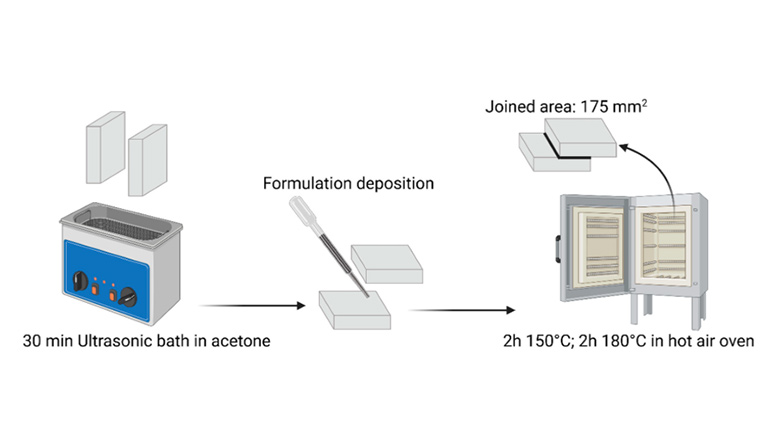
SEM images of RCF (a) and MW (b) as free fillers. Credit: Polytechnic University of Turin
Formulations Preparation
A total of seven formulations have been analyzed, each with different filler content. Table 1 shows the formulations studied. In each formulation, 2 phr of cationic thermal initiator, the YTT, was added.
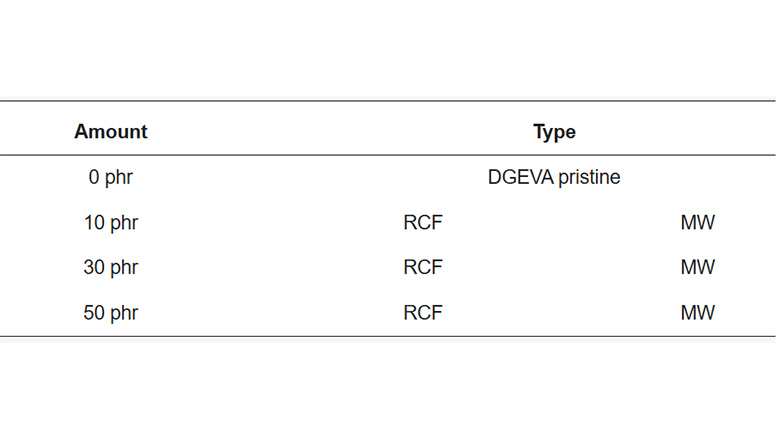
List of formulations analyzed. Credit: Polytechnic University of Turin
Characterization of the Formulations
All the formulations were analyzed in their liquid and solid form by means of the following methods.
FTIR: IR spectroscopy was used to measure the conversion of the resin upon thermal curing. A lowering of the peak characteristic of epoxies after curing is expected.
Dynamic DSC and DSC: The dynamic DSC and DSC analyses were performed using a Mettler TOLEDO DSC1 instrument under a nitrogen atmosphere, with a flow rate maintained at 40 mL/min. Three samples of each formulation were analyzed to calculate a weighted average while considering the standard deviation of the obtained values. To evaluate the thermodynamic properties of the curing process, dynamic DSC experiments were conducted and analyzed using the Kissinger method.
In addition to the kinetic analysis provided by dynamic DSC, conventional DSC measurements were employed to evaluate the glass transition temperature (Tg) of the cured formulations. The Tg was identified as the temperature region where a distinct change in heat capacity occurs, typically observed as a step or an inflection point in the DSC baseline. For these measurements, a heating rate of 3 K/min was used over a temperature range from 0 to 200 °C.
Sample Manufacturing
The process to manufacture the joints involved the application of the resin on the top of the substrates, made of Ceramic Matrix Composite (CMC) or aluminum (Al), and then covering it with the second piece of metal or composite. CMC/CMC and Al/Al joints have been produced, at least three joints for each formulation. A support of the same thickness of the substrates has been used to create parallel surfaces of the two pieces which are joined. Additionally, before applying the liquid formulations, the surface of the substrates undergoes degreasing by a treatment with acetone in ultrasound bath for 30 min.
Once the liquid formulation was correctly deposited and the two substrates correctly positioned, the samples were put in an oven to undergo the curing process. This step consisted of 2 h at 150 °C and 2 h at 180 °C to guarantee a proper curing. The joined area is 175 mm2. The scheme of the process is visible in Figure 1.
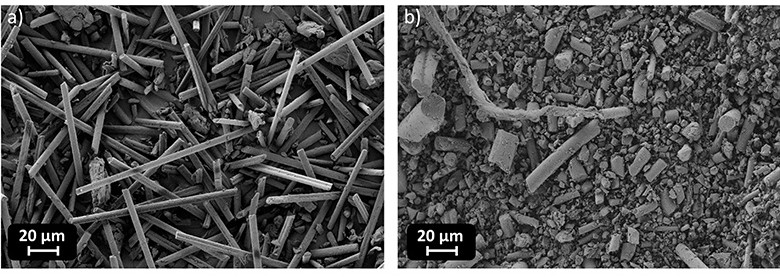
Graphical representation of joint manufacturing. Credit: Polytechnic University of Turin
In addition to joints, DMTA samples were also produced by pouring the liquid formulation into silicon molds and then undergoing the curing process previously explained. Five samples for each formulation have been produced, with dimensions of 18 × 8 × 1 mm3.
Characterization of the Cured Samples
DMTA: Dynamic mechanical thermal analysis (DMTA) was performed using a Triton Technology instrument operating in tension mode, where uniaxial stress was applied at a frequency of 1 Hz. The tests were carried out with a temperature range from 25 °C to 225 °C, at a heating rate of 3 K/min. The glass transition temperature (Tg) was determined as the peak of the Tanδ curve.
Lap Shear Test: The tests were conducted on joints in a compressive instrument, with a translation speed of 2 mm−1 and a loading cell of 50 kN.
SEM: SEM analyses were conducted to investigate filler dispersion inside the polymeric matrix and adhesion of the formulations with the substrates. The analyzed surface was covered with a 10 nm thick platinum layer.
Results
FTIR Analysis
FTIR analysis was conducted to investigate epoxy group conversion upon thermal curing of DGEVA-based formulations. In the case of pristine DGEVA, the pre-cured spectrum exhibits characteristic epoxy signals in the region around 915–830 cm−1, corresponding to the oxirane ring vibrations. After thermal curing, a significant reduction in these peaks is observed, indicating the successful consumption of epoxy groups during network formation. Concurrently, an increase in absorbance around 1100–1200 cm−1 suggests the formation of ether linkages, further confirming the progression of the crosslinking reaction.
For the DGEVA formulation containing 50 phr RCF, a similar trend is observed, with a noticeable decrease in epoxy-related peaks upon curing. However, a comparison with pristine formulation reveals some differences. The post-cured spectrum of the RCF filled sample exhibits lower residual intensity in the epoxy region with respect with the pristine one, suggesting higher conversion of oxirane rings. This could be attributed to the presence of carbon fiber reinforcement, which may increase the thermal conductivity and heat transfer or catalytic effects, thereby influencing the curing process. Additionally, slight shifts in some spectral bands indicate possible interactions between the polymer matrix and the RCF filler, potentially modifying the local curing environment.
On the other hand, a different trend is observed for the MW-filled formulation. In this case, conversion is reduced with respect to the pristine formulation, indicating a potential chain mobility restriction that leads to a less efficient process. Overall, the FTIR results confirm the effective crosslinking of DGEVA in both the pristine and filled formulations, while also highlighting the beneficial impact of RCF and the detrimental effect of MW on the extent of epoxy conversion.
Dynamic DSC and DSC of Cured Samples
The dynamic DSC data and the resulting Kissinger analysis provide insights into the curing behavior of the pristine and filled formulations. The peak polymerization temperature (Tp) of the pristine system is found at 163 °C, with an associated activation energy (Ea) of 63 kJ/mol. The incorporation of 10 phr RCF leads to a slight decrease in Tp to 159 °C, coupled with an increase in Ea to 67 kJ/mol. This suggests that the presence of RCF may facilitate the initiation of the reaction at lower temperatures, potentially due to its influence on heat transfer or catalytic effects, while simultaneously requiring higher energy to sustain the overall polymerization process.
Conversely, the addition of 10 phr MW results in an elevated Tp of 170 °C and a further increase in Ea to 70 kJ/mol. This shift indicates that the MW filler potentially restricts chain mobility or introduces interactions that delay the onset of polymerization, thereby demanding a higher activation energy. Such behavior may be attributed to enhanced physical or chemical interactions between the MW filler and the reactive species, leading to a modified reaction pathway, in accordance with FTIR analysis.
In addition to dynamic DSC conducted on liquid formulations, DSC analysis was conducted on cured samples, in order to assess the glass transition temperature value (Tg). The DSC analysis of the samples reveals significant variations in the Tg depending on the type and amount of filler incorporated into the polymer matrix.
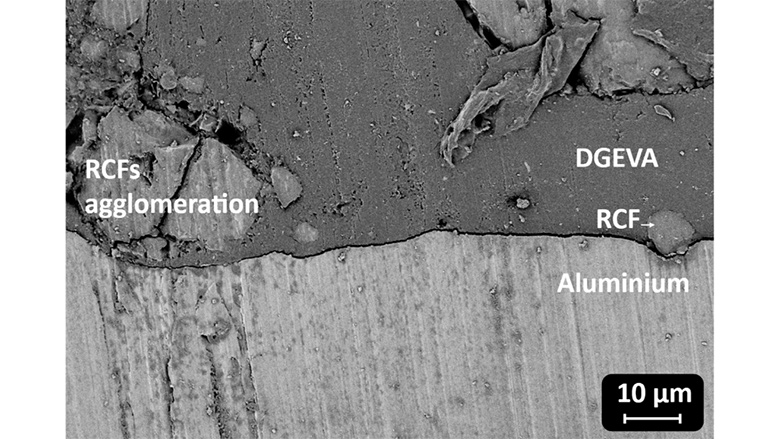
Filler agglomeration at the interface with the substrate. Credit: Polytechnic University of Turin
A different trend is observed with the incorporation of MW. At 10 phr, Tg remains unchanged at 107 °C, implying minimal interaction at this filler concentration. As the filler content increases to 30 phr, Tg drops significantly to 85 °C, suggesting a plasticization effect or poor compatibility between the filler and the polymer matrix, which disrupts the polymer network. At 50 phr, a slight recovery is observed, suggesting that at higher loadings, some degree of network stabilization might occur, although the glass transition temperature remains considerably lower than that of the pristine sample.
The contrasting behaviors observed for RCF and MW fillers indicate differences in their interactions with the polymer matrix. While low concentrations of RCF appear to reinforce the material, excessive amounts likely lead to agglomeration, negatively impacting thermal properties. The poor interfacial adhesion, due to filler agglomeration, is responsible for a poorer stress transfer between the recycled carbon fibers and the resin matrix, and it will induce a decrease in thermos-mechanical properties of the crosslinked adhesive.
DMTA results provide further insights into the glass transition behavior of the studied samples, complementing the trends observed in the DSC data. The pristine sample exhibits a Tg of 131 °C, serving as the reference for comparison. Upon the addition of RCFs at 10 phr, Tg increases slightly to 134 °C, confirming the previously observed reinforcing effect, where the filler restricts polymer chain mobility, leading to an elevation in Tg. However, at 30 phr, Tg decreases to 125 °C, which aligns with the DSC trend indicating a saturation effect, where additional filler does not contribute as effectively to matrix stiffening.
The most striking behavior occurs at 50 phr, where Tg drops significantly to 59 °C. This drastic reduction, also observed in DSC, suggests severe phase separation or plasticization effects due to filler aggregation, disrupting the polymer network, and reducing the effectiveness of polymer–filler interactions.
The MW-filled samples exhibit a different trend. At 10 phr, Tg remains nearly unchanged at 130 °C, like the pristine material, indicating minimal interaction at this concentration. With increasing MW content, Tg follows an irregular pattern: at 30 phr, it decreases significantly to 96 °C, while at 50 phr, it increases again to 105 °C. The slight recovery of Tg at 50 phr suggests that at higher concentrations, MW may contribute to some degree of structural stabilization, possibly due to network percolation effects or secondary interactions reinforcing the polymer matrix.
Regarding the storage modulus in the rubbery plateau (measured at Tg + 50 °C), the pristine DGEVA exhibits a low modulus of 17 MPa, consistent with its soft polymeric state above Tg. The inclusion of RCFs significantly enhances the modulus, and MW yields a more moderate improvement in stiffness.
Overall, while RCF markedly increases the mechanical stiffness of DGEVA, its high loadings adversely affect the thermal behavior, possibly limiting its applicability. Conversely, MW offers a compromise, providing moderate reinforcement with a less pronounced impact on Tg.
Lap Shear Test
The mechanical performance of the DGEVA-based adhesive formulations, modified with varying amounts of recycled carbon fibers (RCFs) and mineral wool (MW), was evaluated through lap shear tests using two different substrates: Ceramic Matrix Composite (CMC) and aluminum (Al). CMC joints exhibited higher shear strengths than their Al counterparts, with all CMC samples displaying cohesive failure within the adhesive layer, indicating good adhesion to the substrate. Conversely, Al joints systematically failed via adhesive rupture, pointing to weaker interfacial bonding.
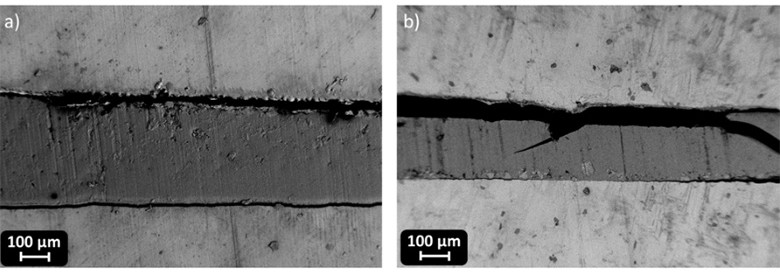
Lap shear test performed on Al joints. Credit: Polytechnic University of Turin
In CMC joints, the incorporation of RCFs significantly improved the maximum shear strength. A similar trend was observed with MW. These observations correlate well with the dynamic mechanical properties. The storage modulus in the rubbery plateau increased markedly with filler content, reflecting the formation of a rigid filler network. However, the pronounced drop in Tg at 50 phr RCF (59 ± 5 °C) suggests disrupted polymer network continuity, which could compromise cohesive strength despite the high stiffness.
In contrast, Al joints showed more moderate strength values. Although filler addition improved the load-bearing capacity, the adhesive failure mode indicates that substrate–adhesive interfacial strength remained the limiting factor.
Conclusion
In conclusion, the developed DGEVA-based adhesives reinforced with recycled carbon fibers (RCFs) and mineral wool (MW) exhibit mechanical and thermal properties suitable for semi-structural bonding applications where sustainability and performance must coexist. Their high shear strength on ceramic matrix composites, combined with enhanced stiffness and thermal resistance, makes them promising candidates for lightweight composite joining and repair in automotive, transportation, and aerospace interior components.
In addition, the compatibility with mineral-based fillers supports their use in construction and building materials, such as bonding of insulation panels, facade laminates, or eco-composite elements, contributing to waste valorization of demolition residues.
This paper was edited to accommodate space constraints. To read the entire paper, Bio-Based Epoxy Adhesives Reinforced with Recycled Fillers, click here.
Looking for a reprint of this article?
From high-res PDFs to custom plaques, order your copy today!