Adhesives Mag logo
search
cart
facebook twitter linkedin youtube
  • Sign In
  • Create Account
  • Sign Out
  • My Account
Adhesives Mag logo
  • NEW PRODUCTS
  • NEWS
    • Adhesives & Sealants Headlines
    • Mergers/Acquisitions
    • Market Trends
    • TOP 20
  • TOPICS
    • Finished Adhesives and Sealants
    • Pressure-Sensitive Adhesives (PSAs)
    • Coatings
    • Raw Materials and Chemicals
    • Materials Handling/Processing
    • Meter/Mix/Dispense
    • Curing
    • Testing/Quality Control
    • Packaging of Adhesives & Sealants
    • Converting/Packaging
    • Composites
    • Sustainability
  • EVENTS
    • ASI Academy
    • Events Calendar
  • COLUMNS
    • European Perspectives
    • Strategic Solutions
    • Supply Chain Strategies
    • Tape Talk
  • MULTIMEDIA
    • Videos
    • Podcasts
    • Webinars
    • eBooks
  • EXPLORE
    • Adhesives in Action
    • Blog
    • ASI Store
    • Industry Links
    • Market Research
    • Classifieds
  • DIRECTORIES
    • Buyers' Guide
    • Global Adhesives & Sealants Directory
    • Raw Materials, Chemicals, Polymers and Additives Handbook
    • Equipment Handbook
    • Distributor Directory
  • EMAGAZINE
    • EMAGAZINE
    • ARCHIVE ISSUES
    • ADVERTISE
      • Custom Content & Marketing Services
    • CONTACT
  • SIGN UP!
Adhesives and Sealants TopicsFinished Adhesives and SealantsSustainability

Adhesive Systems Optimize Heat Dissipation in EV Batteries

Liquid adhesive systems offer an alternative to silicone-based pads to dissipate heat generated in electric vehicle battery cells.
electric car

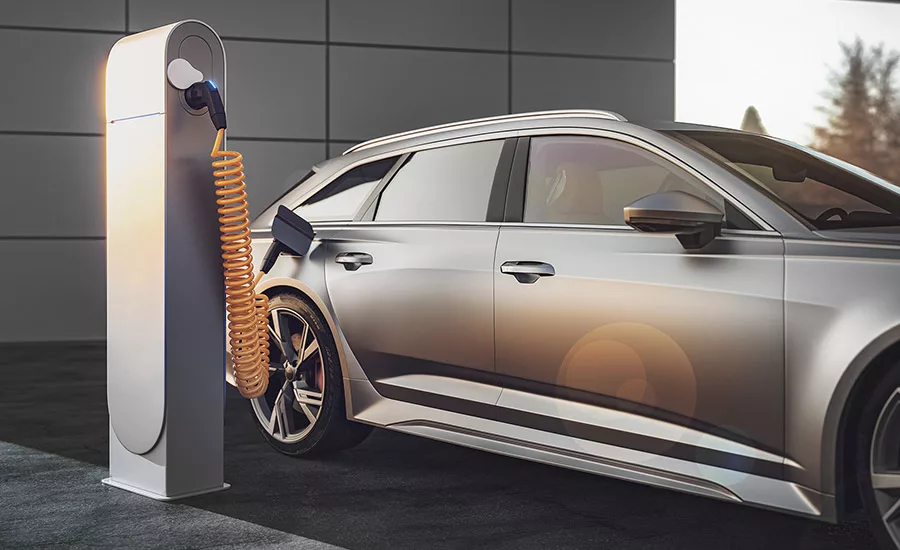
Wevo adhesive systems reliably dissipate the heat generated during the charging process from the battery cells to the heat sink. (Image source: © Bildwerk – stock.adobe.com)

February 9, 2023

High temperatures are generated in the battery cells of electric vehicles (EVs) during charging, and these have to be dissipated. Until now, this has mostly been achieved by inserting silicone-based pads between the cells and the cooling system. However, the manufacturing process of batteries is increasingly demanding that thermal interface materials (TIMs) with adhesive properties be used – something silicone pads are not able to provide. Liquid adhesive systems developed by WEVO-CHEMIE GmbH offer better surface wetting and can also be used as structural adhesives. In addition to the optimized heat dissipation, these customizable polyurethanes also open up new possibilities in the design process.

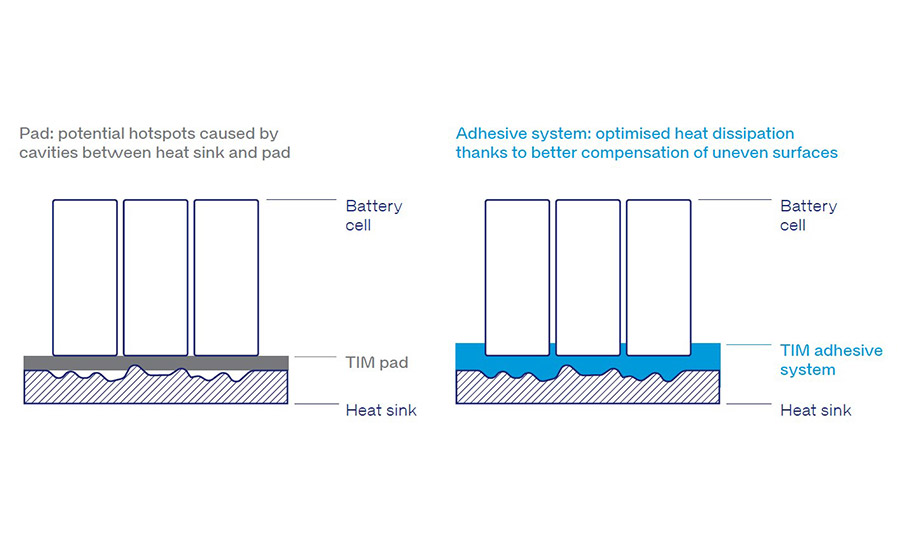
The ongoing upgrade of the system voltage of EVs from 400 V to 800 V is leading, among other things, to an increase in the efficiency of the battery charging process. However, this results in high temperatures – also in the battery cells. TIM pads no longer provide adequate heat dissipation in these cases. That is because the inlaid solutions that are inserted between the cells and the cooling system do not fully compensate the uneven surfaces of the cells and cooling system (see Figure 1). This can lead to hotspots and damage to the cells.
chart

Heat dissipation in electric vehicle battery cells


What’s more, insertion solutions such as pads can no longer satisfy the complex geometries of modern battery design concepts. The customized liquid adhesive systems developed by Wevo are the perfect solution for the job. They are flexible and are applied directly to the cooling system – three-dimensional if required – and pressed together with the battery cells. This prevents air voids from forming and ensures immediate dissipation of the generated heat to the cooling system.


Properties Meet Latest Battery Designs 

Wevo has set the thixotropy and therefore the rheological properties of these adhesive systems so they can be applied as a vertical bead that doesn’t collapse, even if the components are tilted or rotated as part of the manufacturing process. At the same time, the corresponding special fillers ensure that the viscosity of the potting compound doesn’t rise disproportionately to the thermal conductivity. This enables trouble-free processing in standard dosing systems despite the compound’s high thermal conductivity. The reactivity of the materials is individually adjusted to the customer’s particular process – for fast downstream processing and short production cycles.

These products can also be used as structural adhesives for durable and dimensionally stable bonding applications. This makes it easier for battery manufacturers to overcome challenges they come up against in the design process. That is because the polyurethane adhesives make it possible, for example, to dispense with certain screwed connections, helping to reduce the overall weight of the battery and increase the range it offers.


Learn more about Wevo adhesive systems at www.wevo-chemie.com. 

KEYWORDS: adhesives in electrical/electronic electric vehicles structural adhesives

Share This Story

Looking for a reprint of this article?
From high-res PDFs to custom plaques, order your copy today!
Recommended Content

JOIN TODAY
to unlock your recommendations.

Already have an account? Sign In

  • 2026 ASI Top 20: Leading Global Adhesives and Sealants Manufacturers

    2026 ASI Top 20: Leading Global Adhesives and Sealants Manufacturers

    Every year, we study the leading worldwide manufacturers...
    Adhesives and Sealants Topics
    By: Karen Parker
  • PSA Market

    Trends and Opportunities in Pressure-Sensitive Adhesives: Sustainability, Innovation, and Market Growth

    The pressure-sensitive adhesives market is growing...
    Pressure-Sensitive Adhesives (PSAs)
    By: Parag Shah and Chirag Tripathi
  • science test tubes

    2026 Adhesives and Sealants Raw Materials Roundup

    After more than two years of contraction, the...
    Raw Materials and Chemicals
    By: Karen Parker
Manage My Account
  • eMagazine Issues
  • Newsletters
  • Online Registration
  • Manage My Preferences
  • Subscription Customer Service

More Videos

Sponsored Content

Sponsored Content is a special paid section where industry companies provide high quality, objective, non-commercial content around topics of interest to the Adhesives and Sealants Industry audience. All Sponsored Content is supplied by the advertising company and any opinions expressed in this article are those of the author and not necessarily reflect the views of Adhesives and Sealants Industry or its parent company, BNP Media. Interested in participating in our Sponsored Content section? Contact your local rep!

close
  • Assembly automation for medical device manufacturing
    Sponsored byNordson EFD

    Three Proven Principles Powering Quality Assembly

Popular Stories

Image of a computer keyboard with the letters N E W S highlighted

Huntsman to Merge with Olin, Creating $12 Billion Chemicals Leader

Image of a computer keyboard with the letters N E W S highlighted

H.B. Fuller Announces Offer to Buy Advanced Medical Solutions Group

Picture of the words Ask 3M in red and white

3M Launches AI-Powered Tool That Provides Access to Technical Expertise

ASI 2026 Top 20 Adhesives & Sealants List

Events

September 15, 2026

Coatings Trends & Technologies Summit

This annual Midwest coatings conference combines all of the high-quality technical presentations, exhibits and networking opportunities from the Coatings Trends and Technologies and Powder Coating Summit conferences into one new event. The event caters to both liquid and powder coatings formulators and manufacturers.

September 16, 2026

World Adhesive & Sealant Conference (WAC) 2026

As the industry’s premier international event, WAC 2026 offers a unique opportunity for professionals from every continent to connect, collaborate, and shape the future of the sector.
View All Submit An Event

Products

Structural Adhesives: Properties, Characterization and Applications

Structural Adhesives: Properties, Characterization and Applications

See More Products

Related Articles

  • ev battery

    UV Curing Technology Helps Transform the Manufacturing of EV Batteries

    See More
  • Picture of a white dot of gel and an image showing where it is place in an automotive component

    Henkel Unveils Advanced Heat Dissipation for Autonomous Driving

    See More
  • Q&A About Polyurethanes: What types of chemical structures could be built into a polyurethane adhesive to optimize heat resistance?

    What types of chemical structures could be built into a polyurethane adhesive to optimize heat resistance?

    See More

Related Products

See More Products
  • Advances in Structural Adhesive Bonding

  • Adhesive Bonding: Science, Technology, and Applications

See More Products
×

Keep the info flowing with our newsletters!

Get the latest industry updates tailored your way.

JOIN TODAY!
  • RESOURCES
    • Advertise
    • Contact Us
    • Directories
    • Manufacturing Division
    • Store
    • Want More
  • SIGN UP TODAY
    • Create Account
    • eMagazine
    • Newsletters
    • Customer Service
    • Manage Preferences
  • SERVICES
    • Marketing Services
    • Reprints
    • Market Research
    • List Rental
    • Survey & Sample
  • STAY CONNECTED
    • LinkedIn
    • Facebook
    • Youtube
    • X (Twitter)
  • PRIVACY
    • PRIVACY POLICY
    • TERMS & CONDITIONS
    • DO NOT SELL MY PERSONAL INFORMATION
    • PRIVACY REQUEST
    • ACCESSIBILITY

Copyright ©2026. All Rights Reserved BNP Media, Inc. and BNP Media II, LLC.

Design, CMS, Hosting & Web Development :: ePublishing