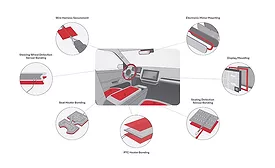
Pressure-sensitive adhesive tapes offer functionality, versatility, and customization as the automotive industry produces more EVs and increases the integration of electronic systems into vehicles.
The trends of integration of electronic systems into vehicles and the shift to electric vehicles are creating new opportunities for pressure-sensitive adhesive tapes.
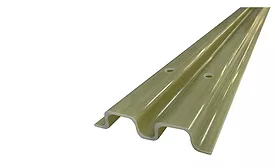
When combined with structural adhesives or overmolded thermoplastics, composite putrusion systems* help deliver high-strength, lightweight macrostructures that can help automotive manufacturers meet efficiency goals while optimizing costs.
Pultruded composites are continuous fiber-reinforced materials that can be used as a main structure and, when combined with sealants or structural adhesives, create a unified macrostructure.
Whether using a silicone adhesive in an aerospace assembly or manufacturing silicone bakeware, post-cure for silicone is not a process that belongs in the past.
Original equipment manufacturers (OEMs) may find that post-curing can bring value to certain applications. To determine if post-cure is the best option, it’s important to better understand what is happening during the process, the advantages it offers, and key best practices.
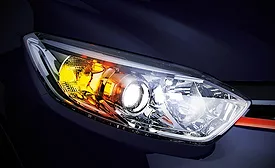
Headlights for cars and commercial vehicles need to be continuously and consistently well bonded.
July 5, 2022
Dispensing technologies for the automotive industry play a central role beyond the production of engines, transmissions, and airbags. Even in the production of headlights for cars, commercial vehicles, and heavy-duty transport systems, nothing works without the precise dispensing of 1- or 2-component adhesives and sealants.
Joe Tocci, president of the Pressure Sensitive Tape Council (PSTC), shares information about the recently held Tape Week, some of the PSTC’s activities, and challenges and opportunities for the tape industry.
I recently took the Bonding with ASI podcast on the road, sitting down with Joe Tocci, president of the Pressure Sensitive Tape Council (PSTC) at Tape Week in Orlando, Fla. Postponed twice due to the COVID-19 pandemic, the inaugural Tape Week was held May 3-5, 2022.
Newly developed UV-activated, dual-cure silicones can protect sensors in autonomous vehicles from the heat, cold, moisture, and stress that result from the rigors of the automotive environment.
May 11, 2022
Automobile manufacturers have identified approximately 200 sensor areas around the vehicle that will be instrumental in achieving commercialization and meeting safety goals for autonomous vehicles. The main commonality is the need to protectively seal these key sensor platform areas from the heat, cold, moisture, and stress that result from the rigors of the automotive environment.