The division will pursue a strategy that includes the reuse of materials, increasing the use of recycled materials, and reducing the quantity of raw materials used.
As part of its roadmap to become a leading sustainable business, Fedrigoni Group has announced that its Fedrigoni Self-Adhesives division plans to increase the volume of advanced ESG solutions in its product portfolio from 35% to 70% by 2030.
Henkel has launched a global innovation call for separating plastic from silicone waste.
In collaboration with ChileGlobal Ventures, the venture capital arm of Fundación Chile, Henkel Chile has launched the global Seal the Cycle initiative to find technological solutions for plastic waste. The goal of the initiative is innovation in separating high-density polyethylene (HDPE) from silicone waste to enable the recycling of cartridges that cannot currently be reprocessed.
Henkel has introduced three new low-pressure molding (LPM) materials designed to seal and protect medical devices from moisture, temperature extremes, chemicals, vibration, impact, and other environmental concerns.
Andre Argenton joined Dow in 1999 in Brazil as a research scientist.
Dow recently announced that Mary Draves, vice president of Environment, Health and Safety (EH&S) and chief sustainability officer, has announced her decision to retire in April 2022, following more than 32 years of service with the company.
Sustainable bonding requires combining the highest possible certified bio-based raw material content in the adhesives, low maintenance and energy requirements in the bonding process, high compatibility of the adhesives with existing application systems, and, especially in the packaging industry, high compatibility in terms of downstream paper recycling. All of this must be achieved at competitive prices.
The prize will be awarded annually for scientific breakthroughs in the development, understanding, or application of sustainable materials.
The recently announced Arkema–Académie des Sciences Prize for Innovation in Chemistry for Sustainable Materials is intended to reward a scientist of international standing in the field of materials.
NAGASE Specialty Materials will produce renewable 1,5-pentanediol diacrylate and other derivatives in the U.S. and market them in North America and Europe.
Pyran, Inc. and NAGASE Specialty Materials have entered an exclusive partnership for the conversion of Pyran’s bio-based 1,5-pentanediol (PDO) to renewable 1,5-pentanediol diacrylate (PDDA) and other acrylate and methacrylate derivatives.
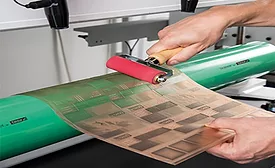
A self-adhesive, reusable, and compressible sleeve, tesa® Twinlock can reportedly help packaging printers achieve greater operational efficiency and improve return on investment while reducing the solid waste associated with packaging printing.
 RSS
RSS