For the sixth consecutive year, Dow has received a top score on the Disability Equality Index® (DEI) – a benchmarking tool for the Fortune 1000 and Am Law 2001 to measure disability workplace inclusion.
Elkem has released results for the second quarter of 2022, reporting total operating income for the quarter of NOK 12,326 million (approx. $1,236 million), up 68% from the corresponding quarter last year.
The most successful companies are focusing on taking control of their end-to-end supply chain with cross-functional, cross-organizational, collaborative programs such as sales and operations planning (S&OP), which is also known as sales, inventory, and operations planning (SIOP).
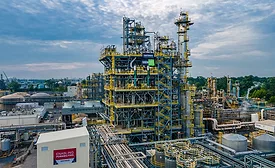
Huntsman Corp. recently announced the start of commercial operation of a new methylene diphenyl diisocyanate (MDI) splitter at its Geismar site in Louisiana.
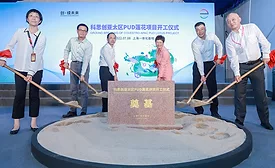
Covestro recently announced that it has broken ground on two new plants in Shanghai to meet the rising demand for polyurethane dispersions (PUDs) and elastomers.
The Society of Chemical Manufacturers & Affiliates (SOCMA) recently announced that eight companies have joined its membership in the first half of 2022.
The Adhesive and Sealant Council (ASC) will hold its Adhesives & Sealants Sustainability Forum September 19-21, 2022, at the Omni William Penn Hotel in Pittsburgh, Pa.
 RSS
RSS