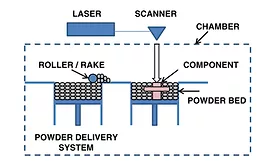
Additive manufacturing (AM), also known as 3D printing, has seen increased adoption across industries and regions for producing a variety of end-use parts.
The continued transition away from brick-and-mortar to ecommerce brings demand for packaging innovations that enable faster delivery and better content protection from shock or temperature variations.
The shift from brick-and-mortar to digital shopping had been under way for some time when the COVID-19 pandemic hit. Since 2017, ecommerce revenues have risen from an estimated $1.4 trillion to $2.4 trillion, or about 2.7% of global output.
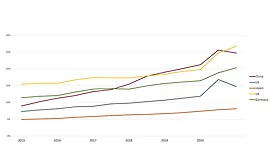
The global adhesives and sealants market grew from approximately $45 billion in 2010 to around $63 billion last year, according to The Adhesive and Sealant Council’s recently released “2020-2023 North American Market Report for Adhesives and Sealants, with a Global Overview.” During this period, over 200 patent applications (simple family groups) in the technical fields of adhesives and sealants were filed across the five major IP jurisdictions (US, EU, CN, JP, KR).
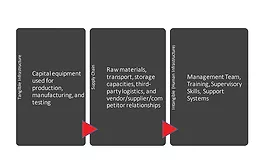
While certainly no guarantee of success, a business strategy with robust crisis management increases not only the probability of survival but a faster return to a thriving business. In many cases, it also enables a business to uncover and correct its weaknesses.
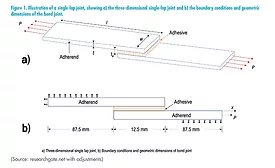
When anticipating using adhesives in structural bonding, a common need is developing the testing protocol to demonstrate bonded system effectiveness. While pressure-sensitive tapes are used in structural joining, this discussion will focus on liquid, paste, and film adhesives in structural joints.
Ink, adhesive, paperboard, film, and other material suppliers need to understand relevant certifications and processes in order to adhere to recycling or composting standards.
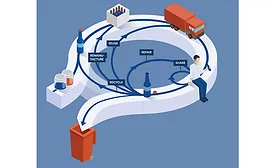
Consumer sentiment continues to drive sustainability throughout the economy and society. Consumers often view packaging as wasteful, and they demand more sustainable options as a result. Many terms, such as reuse, recycle, compost, and reduction, resonate positively with consumers.
The wide use of dissimilar substrate materials driving the selection of sealants was reported in The Adhesive and Sealant Council’s “2017-2020 North American Market Report for Adhesives and Sealants with a Global Overview.”
The specialty chemicals value chain has risen to the challenge of retooling to fill large supply gaps for sanitation products, packaging containers and inks, and other essential products to meet spikes in demand as an outgrowth of the COVID-19 pandemic.
Engineers, architects, specifiers, facility managers, and homeowners must spend time analyzing what performance levels can be obtained by the adhesive and sealant products that are available to them for the environments in which they are being used.
With increasing consolidation among adhesives manufacturers and the raw material suppliers that support them, global product formulation and availability of materials used in these formulations continue to grow in importance.
Scouting for collaboration opportunities outside your company is a process that begins with defining and prioritizing the market's needs in a way that anyone unfamiliar with your business can understand.
Meeting the technical and product needs of customers can be very challenging, especially if R&D resources are constrained or you do not have the right in-house expertise to deliver a timely response.
 RSS
RSS