At present, polymers do not have to be registered under Regulation (EC) No. 1907/2006 of the European Parliament and the Council on the Registration, Evaluation, Authorisation and Restriction of Chemicals (REACH). Nevertheless, a possible change in the treatment of polymers is envisioned in Article 138(2) of REACH, which may result in polymers being included in the registration requirements.
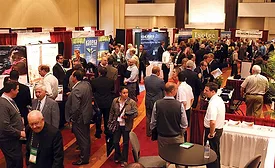
Bill Allmond, president of The Adhesive and Sealant Council (ASC), shares details regarding the 2022 World Adhesive and Sealant Conference (WAC2022), including planned keynotes and technical sessions, the much-anticipated EXPO, various networking opportunities, and more.
Our February issue brings articles on a wide range of topics, including green formulations and applications, curing materials, transportation end uses, and much more.
To start us off, Jowat’s Gerhard Haas asks: How can we make adhesives and bonding processes more sustainable? Luckily, he also provides some insightful answers clustered under a central recommendation to seek a holistic approach to sustainability. Learn more in “Green Bonding.”
Blaige & Co. provides details regarding its proprietary research on the impact of global consolidation.
Two distinct strategies are at play in adhesives and sealants segment M&A—one being employed by large, global consolidators and the other by domestic, private equity-backed consolidators.
After more than 20 years of sharing his expertise and wisdom in the monthly Ask Dr. Dave column, Dave Dunn has retired as a columnist. Here we share some of his most popular columns over the years.
A new solution has been developed in the form of pre-dispersed masterbatches of core-shell particles in (meth)acrylate monomers. These new liquid toughener dispersions are stable and have been proven to increase the toughness of acrylic materials. The utility of these tougheners has been demonstrated in light-curable thermoset formulations and in 2K acrylic structural adhesives.
The packaging industry can address the growing market demand for sustainable packaging while also enabling operating and performance improvements that have benefits independent from sustainability.
The pandemic drove increased demand for packaging and created significant stresses on the packaging value chain, but it didn’t reduce the focus on sustainability. The industry has had to meet the various challenges of the pandemic while continuing to make progress toward a circular packaging economy.
The Specialty & Custom Chemicals Show will feature more than 165 exhibitors, 39 Exhibitor Showcases, and a series of educational sessions focusing on pressing issues that manufacturers are facing both inside and outside their fence lines.
With business booming and companies reaching capacity limits, customers and suppliers throughout the specialty chemical value chain are looking to make business-critical connections in 2022. SOCMA offers that opportunity and more at the Specialty & Custom Chemicals Show, which will be held February 28-March 2, at the Omni in Fort Worth, Texas.
Elastomer products are commonly produced using isoprene, butadiene, and styrene. A new renewable monomer has been used to develop unique polymers, such as liquid farnesene rubber (LFR) and a proprietary bio-based styrenic elastomer.
 RSS
RSS
.webp?height=168&t=1646310161&width=275 "European Perspectives")